


Asian Cultural Diversity Takes Center Stage at First Digital Missionary Assembly in Manila


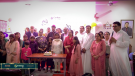
The cultural diversity of Asia took center stage on the opening day of the First Asian Catholic Digital Missionary Assembly, as more than 100 delegates witnessed cultural performances highlighting unity amid differences in languages, traditions and cultures.
The performances were presented during the orientation program on September 10 at the Pope John Paul II Auditorium on the Radio Veritas Asia (RVA) campus in Quezon City.
The four-day assembly, being held from September 10 to 13, carries the theme “Influencers to Witnesses: Synodal Way for Digital Mission in Asia.” Hosted by Radio Veritas Asia in collaboration with the FABC Office of Social Communication, the gathering brings together Catholic digital missionaries, communicators and influencers from across Asia to reflect on digital mission, formation, collaboration and evangelization.
Among those present for the cultural program was Bishop Marcelino Antonio “Junie” Maralit Jr., chairman of the FABC Office of Social Communication.
The first performance was presented by international students of the Institute of Formation Fondacio Asia (IFFAsia), a leadership and formation institute based in Quezon City, Philippines. The presentation brought together cultural traditions from across Asia under the theme “Five Nations, One Stage, Connected Through Dance.”
The performance featured Malaysia’s cultural harmony, Chinese martial arts, the welcoming spirit of the Orang Ulu people, Lao heritage associated with sticky rice, Myanmar’s Kayan traditions, Timor-Leste’s expressive dance associated with the shrimp harvest, and South Korea’s symbolic Arirang.
The presentation reflected the intercultural experience of young lay missionaries undergoing leadership formation at IFFAsia. Coming from different cultural backgrounds, the students live and learn together as they prepare for mission in diverse Asian contexts.
A second performance showcased Philippine cultural traditions through the Sanglahi Dance Troupe and Rondalla, a cultural group dedicated to preserving and promoting traditional Philippine folk dances, music and songs.
The troupe presented traditional dances including Tinikling, the Philippine bamboo-stick dance, and Pandanggo sa Ilaw, in which dancers balance lights and glasses on their heads and hands while performing.


The performance also became an opportunity for cultural exchange when several delegates joined the dancers for the Tinikling portion. Their enthusiastic participation drew laughter and applause from the audience.
The final presentation was a short skit by international students of IFFAsia, drawing on their experiences of intercultural formation to highlight the values of harmony, human dignity and hope.
The students presented the skit in connection with an upcoming mission outreach project in Zamboanga, where they will work with Indigenous youth and families.
The five-minute presentation carried the message “hope in action,” encouraging the assembly participants to become people who inspire hope through their mission and service.
The cultural program highlighted one of the realities of the Asian Church: its diversity can become a source of encounter, dialogue and collaboration.
For digital missionaries working across Asia, the performances also underscored the importance of understanding the cultures, traditions and experiences of the people they seek to reach through digital platforms.
As the assembly continues through September 13, participants are taking part in formation sessions, discussions and exchanges on how digital platforms can serve the Church’s mission of evangelization and help build bridges across Asia.
Radio Veritas Asia (RVA), a media platform of the Catholic Church, aims to share Christ. RVA started in 1969 as a continental Catholic radio station to serve Asian countries in their respective local language, thus earning the tag “the Voice of Asian Christianity.” Responding to the emerging context, RVA embraced media platforms to connect with the global Asian audience via its 21 language websites and various social media platforms.
Comments

Latest News




- Reply
Permalink