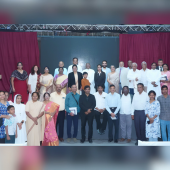



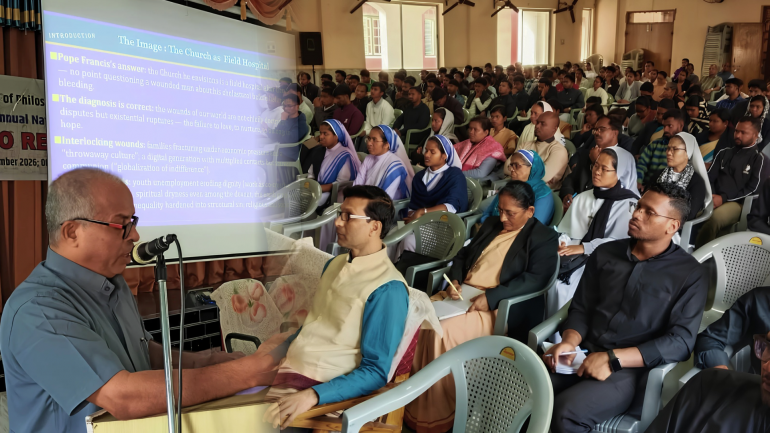
Indian Catholic theologians and scholars have called for a renewed commitment to rebuilding the Church through healing, interreligious dialogue, fraternity and greater recognition of indigenous cultures during a national theological seminar in Ranchi, eastern India.
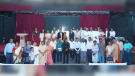
The Annual National Research Seminar, organized by St. Albert’s Institute of Philosophy (SAIP) and the Pontifical Faculty of Theology, Ranchi (PFTR), was held on November 14 at St. Albert’s College Auditorium under the theme “A Call to Rebuild the Church.”
The gathering brought together theological, pastoral, historical and intercultural perspectives on the Church’s mission, with particular attention to indigenous and Adivasi communities in Jharkhand, a state in eastern India with a significant tribal population.
Five research papers examined how the Church can renew its identity and mission in response to contemporary social and pastoral challenges.
Fr. Valerian Lobo, presenting “The Church as a Field Hospital: Theological-Pastoral Reflections on Healing in a Fractured World,” emphasized the Church’s responsibility to accompany wounded individuals and communities through compassion, reconciliation and solidarity.
Dr. John Barla OFM Cap explored the Franciscan foundations of interreligious dialogue through “The Kairos of Damietta,” highlighting the relevance of peaceful engagement among different religious traditions.
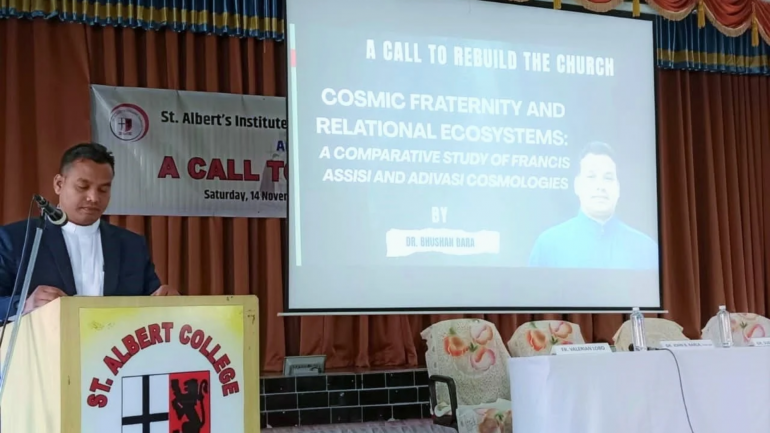
Connecting Christian spirituality with indigenous worldviews, Dr. Bhushan Bara examined cosmic fraternity and ecological interconnectedness through a comparative study of St. Francis of Assisi and Adivasi cosmologies.
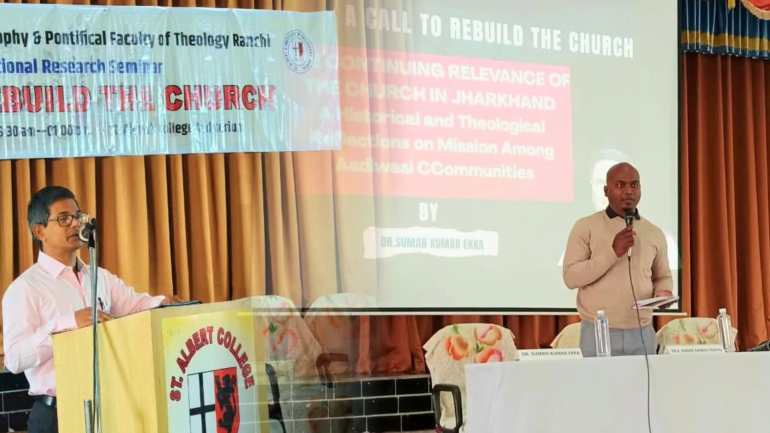
Prof. Dr. Suman Kumar Ekka reflected on the historical and theological relevance of the Church's mission among Adivasi communities in Jharkhand, while Dr. Raju Felix Crasta explored the contribution of missionaries to building the indigenous Church, particularly in the Chotanagpur region of eastern India.
The presentations highlighted the importance of strengthening local leadership, respecting cultural identities and recognizing indigenous wisdom in the Church’s missionary journey.
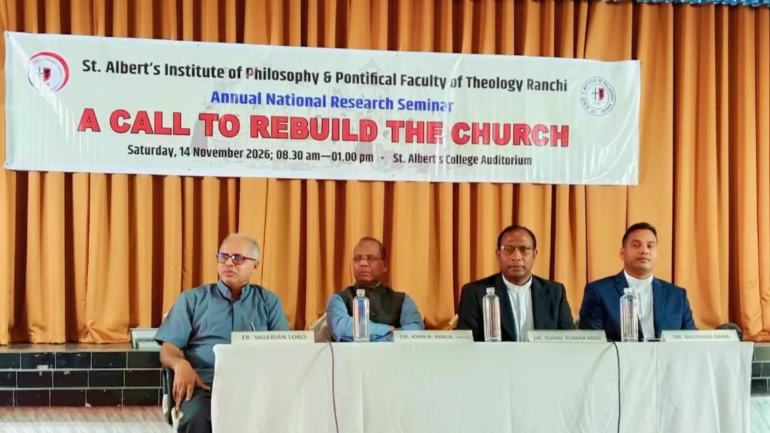
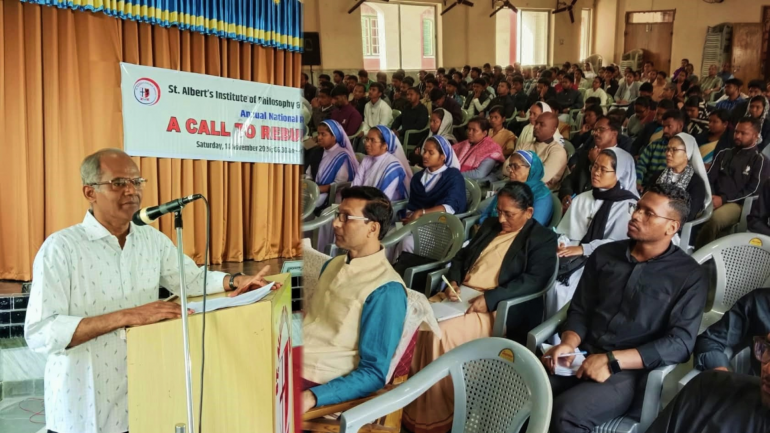
Brother Clement Digal, a theologian who participated in the seminar, said rebuilding the Church must begin with renewed commitment to Jesus Christ rather than merely strengthening institutional structures.
“Rebuilding the Church is not simply about strengthening its institutions or structures; it is about renewing our commitment to Jesus Christ and restoring the Church’s mission of love, compassion, justice and fraternity,” he said.
He called for a Church that becomes “a healing presence in a wounded world, a bridge of dialogue among religions and cultures, and a voice for the dignity and rights of the marginalized, particularly indigenous and Adivasi community.”
Digal also stressed that theological research and academic discussions must translate into concrete pastoral action, enabling local communities to participate actively in the Church’s mission.
The seminar was convened by Dr. Raju Felix Crasta, director of SAIP, and Prof. Dr. Suman Kumar Ekka, president of PFTR.
The discussions underscored the importance of theological reflection rooted in local realities, particularly as the Church in Asia seeks to strengthen its missionary presence through dialogue, cultural sensitivity, ecological responsibility and solidarity with marginalized communities.
Radio Veritas Asia (RVA), a media platform of the Catholic Church, aims to share Christ. RVA started in 1969 as a continental Catholic radio station to serve Asian countries in their respective local language, thus earning the tag “the Voice of Asian Christianity.” Responding to the emerging context, RVA embraced media platforms to connect with the global Asian audience via its 21 language websites and various social media platforms.
Latest News