The Catholic Bishops’ Conference of Japan (CBCJ) expressed concern over the recent deployment of long-range missiles in the Nansei Islands in response to the increasing Chinese military buildup in the Pacific region.
The Nansei Islands are a chain of islands stretching southwest from Japan's main islands toward Taiwan. They lie between the East China Sea and the Philippine Sea.
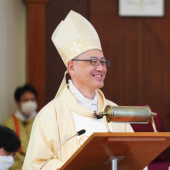
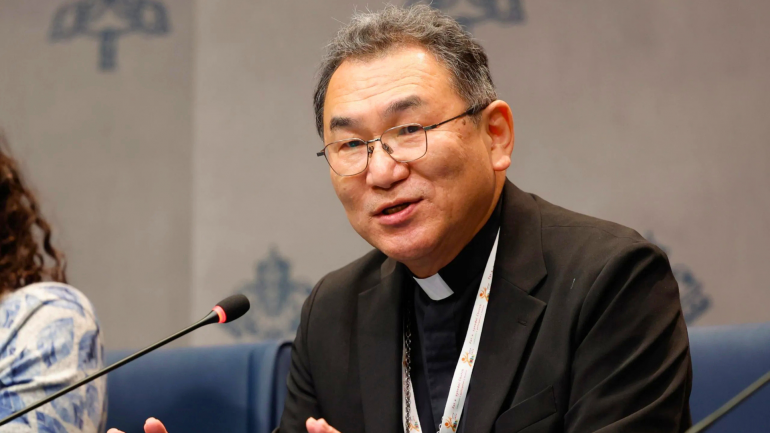
In a pastoral message dated July 10 for the upcoming Ten Days of Prayer for Peace in Japan, CBCJ President Cardinal Isao Tarcisio Kikuchi noted that the export of lethal capability is now permitted “under certain conditions.”
According to Japan’s Defense Ministry, it has allocated 100.1 billion yen in the fiscal 2026 budget to acquire unmanned submarines and drones with “counterattack capability” against enemy attacks from far-flung islands.
“Lately, the interpretation of Article 9 of the Constitution has changed, allowing the exercise of collective self-defense with restrictions,” he said. “With the excuse of changes in the security environment, defense spending has been rapidly increased.”
The said article states that “the Japanese people forever renounce war as a sovereign right of the nation” and that “land, sea, and air forces, as well as other war potential, will never be maintained.”
Cardinal Kikuchi emphasized that this pacifist nature of the Japanese constitution was inspired by the wisdom they had learned from the devastation of World War II.
“We need to pause and consider whether gradually eroding that spirit and advancing military buildup without sufficient national debate will lead to the establishment of true peace,” he said.
The prelate also laments how war is often justified as “unavoidable” in different parts of the world, particularly in Ukraine, Sudan, Myanmar, and the Middle East.
“On these battlefields, each one who is wounded or violently loses life is a human being just like us, created in the image of God,” he said.
Echoing Pope Leo XIV’s call to make peacebuilding a priority in the Church’s work of evangelization, Cardinal Kikuchi urged the faithful to “stand in loving solidarity” with those suffering in war-torn areas.
“All life is a precious gift from God. Regardless of nationality, ethnicity, or religion, everyone is given dignity by God. Protecting that dignity is the starting point of peace,” he said.
The cardinal also reminded everyone to always choose “powers of love” over “words of power” for the Church to nurture a civilization of love.
Japan’s Ten Days of Prayer for Peace is an annual commemoration of the end of World War II, observed from August 6 to 15.
Radio Veritas Asia (RVA), a media platform of the Catholic Church, aims to share Christ. RVA started in 1969 as a continental Catholic radio station to serve Asian countries in their respective local language, thus earning the tag “the Voice of Asian Christianity.” Responding to the emerging context, RVA embraced media platforms to connect with the global Asian audience via its 21 language websites and various social media platforms.
Latest News