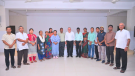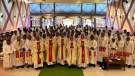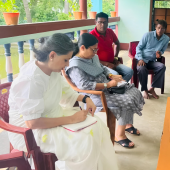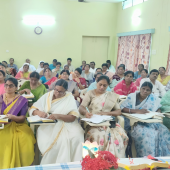



A mob attack on a Catholic parish in West Bengal’s Nadia district forced organizers to end a four-day Santali Bible convention early after church property was damaged and several Christians were reportedly injured.
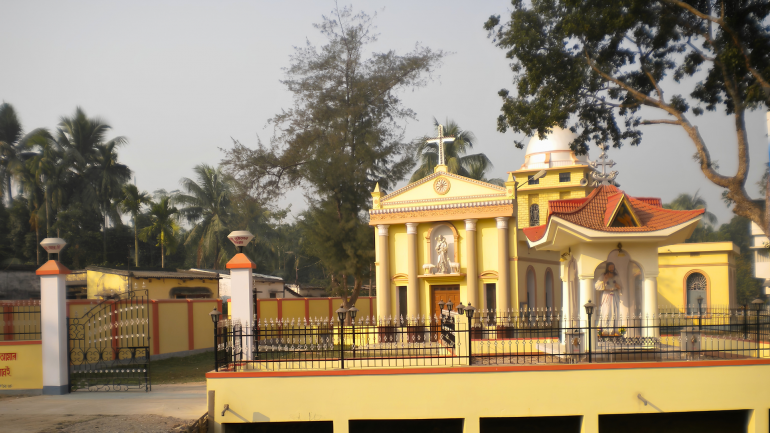
The incident occurred on October 9 at St. Louis Parish Church in Jalarkhali, where the convention was being held at the Divine Center. Local authorities ordered the gathering to close, citing security concerns, and the Diocese subsequently advised organizers to disperse participants to protect their safety.
The Santali are an Indigenous people concentrated in eastern India, particularly West Bengal, Jharkhand, Odisha and Bihar. Members follow different religious traditions, including Christianity. The convention brought together Santali-speaking Christians and others interested in the faith.
According to an incident report by Fr. Michael Adesar, an eyewitness, about 200 people gathered outside the church on the evening of October 9, the convention’s second day. The group allegedly raised anti-Christian slogans and vandalized banners.
The report said the attackers threw stones at the church premises, damaging property, including the protective glass covering a statue of Divine Mercy. When local Catholic residents came out to defend the premises and protest, they were reportedly attacked with bricks and bamboo sticks, leaving several people injured.
The attackers did not enter the main Divine Retreat House grounds, where convention delegates were staying.
The annual gathering brought together Santali-speaking Christians, catechumens and people exploring the Christian faith. More than 1,900 participants had registered on October 8, the opening day, and organizers expected attendance to reach about 2,500 over the four-day event. Many participants had traveled from distant areas to attend.
Fr. Vincent V.C., head of the organizing committee, had reportedly obtained permission from the district magistrate to hold the convention and use loudspeakers. Organizers had also informed the local police station about the program and expected attendance.
As tensions escalated, authorities instructed organizers to stop the gathering, citing security concerns and the lack of necessary administrative approval for an assembly of that scale under the prevailing circumstances.
In the absence of Bishop Nimal Gomes, Vicar General Fr. Pradip and diocesan financial administrator Fr. Arul prepared a First Information Report (FIR), endorsed by several priests, and approached the local police station. The incident report said the duty officer initially appeared reluctant to receive or examine the complaint.
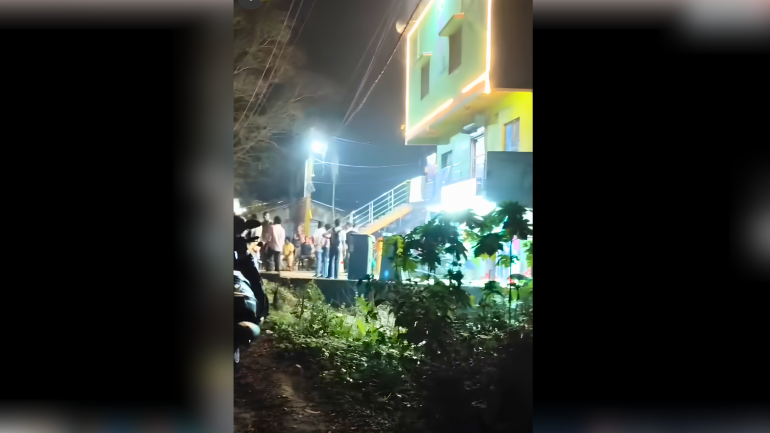
A small police contingent later arrived at the church entrance and proceeded to the retreat center to question individual participants.
Following an assessment by diocesan leaders, organizers informed delegates on the evening of October 9 that they should prepare to leave after Mass the following morning. The convention ended on October 10, two days before its scheduled conclusion.
Fr. Arul and Fr. Adesar visited the retreat center on October 10 to console participants distressed by the incident. Priests, religious sisters and volunteers also provided pastoral support and helped delegates prepare for their departure.
Herod Mullick, founding state secretary of Bangiya Christiya Pariseba, a forum representing Christians of different denominations in West Bengal, condemned the attack in an interview with Radio Veritas Asia.
“We strongly condemn this attack,” Mullick said.
He alleged that attacks on Christians were becoming increasingly brazen while the government remained silent.
“The attackers are becoming increasingly desperate, yet the Government unfortunately remains silent. This silence indirectly signals tolerance, if not encouragement, of such violence,” he said.
Mullick also disputed allegations that convention participants had initiated the violence by throwing stones.
“They have made false allegations claiming that participants of the convention threw stones first, which is completely untrue,” he told RVA.
He called for a swift and impartial investigation into the incident and other reported attacks on Christian communities.
The circumstances surrounding the incident, including the reported assault on residents, damage to church property and initial difficulty in filing the police complaint, require clarification by the authorities.
The early closure disrupted an annual gathering intended to strengthen faith and fellowship among Santali-speaking Christians in eastern India. Diocesan clergy and volunteers continued to provide pastoral support as participants prepared to return home.
Radio Veritas Asia (RVA), a media platform of the Catholic Church, aims to share Christ. RVA started in 1969 as a continental Catholic radio station to serve Asian countries in their respective local language, thus earning the tag “the Voice of Asian Christianity.” Responding to the emerging context, RVA embraced media platforms to connect with the global Asian audience via its 21 language websites and various social media platforms.
Latest News