Philippines: Halcon Mountaineers Mark 40 Years of Conservation-Driven Climbing in Oriental Mindoro

What began as a group of high school friends meeting informally over drinks has developed over four decades into a structured mountaineering organization with a sustained focus on environmental protection in Oriental Mindoro, Philippines.
The Halcon Mountaineers Association Inc. (HALMs) is now preparing to mark its 40th founding anniversary on April 25–26, 2026, at the Aplaya Campsite by POSITADI in Barangay Banilad, Pinamalayan, under the theme “Towards Greater Heights: 1986–2026.”
The group traces its origins to Batch ’78 graduates of Oriental Mindoro National High School, who once referred to themselves informally as the “Sunday Club.” In its early years, members regularly gathered at El Canonero restaurant in Barangay Nacoco, Calapan, without any structured outdoor activity or formal objectives.
A shift occurred in 1986 when members of the University of the Philippines Mountaineers, led by Boboy Francisco, coordinated with school principal Tony Dilay for an organized ascent of Mount Halcon. The expedition included early participants such as Dickie Acedera, Efren Garcellano, and Aster Tecson, and became the foundation of what would later be formalized as HALMs.
Acedera, now a board member, described the period as unstructured but formative. He said the group initially had limited awareness of what it would eventually become, noting that it was only later that their shared activity developed into an enduring organization.
By the early 1990s, membership expanded to include professionals and business figures such as Oscar Tan, Felipe Chan, Jimmy Tu, Roy Padilla, and Willie Goco, as well as students from Divine Word College of Calapan. Access to equipment and training remained uneven, with most climbers relying on basic gear and personal resources.
Current HALMs president Christober T. Licot said sustaining participation was one of the group’s early challenges, noting that the physical demands of mountaineering and the discipline required led to frequent turnover in membership.
Despite this, the organization maintained continuity through successive groups of members and a developing internal structure that emphasized training and shared responsibility.
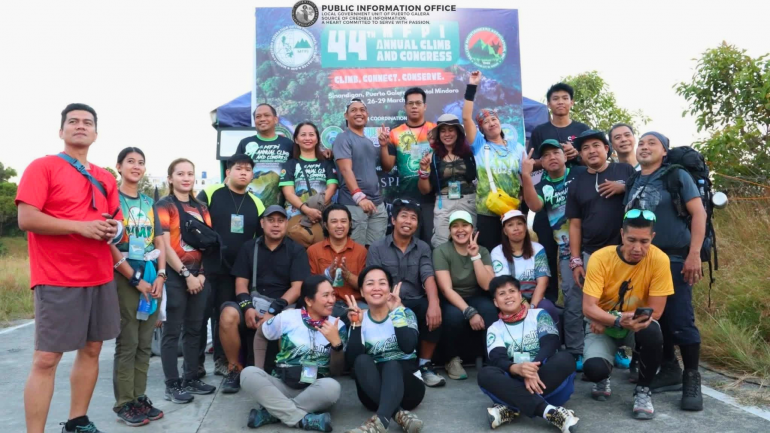
HALMs later became active within the Mountaineering Federation of the Philippines Inc. (MFPI). One of its major organizational milestones was hosting the 44th Annual Climb and Congress in Sinandigan, Puerto Galera, from March 26 to 29, 2026, which brought together climbers from across the country.

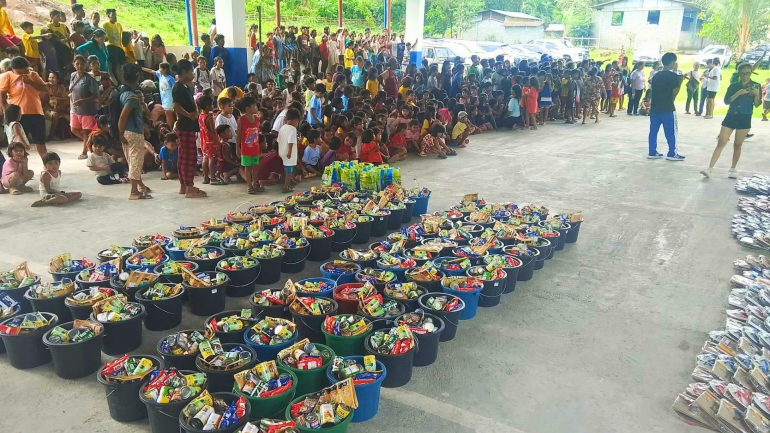
Alongside its climbing activities, the group has expanded its environmental programs. These include reforestation work on Mount Halcon’s slopes, coastal cleanups linking upland and marine ecosystems, and participation in rescue operations during emergencies in coordination with local government units. The provincial government of Oriental Mindoro previously recognized the group’s disaster response work during its 75th founding anniversary.
Members have also pointed to environmental degradation on Mount Halcon, including illegal logging, as a continuing concern. Licot recalled incidents of sudden flooding on the mountain that required technical rescue operations, underscoring the direct link between environmental conditions and climber safety.
As HALMs approaches its 40th anniversary, founders and current members describe the milestone as an opportunity to assess both continuity and change in their work. Acedera said the group’s longevity reflects sustained commitment across generations, while also pointing to the need to maintain environmental standards as participation evolves.
The anniversary gathering in Pinamalayan is expected to bring together past and present members to mark four decades of organized mountaineering and environmental work in the province.
Radio Veritas Asia (RVA), a media platform of the Catholic Church, aims to share Christ. RVA started in 1969 as a continental Catholic radio station to serve Asian countries in their respective local language, thus earning the tag “the Voice of Asian Christianity.” Responding to the emerging context, RVA embraced media platforms to connect with the global Asian audience via its 21 language websites and various social media platforms.
Latest News