“I really treasure their songs, for they helped me survive and overcome the darkest, most challenging moments of my life by giving me comfort and peace. These songs always remind me of God’s presence whenever I feel hopeless,” confided Sam De Castro, a psychometrician and TAK warrior (Takayasu Arteritis, a rare autoimmune illness).
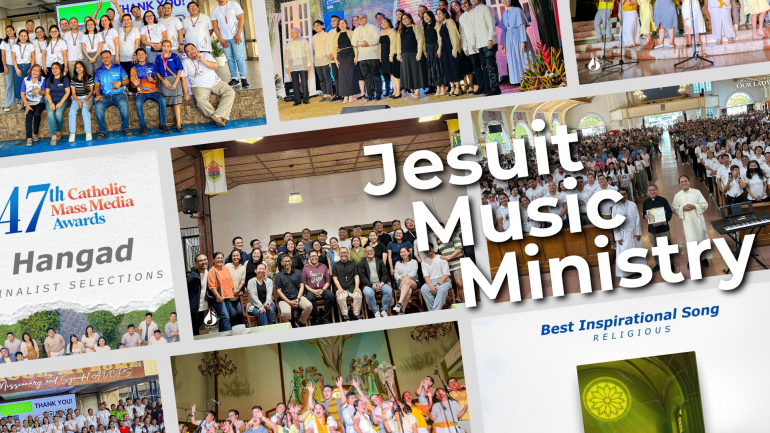
Comfort and peace—two words that come to mind for countless Filipinos like Sam who have found solace in the songs produced by the Jesuit Music Ministry (JMM). An official ministry under the Philippine Province of the Society of Jesus (SJ), JMM is dedicated to creating uplifting music that touches people’s lives and nurtures a deeper connection with God.
JMM crafts its soundscape using instruments such as the keyboard, guitar, percussion, flute, and violin, blending familiar, prayerful melodies with stately, modern arrangements that carry the strength of Filipino resilience. Tightly layered harmonies of clear, soaring voices evoke the warmth of morning light—guiding the listener gently, like a shepherd’s staff (tungkod). As masters of this sound, JMM is not just making music; it is creating prayer and hope.
Singing as Deep Spiritual Life
Pope Leo XIV emphasized the spiritual dimension of music ministry during his address to some 35,000 choristers at the Jubilee of Choirs last November 22–23, 2025, in Rome. Music ministers, he said, are “tasked to draw others into the praise of God, and help them to participate more fully in the liturgy through song,” a calling that requires preparation, commitment, mutual understanding, and above all, deep spiritual life. “So that when you sing, you both pray and help everyone else to pray.”
The Jesuit Music Ministry’s work in the Philippines is a clear embodiment of this deep, prayerful ministry.
“Personally, these songs are my prayers too. They accompany me in the darkest parts and seasons of my life, and they have also helped me accompany other people in their spiritual journey,” shared JMM Lay Director Lester Mendiola. As Lay Director, he has overseen the production and publication of music from some of the most beloved Catholic groups in the Philippines, including Bukas Palad, Hangad, and Himig Heswita. Their contemporary Filipino Catholic music has inspired generations at home and abroad.
To stay rooted in service, JMM music ministers regularly attend formations and retreats. This dedication is evident in their work—they encourage prayerful community singing, acting not as performers, but as humble channels whose sole purpose is to share God’s love.
Melodic Staff, Pilgrims of Hope
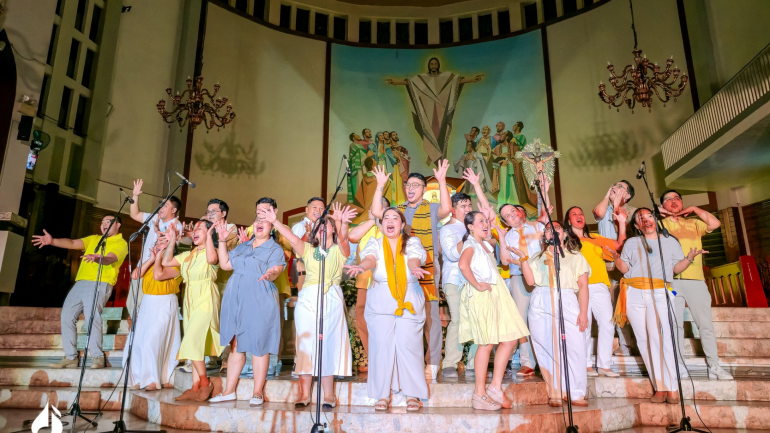
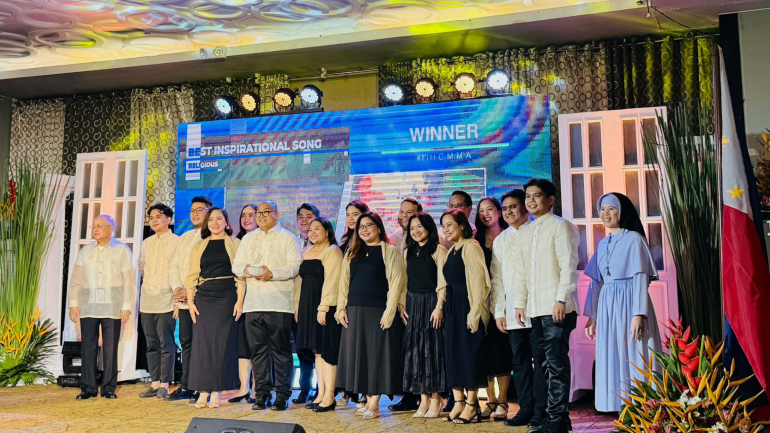
This same spiritual grounding shone brightly at the 47th Catholic Mass Media Awards (CMMA) last November 19, 2025, where the song “Ang Tungkod Mo” (Your Staff) won Best Inspirational Song – Religious Category. Arranged by Dean Naces and Nigel Perea and written by veteran singer-songwriter and Positive Living coach Mimo Perez, the song appears on the all-Filipino liturgical album Misa ng Pag-asa (Mass of Hope), launched on April 12, 2024, in Manila. The entire album was performed by Hangad and produced by JMM.
Perez shared the deeply personal inspiration behind the song. Hailing from Baco, Oriental Mindoro and with over 30 years of ministry experience, he wrote the song based on the episcopal motto of Oriental Mindoro Bishop Moises Cuevas: Virgo Tua Consolatio Mea, drawn from Psalm 23:4. Written during the pandemic, the song becomes a wellspring of consolation and trust in God amid uncertainty.
Perez is part of a new generation of lay composers—alongside Norman Agatep and Paul K. Tirol—and is joined by the newest Jesuit composers: Fr. Dom Bulan, SJ; Fr. Ro Atilano, SJ; and Fr. Bok Arandia, SJ. They follow in the footsteps of pioneers such as Fr. Eduardo Hontiveros, SJ.

Jesuit Legacy: Pioneers of Filipino Liturgical Music
The roots of JMM trace back to the 1960s, during the transformative period of Vatican II, which called for inculturation and active lay participation in worship. Fr. Hontiveros embraced this mission by composing songs in the Filipino vernacular and integrating local melodies and traditions. Among his beloved compositions are Mass staples like “Pananagutan,” “Luwalhati,” “Santo,” “Kordero ng Diyos,” and “Magnificat.”
Paralleling Filipino nationalist movements of the 1970s, his music became deeply rooted among the faithful, earning him the title “Father of Filipino Liturgical Music.”
This pioneering work made the solemn liturgy accessible and profoundly resonant with the Filipino soul, giving the Church a distinctly Filipino voice in worship. By 1964, Philippine bishops had already approved Tagalog, Pampango, Cebuano, Bicolano, Ilocano, Hiligaynon, Pangasinan, Waray, Ibanag, and Chavacano for liturgical use—later confirmed by Rome. Benedictine monks also explored indigenous chants from Kalinga, Mindoro, and Mindanao.
Following this legacy are numerous gifted Jesuit composers, including Fr. Manoling Francisco, SJ, and Fr. Charlie Cenzon, SJ, whose compositions—“Tanging Yaman” and “Awit ng Paghahangad”—became so iconic that they were used in a film and a telco commercial. Other notable Jesuit composers include Fr. Nemy Que, SJ; Fr. Arnel Aquino, SJ; Fr. Fruto Ramirez, SJ; and Danny Isidro.
Lay composers across Luzon, Visayas, and Mindanao likewise enriched the nation’s liturgical music tradition.
Mission in Melody
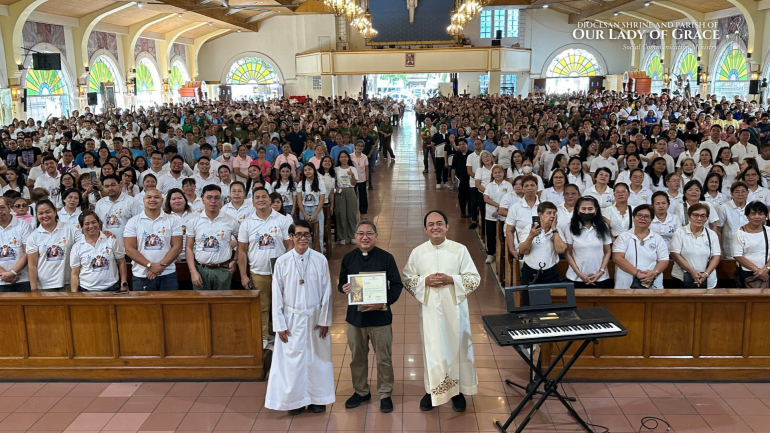
From the pioneering work of Fr. Eduardo Hontiveros, SJ, in the 1960s to the contemporary leadership of Lay Director Lester Mendiola, JMM continues to innovate. Their music has followed the Filipino faithful wherever they are—moving from word-of-mouth to vinyl, cassette tapes, CDs, and now digital platforms like Facebook, Instagram, Spotify, Apple Music, and TikTok, reaching over 90,000 followers. JMM also offers regular Liturgical Music Workshops and other formation activities nationwide, including their latest workshop attended by 2,000 music ministers from the Diocese of Kalookan, facilitated by Fr. Manoling Francisco, SJ.
“Every song is the product of countless unsung heroes in our work of evangelization—composers, arrangers, lyricists, sound engineers, the marketing team, finance staff, and other volunteers—working together to glorify God,” Mendiola emphasized.
“I also want to express my gratitude to our supportive families and the people who listen to our music through our different platforms. Thank you for helping sustain our ministry so we can continue producing more. May our songs continue to inspire and bring more people closer to God,” he added.
Despite challenges such as limited budgets and the pressure to remain relevant in the digital age, JMM—and its mother organization, Jesuit Communications—remains committed to its vision, guided by the prayer of the late Fr. James Reuter, SJ, recited before every activity:
“To open our eyes and ears, that we may see the face of Christ and hear His voice in our midst;
To give a face to the faceless, and a voice to the voiceless, That we may recognize Christ in them and hear His story in theirs.”