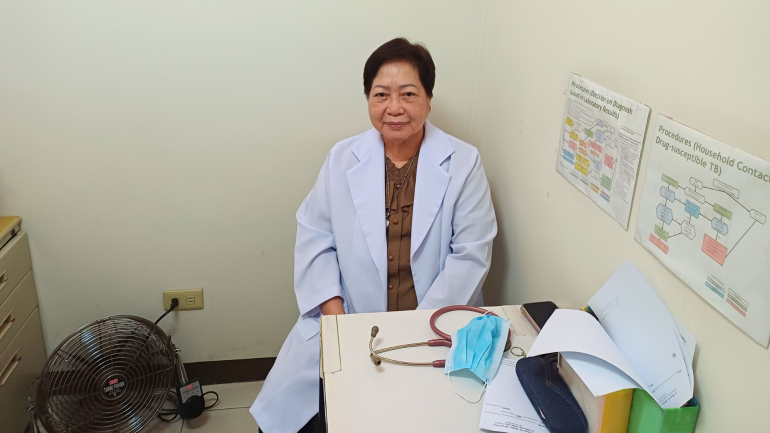
Since 1996, Dr. Lourdes Sarmiento has cared for patients at St. Maria De Mattias Mission Center in Barangay Culiat, Metro Manila, Philippines, Operated by the Sisters of the Adorers of the Blood of Christ, the clinic primarily serves people from economically challenged communities, offering consultations free of charge.
She has lived in the same area since childhood. She recalled that before subdivisions rose and roads cut through the area, it had been vast farmland.
She remembered a quieter Culiat, long before urban development transformed the community. Open fields stretched across much of the landscape, and opportunities were limited. Few people pursued higher education. Transportation was difficult, and families often built their lives around the land.
Now 75 and retired, she continues caring for patients at the clinic as a volunteer physician.
Dr. Sarmiento was raised by farmer parents. Her father farmed while her mother kept the household.
“I still remember seeing American military tanks stationed in the area during that time,” she said.
At the time, few people in their community had the opportunity to pursue higher education.
For a daughter of farmers, becoming a doctor was not an expected path.
She earned her medical degree from Manila Central University in 1974. People in Culiat regarded her as the first in the community to complete medical school.
Soon after graduating, she joined medical missions whenever she could, in parishes or schools.
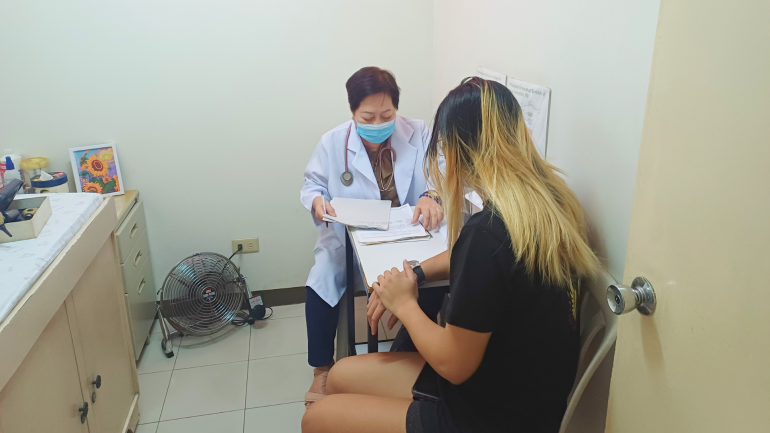
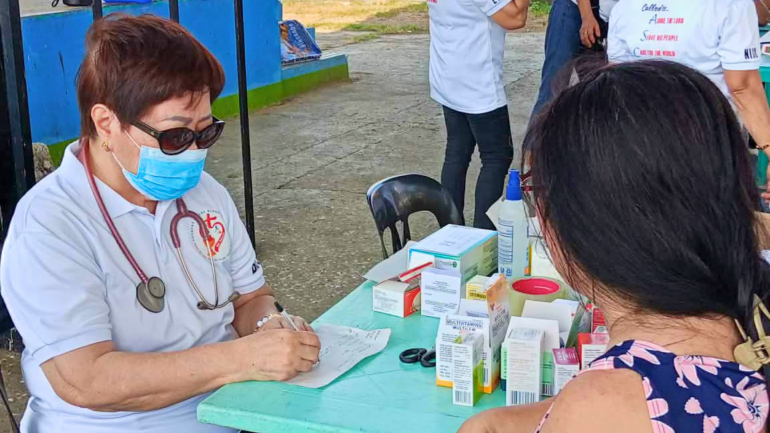
She also served as a physician at Claret School of Quezon City for years.
At the time, she balanced private practice, volunteer work, school duties, hospital responsibilities, and raising children.
“I started volunteering in 1996 as a way of thanking the Lord for the gift of becoming a doctor,” she said.
She was 46 then, with children still in elementary school. At the time, the nuns’ clinic was open on Sundays only.
Dr. Sarmiento, an OB-GYN, operated a private clinic in Tandang Sora for more than a decade.
She closed one chapter of her professional life when her hospital affiliations ended in 2011.
In 2013, she began volunteering at a clinic run by the Franciscan Daughters of St. Elizabeth in Quezon City, caring for economically challenged patients on Tuesdays.
In 2015, the Sisters of the Adorers of the Blood of Christ invited her once again to volunteer at their clinic.
“I had retired and did not have much to do, so I accepted the offer,” she said.
At the sisters’ clinic, she sees patients on Mondays, Wednesdays, and Fridays.
Some patients are elderly residents managing chronic illnesses. Others are parents bringing children for consultations. Many come from families with limited access to healthcare. Long after retiring from hospital work, Dr. Sarmiento continues listening to concerns, checking patients, and offering medical advice shaped by decades of experience.
“If I had charged consultation fees all those years, I might already be rich,” she said jokingly.
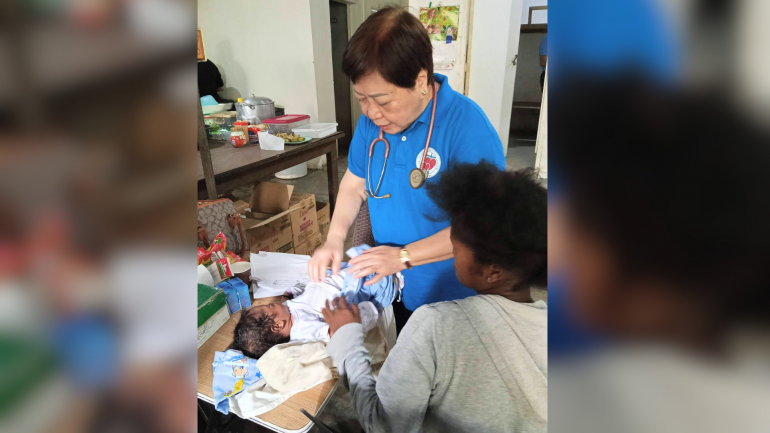
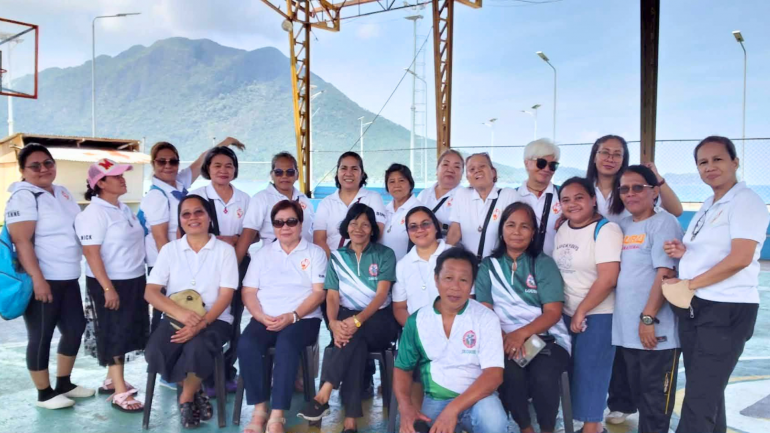
Aside from caring for patients at two clinics run by nuns in Quezon City, she also joins medical missions organized by the Sisters of the Adorers of the Blood of Christ. She regularly serves as the physician for the congregation’s outreach programs, including visits to an Aeta community in a mountainous section of Floridablanca, Pampanga.
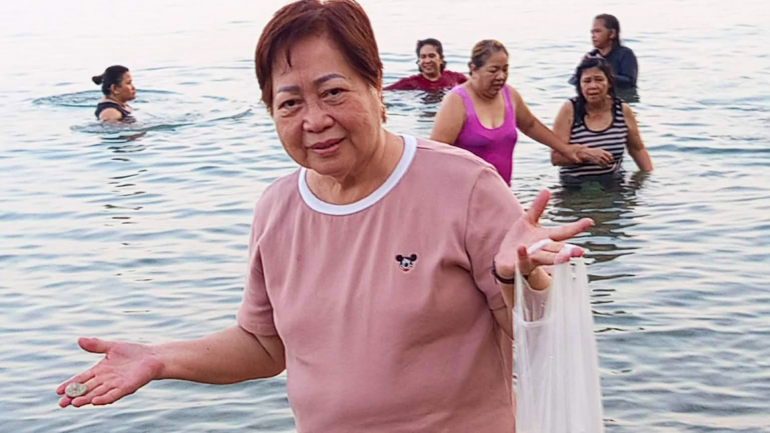
Most recently, she joined the sisters as the lone physician in a medical mission to Romblon, an archipelagic province about 400 kilometers southeast of Manila by land and sea. The mission served mostly economically challenged residents who had limited access to healthcare.
“This was our second medical mission in Romblon,” she said. “The first was in 2019, and now we returned in 2026. Physically, it can be draining for me because of my age and the intense heat.”
But meeting people and making friends from other places, especially in a distant province like Romblon, uplifts her spirit, she added.
“I am thankful to Sr. Flor [Montojo Manga] for bringing us back to her hometown and taking us around the tourist spots in their province,” she said.
She said she had not originally planned to work closely with religious congregations. But living in an area with many religious communities, she eventually came to see her path differently. Looking back, she said, she believes the Lord had been guiding her where to go.
Dr. Sarmiento is proud of her roots as a child of farmers.
Medicine gave her a profession, but service gave it meaning. Years into retirement, she still returns to the clinic not because she has to, but because gratitude continues to call her back.
“I continue doing volunteer work as an expression of gratitude to God for allowing me to become a doctor, something that would not have been possible without His grace, especially since my family was not wealthy,” she said.
The daughter of farmers became a physician. But despite the years and the career she built, the village’s first doctor never truly left home behind.