

Asian Catholic Intellectuals Warn of ‘Catastrophic Escalation’ After US–Israel Strikes on Iran

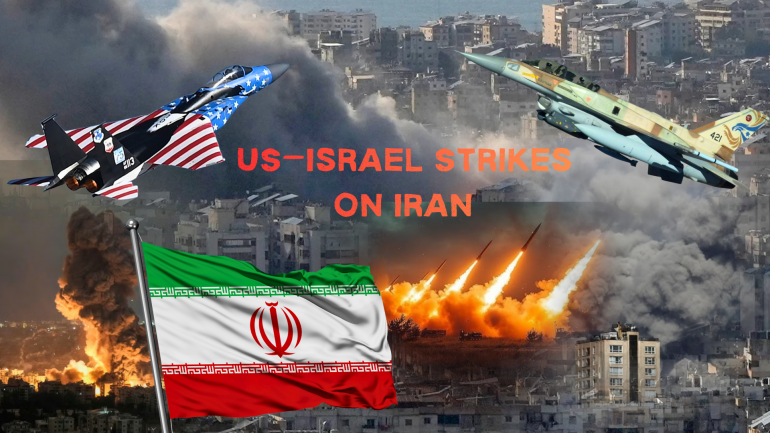
A coalition of Catholic intellectual and professional groups across the Asia-Pacific has issued a strong public statement condemning recent military attacks by the United States and Israel against Iran, warning that the escalating conflict risks triggering a wider regional war and deepening civilian suffering.
In a statement dated March 2, the International Catholic Movement for Intellectual and Cultural Affairs (ICMICA) Asia-Pacific said it was expressing “grave concern” over the growing hostilities and urged all parties to return immediately to diplomacy.
“As Catholic lay faithful from across Asia-Pacific, we strongly condemn actions that escalate violence, inflame regional tensions, and endanger global peace,” the statement said.
The network, which includes Catholic professional and intellectual associations from South Korea, Indonesia, Malaysia, the Philippines, India, Sri Lanka and Australia, warned that continued reliance on military force could produce “catastrophic escalation, widespread civilian suffering, and long-term instability.”
A Region on Edge
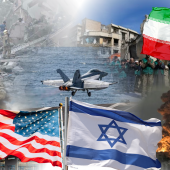
The statement comes amid rising tensions in the Middle East following a series of military actions targeting Iranian-linked infrastructure and strategic sites. In recent weeks, U.S. and Israeli forces have reportedly struck facilities connected to Iran’s military and nuclear capabilities, moves that Western officials say are aimed at curbing Tehran’s expanding regional influence and preventing further escalation by Iran-backed militias.
Iran, however, has condemned the strikes as violations of its sovereignty and international law, while regional analysts warn that retaliatory responses, either directly from Tehran or through allied groups in Lebanon, Iraq, Syria, or Yemen, could widen the conflict.
The Middle East has long remained one of the world’s most volatile geopolitical theatres, shaped by overlapping rivalries involving Iran, Israel, Gulf Arab states and major global powers. Iran’s nuclear ambitions, Israel’s security concerns, and the presence of proxy forces across the region have repeatedly pushed the area to the brink of broader confrontation.
Diplomatic initiatives in recent years - including negotiations to revive the Joint Comprehensive Plan of Action (JCPOA), the 2015 nuclear agreement- have struggled to gain traction amid mutual distrust and shifting geopolitical alliances.
Against this backdrop, ICMICA Asia-Pacific said the international community must resist normalising unilateral military actions.
“We reject the normalisation of preventive strikes, unilateral military actions, and geopolitical brinkmanship that bypass international consensus,” the statement said.
Catholic Social Teaching On War and Peace
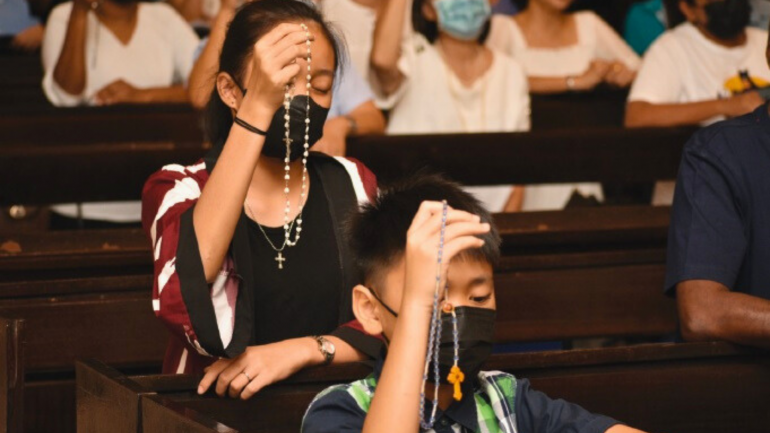
The Asia-Pacific Catholic network framed its concerns within the broader tradition of Catholic social teaching, which emphasises the sanctity of life, the pursuit of justice and the moral imperative to seek peace through dialogue rather than force.
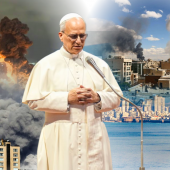
Quoting Pope Leo XIV, the group said: “Stability and peace are not built with mutual threats nor with weapons that sow destruction, pain and death, but only through a dialogue that is reasonable, authentic and responsible.”
The statement also highlighted the historical experiences of many Asian societies that have endured war, colonialism and geopolitical rivalries.
“From this historical memory… we declare that war is a defeat for humanity and violence does not build peace,” it said.
ICMICA Asia-Pacific expressed solidarity with civilians caught in the conflict, particularly vulnerable populations such as migrants, displaced persons, women, children and religious minorities.
The statement was endorsed by seven organisations within the ICMICA Asia-Pacific network, including Malaysia’s Community Action Network (CAN), Indonesia’s Association of Indonesian Catholic Professionals and Intellectuals (ISKA), the Woori Theology Institute in South Korea and the Australia Cardijn Institute.
The groups also called on Catholic communities, interfaith partners and civil society across the region to intensify prayer, advocacy and peacebuilding efforts.
“We entrust the peoples of the Middle East to God’s protection and renew our commitment to the work of peace,” the statement concluded.
Radio Veritas Asia (RVA), a media platform of the Catholic Church, aims to share Christ. RVA started in 1969 as a continental Catholic radio station to serve Asian countries in their respective local language, thus earning the tag “the Voice of Asian Christianity.” Responding to the emerging context, RVA embraced media platforms to connect with the global Asian audience via its 21 language websites and various social media platforms.
Latest News