


The Church in Asia must form priests who go beyond sacramental and liturgical responsibilities to accompany people in their daily struggles, empower lay participation, and build grassroots Christian communities, speakers said at a five-day symposium in southern India.
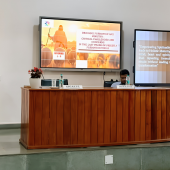
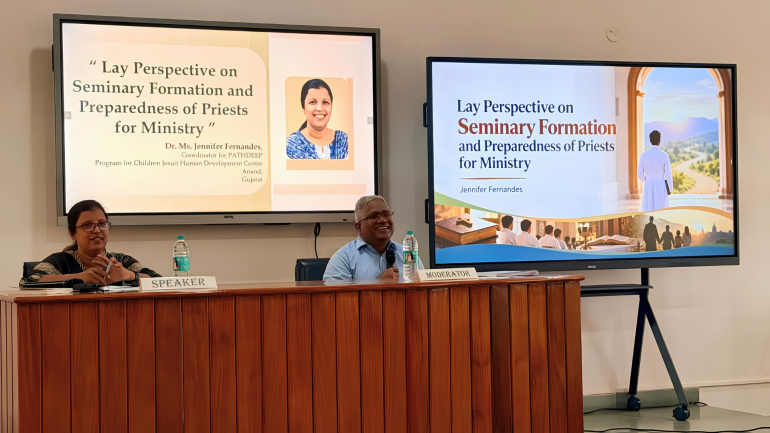
The symposium, titled “Bridging Formation and Ministry: Critical Challenges and Concerns in the Last Phase of Priestly Formation Today,” is held November 5–9 at Prabodhana, the Pallottine Institute of Theology in Mysuru, Karnataka. About 100 participants attended the gathering, organized as part of the Pallottine congregation’s Platinum Jubilee celebrations.
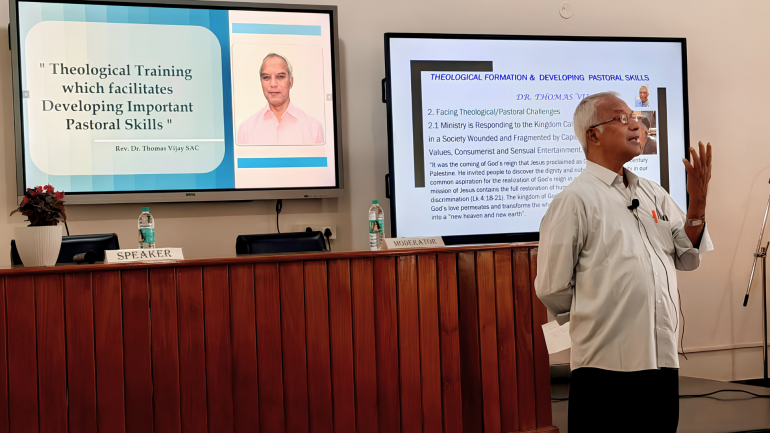
Fr. Dr. Thomas Vijay, SAC, highlighted the gap between academic theological education and the practical demands of pastoral ministry. He observed that some seminarians approach their studies primarily as preparation for examinations, while priests risk reducing their ministry to repetitive liturgical activities without fostering active Christian communities.
Drawing on his experience of transforming a neglected rural mission parish into a vibrant network of Basic Ecclesial Communities (BECs), he argued that priestly leadership should focus on enabling people to take ownership of their faith and mission.
He urged future priests to engage with people in their neighborhoods, recognize and develop lay charisms, and build participatory and self-reliant Christian communities.
Addressing the interior dimensions of priestly formation, Fr. Henry Angel, SAC, a professor at Prabodhana, emphasized that theological knowledge must lead to personal and spiritual transformation.
He cautioned that media-driven consumer culture and the pursuit of public recognition could encourage seminarians to prioritize appearances and social media visibility over authentic spiritual growth.
Fr. Angel called on candidates to discover their identity and self-worth in Christ, understand celibacy as a charism directed toward generous communion with others, and practice evangelical simplicity amid growing material aspirations.
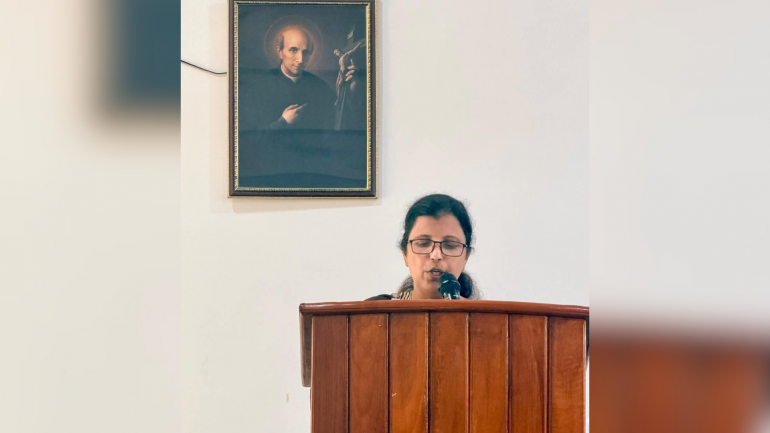
Bringing the perspectives of lay Catholics into the discussion, Dr. Jeniffer Fernandes of the Teresian Association presented feedback from the faithful on the qualities and formation needs of future priests.
Using the framework of “Head, Heart, and Hands,” she proposed four areas for strengthening priestly formation: public theology to understand socioeconomic realities, positive psychology to develop emotional resilience, Gospel sharing in small Christian communities, and stronger partnerships with laypeople.
“A priest serves the community, but the community also helps form the priest,” Fernandes said, advocating greater involvement of lay professionals and women in seminary formation.
The discussions highlighted the need for Asian seminaries to prepare priests who can connect theological understanding with people's everyday experiences, particularly those affected by poverty and social exclusion.
The concerns raised at the symposium also reflected the broader pastoral priorities of the Federation of Asian Bishops’ Conferences (FABC), particularly its emphasis on contextualized evangelization, synodal participation, and the Church's engagement with Asian societies.
The gathering called for priestly formation that extends beyond academic achievement and institutional routines, preparing future pastors to listen to people, recognize their gifts, and accompany communities in their faith and social realities.
Radio Veritas Asia (RVA), a media platform of the Catholic Church, aims to share Christ. RVA started in 1969 as a continental Catholic radio station to serve Asian countries in their respective local language, thus earning the tag “the Voice of Asian Christianity.” Responding to the emerging context, RVA embraced media platforms to connect with the global Asian audience via its 21 language websites and various social media platforms.
Latest News