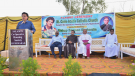
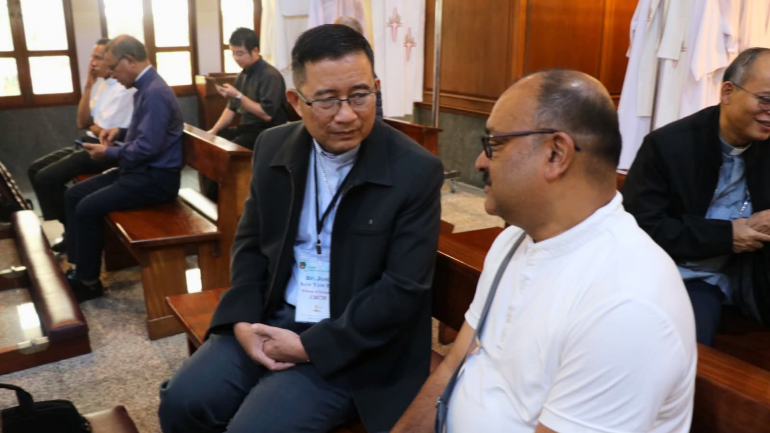
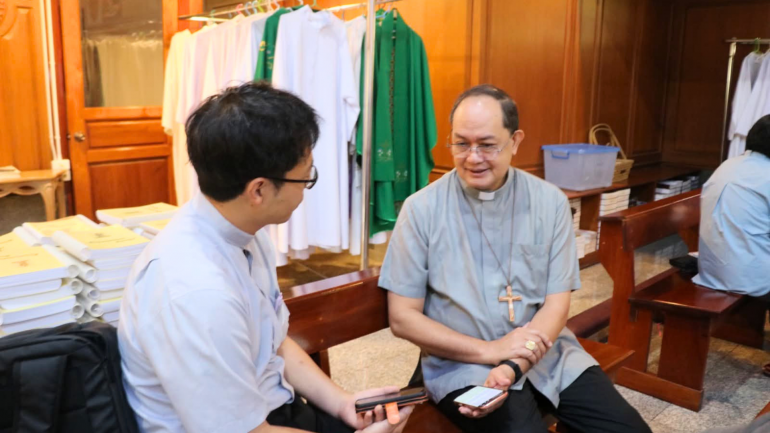
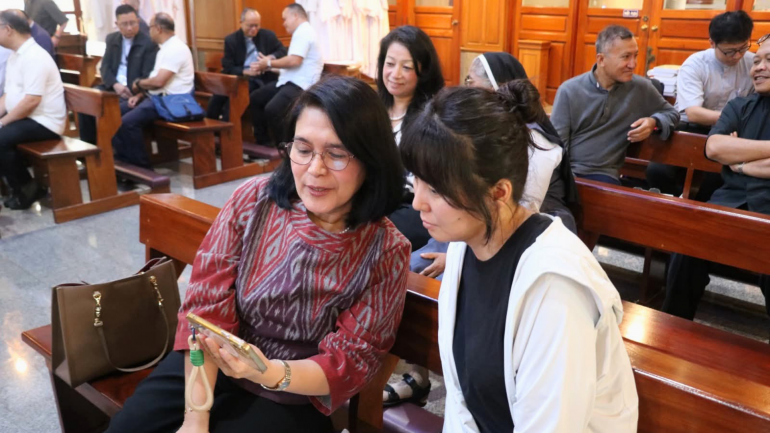
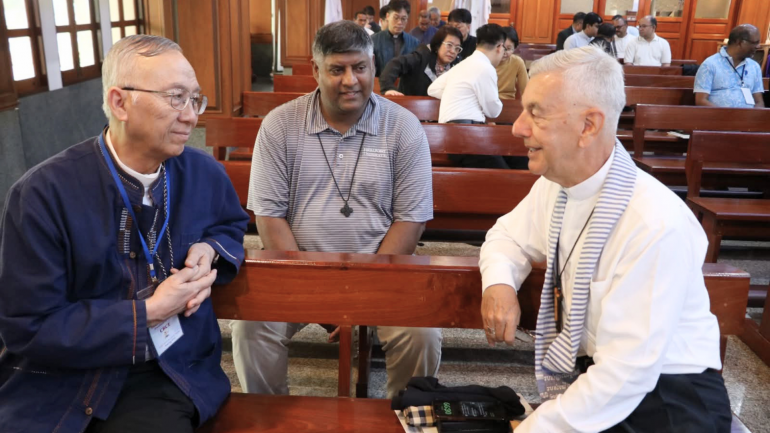
National synodal teams from across Asia began a three-day meeting on September 1 at the Baan Phu Waan Pastoral Training Center in Bangkok, with a call to deepen listening, strengthen participation and prepare local Churches for the next phase of the synodal journey.
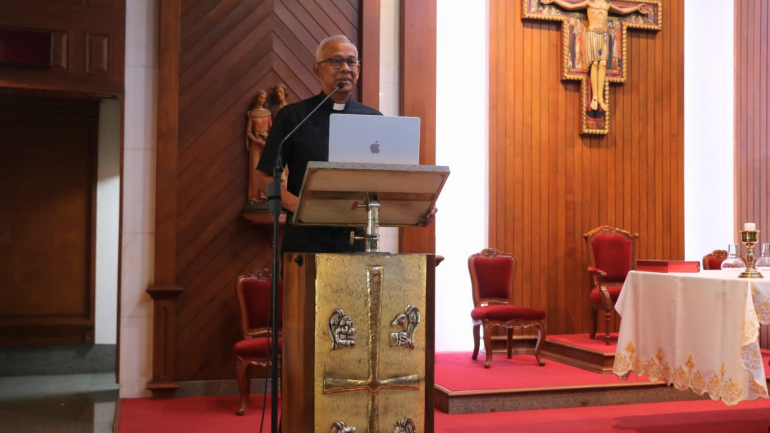
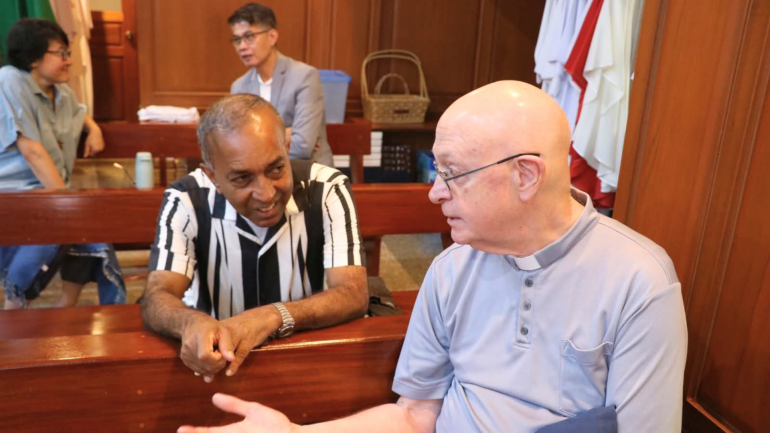
The meeting opened at St. Michael Chapel with an orientation talk by Fr. Clarence Devadass, executive secretary of the Federation of Asian Bishops’ Conferences (FABC) Commission for Synodality.
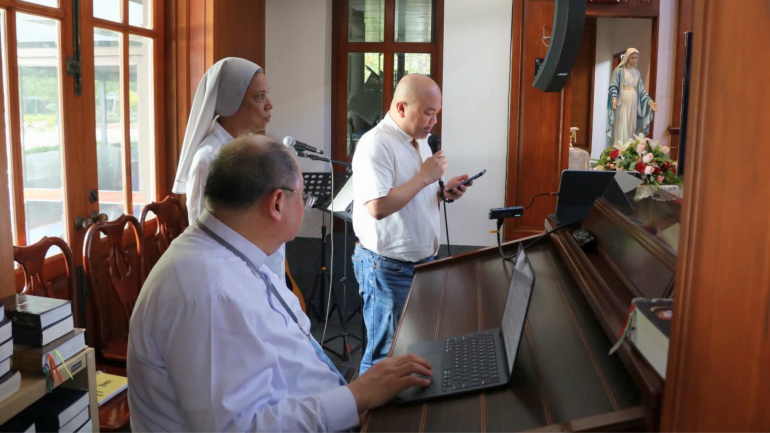
The gathering was preceded by a short prayer session led by delegates from Malaysia. During the prayer, participants briefly shared with one another a word from God that had touched them from the readings, setting a reflective and prayerful tone for the meeting.
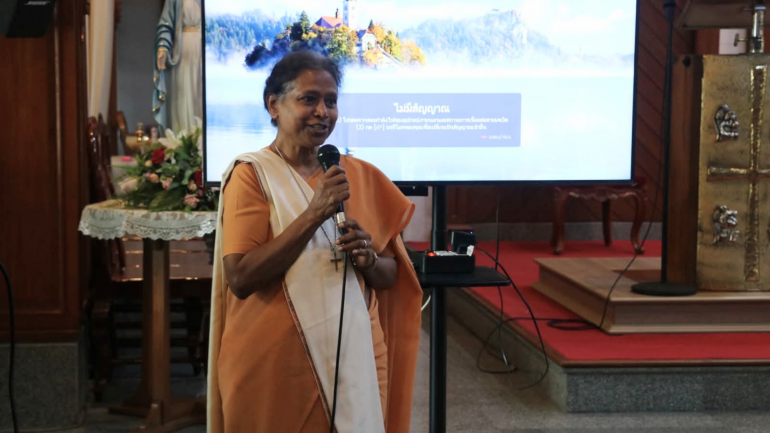
The orientation session was moderated by Sr. Lalitha Thomas, SJT, from India, a member of the FABC Commission for Synodality.
Welcoming the participants, Fr. Devadass said their presence was itself “a sign of hope” for the Church in Asia, showing that the continent’s Catholics continue to seek ways to “walk together, listen together, and discern together” the path to which the Holy Spirit is calling them.
“Synodality begins with some familiarity and hospitality,” he said, encouraging participants to approach the days ahead with joy and openness.
Fr. Devadass outlined four movements that would guide the meeting: reflecting on the fruits already experienced through synodality; identifying continuing challenges; exploring concrete ways the FABC can support local Churches; and preparing for diocesan, national and continental steps toward assemblies in 2027.
Reflecting on the synodal process since the first consultations in 2021, Fr. Devadass highlighted the “remarkable signs of grace” witnessed through the Asian Continental Assembly on Synodality in 2023 and the two sessions of the Synod on Synodality in 2023 and 2024.
Among the most important fruits, he said, was a renewed commitment to authentic listening, particularly to people on the margins, those who feel unheard and those whose experiences may challenge established ways of thinking.
He also pointed to increased participation by lay Catholics, particularly women and young people, saying synodal conversations had enabled many lay leaders to speak more freely and collaborate more intentionally with clergy.
Local initiatives such as listening circles, parish discernment groups, youth dialogues, interreligious encounters and digital consultations, he said, demonstrate that synodality is not simply an abstract concept but “a lived reality” capable of taking root in Asia’s diverse cultural contexts.

At the same time, Fr. Devadass acknowledged significant challenges, including uneven understandings of synodality, insufficient formation, cultural barriers to open dialogue, fatigue and discouragement, and structural limitations such as limited personnel and resources.
“In many Asian contexts, hierarchical relationships, deference to authority, and reluctance to speak openly can hinder honest dialogue,” he said, emphasizing that such realities must be approached with sensitivity.
“Synodality is beautiful, but it is not easy,” he said. “It requires conversion, personal, pastoral, and institutional.”
Yet naming these difficulties, he added, “is not a sign of failure. It is a sign of maturity.”
Looking ahead, Fr. Devadass identified formation, the sharing of best practices, pastoral frameworks, regional collaboration and ongoing evaluation as concrete ways the FABC can accompany local Churches.
He also urged dioceses and national conferences to begin preparing now for the 2027 assemblies by establishing mechanisms for ongoing listening, regular review and structured consultation.
“These assemblies should not be mere reporting exercises,” he said. “They should be genuine moments of shared discernment.”
As the participants began their work, Fr. Devadass invited them to keep the four movements at the center of their reflections: “the fruits we celebrate, the challenges we acknowledge, the support we seek, and the future we prepare for.”
He concluded with a call to prayer and hope: “May we walk together as a Church that listens deeply, discerns faithfully, and journeys with hope.”
Radio Veritas Asia (RVA), a media platform of the Catholic Church, aims to share Christ. RVA started in 1969 as a continental Catholic radio station to serve Asian countries in their respective local language, thus earning the tag “the Voice of Asian Christianity.” Responding to the emerging context, RVA embraced media platforms to connect with the global Asian audience via its 21 language websites and various social media platforms.
Latest News