Asian Synodal Teams Reflect on Where the Spirit is Already at Work in Local Churches


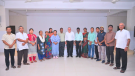
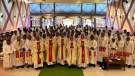
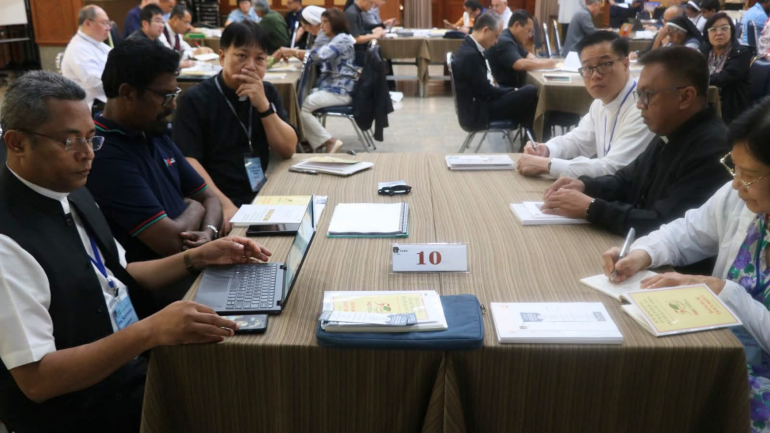
More than 60 members of synodal teams from twenty one countries across Asia took part in a “Conversation in the Spirit,” a synodal methodology designed to help participants discern where God may already be doing “greater things” in their local Churches.
The conversation was part of the September 1 session of the Federation of Asian Bishops’ Conferences (FABC) Meeting of National Synod Teams at the Baan Phu Waan Pastoral Training Center in Bangkok. The September 1–4 gathering brings together representatives from Asian Churches to share experiences of the synodal journey and discern ways forward during the implementation phase of the Synod on Synodality.
The conversation was moderated by Dr. Christina Kheng of Singapore, a member of the FABC Commission for Synodality. Participants were divided into eleven groups, where they were invited to move beyond an exchange of ideas toward prayerful listening and communal discernment.
The basic question came from Cardinal Pablo Virgilio David, chairman of the FABC Commission for Synodality, at the conclusion of his spiritual conference:
“As I look at my own local Church, where might the Lord already be doing ‘greater things’ that I have not yet learned to see, and what conversion in me would make it possible for me to see them?”
The question invited participants to examine their own experience of the Church and their openness to the movement of the Holy Spirit, rather than beginning with plans or solutions.
The guiding material emphasized that synodal teams are not merely operational structures but communities in which an experience of listening and co-responsibility has matured and needs to be preserved and further developed.
The first of three rounds of conversation focused on what emerged from each participant’s prayerful dialogue with God. Participants were reminded that there was no “best answer” and were encouraged to speak honestly from the heart.
Listening was as important as speaking. Participants were asked to give their full attention to whoever was sharing, without interrupting or commenting, while remaining attentive to the person’s words and feelings as well as their own inner movements.
They were also encouraged to receive moments of tension with openness, understanding and a desire to learn, welcoming each contribution as a gift to the group.
After each person spoke, participants reflected on three questions: What did I hear? What struck me? How was I moved? They were also encouraged to examine whether they had listened attentively rather than becoming distracted while preparing their own response.
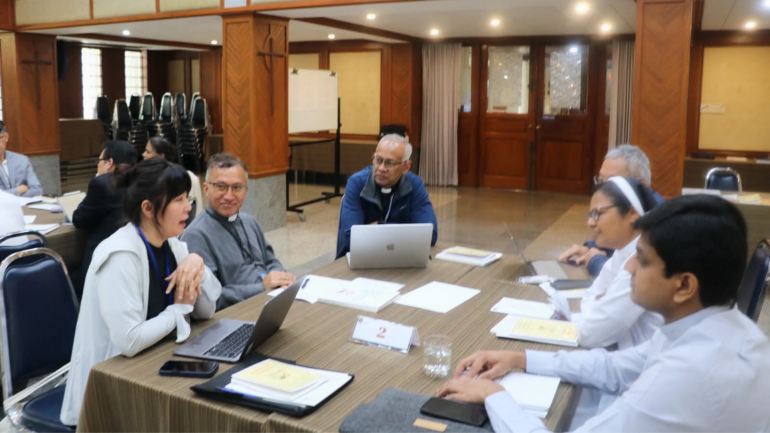
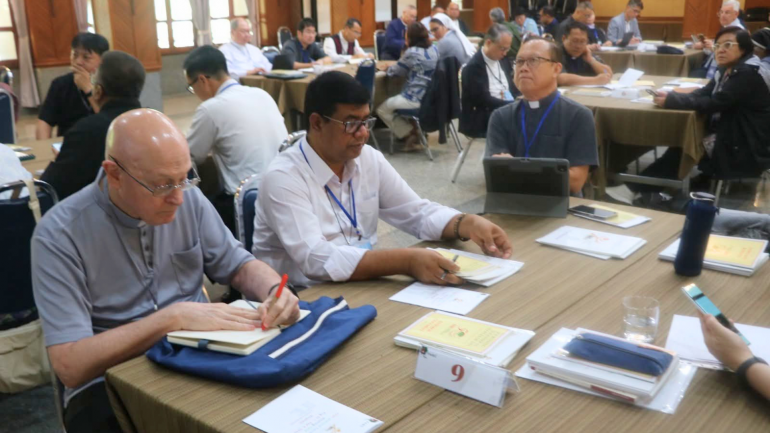
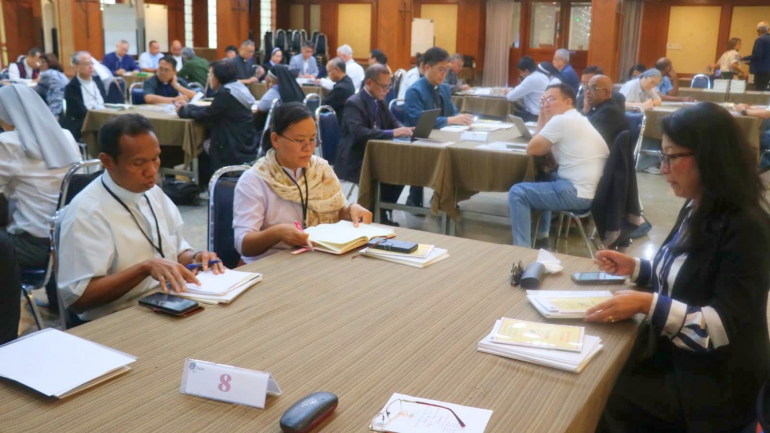
A period of silence followed the first round, allowing participants to consider what had stood out, what had moved or energized them, and what had caused tension and why.
The second round invited participants to share what emerged from this reflection. Each person again had an equal opportunity to speak, without discussion or debate. The process was not intended to provide an opportunity to add points that had been omitted from the first round.
Another period of silence followed, with participants asked to discern what was emerging within the group, areas of resonance, areas of tension and what the Holy Spirit might be saying to them collectively.
In the third round, participants shared the fruits of that discernment, identifying what appeared to be emerging with “good energy,” areas of resonance and tension, and what they believed the Holy Spirit might be saying to the group. The conversation concluded with a review of the experience and an affirmation of its main points.
The process presented listening not simply as a meeting technique but as a spiritual practice through which participants can grow in conversion, communion and shared responsibility.
For the Asian synodal teams, the exercise offered an opportunity to ask whether their local Churches are recognizing where the Spirit is already at work and what personal conversion may be needed to see those signs more clearly.
Radio Veritas Asia (RVA), a media platform of the Catholic Church, aims to share Christ. RVA started in 1969 as a continental Catholic radio station to serve Asian countries in their respective local language, thus earning the tag “the Voice of Asian Christianity.” Responding to the emerging context, RVA embraced media platforms to connect with the global Asian audience via its 21 language websites and various social media platforms.
Latest News