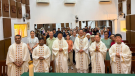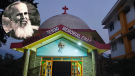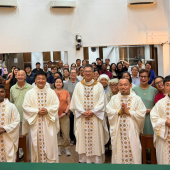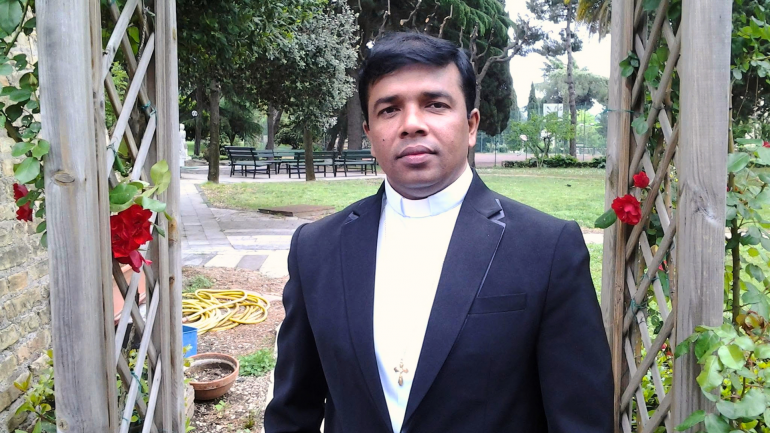
For nearly two decades, Fr. Shankar Dominic Gomes has dedicated himself to forming young minds in northern Bangladesh, convinced that education is not merely about academic success but about shaping responsible and compassionate human beings.
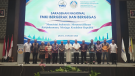
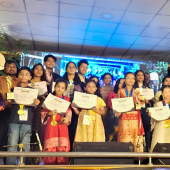
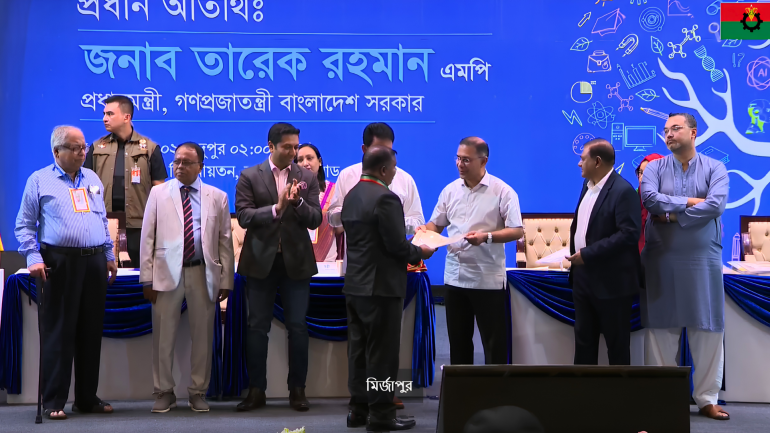
That lifelong commitment recently earned national recognition. Fr. Shankar Dominic Gomes, principal of St. Joseph School and College, Bonpara, Natore, was honored on October 5 as one of Bangladesh's outstanding teachers at a ceremony held at Osmani Memorial Auditorium in Dhaka. Among 100 educators selected from across the country, he received a crest and certificate from Prime Minister Tarique Rahman in recognition of his contributions to education, leadership, and student-centered initiatives.
For the diocesan priest, however, the award represents more than personal achievement.
“Receiving this honor is a unique feeling of joy, pride, emotion, and responsibility,” he said. “Being recognized at the national level is one of the greatest achievements of my life, but it also reminds me of my duty to continue serving students with honesty, dedication, and sincerity.”
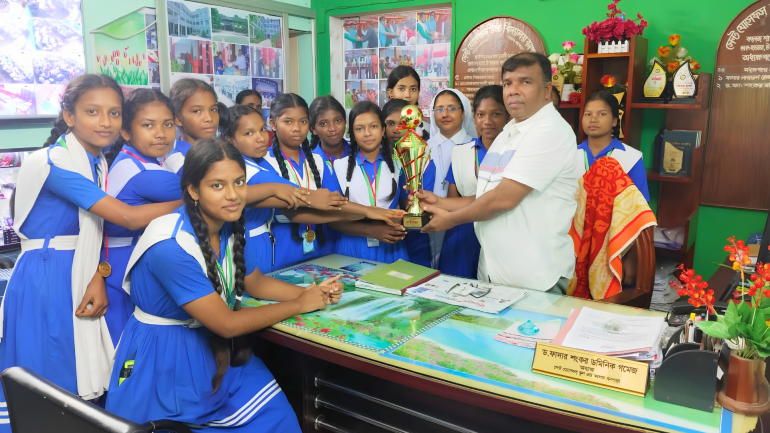
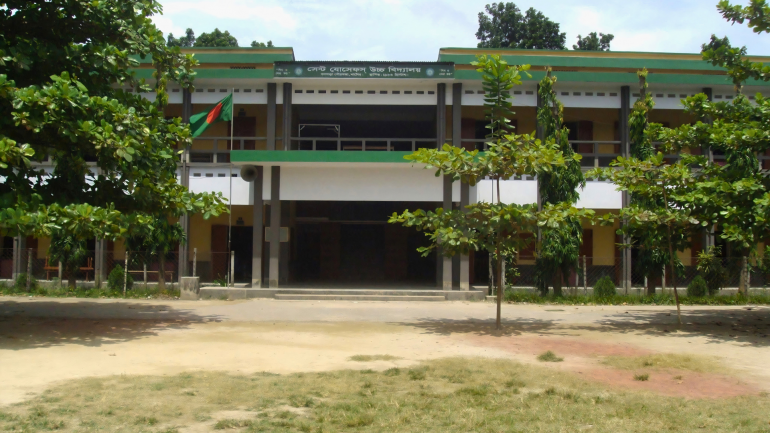
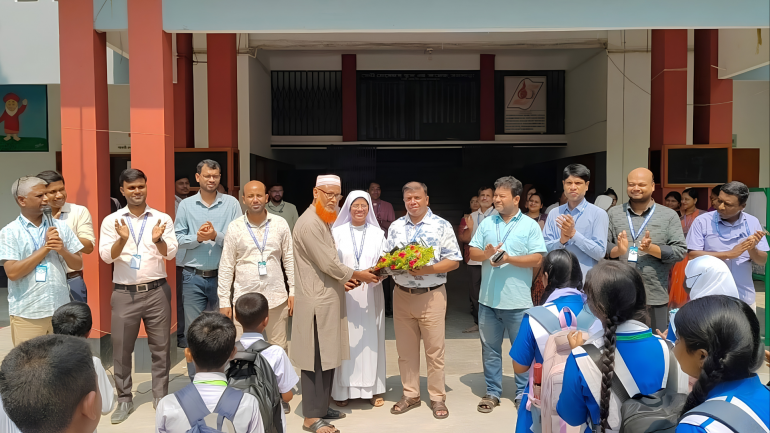
As principal of one of the largest educational institutions in the Rajshahi Diocese, Fr. Gomes oversees a community of around 4,000 students, about 85 percent of whom come from non-Christian backgrounds. The school reflects a longstanding contribution of the Catholic Church to education in Bangladesh, where Church-run institutions are widely respected for academic excellence, discipline, and values-based formation.
Teaching, Fr. Gomes said, has always been a vocation rather than simply a career.
“Through this noble profession, I can teach others and also learn myself,” he explained. “That is why I love teaching.”
Since beginning his career in 2007, he has witnessed significant changes in students' lives and learning habits. He recalls a time when mobile phones had little influence on classrooms and students were generally more focused on their studies.
According to him, the COVID-19 pandemic marked a turning point.
“Students became accustomed to learning through mobile phones during online classes,” he said. “Since then, many spend more time on social media and have become less attentive to their studies. Some want quick results without putting in the necessary effort.”
Like many educators across Bangladesh, Fr. Gomes sees new challenges emerging in an increasingly digital age. He noted that teachers often struggle to maintain students' attention and encourage disciplined study habits. He also expressed concern about a growing dependence on private tutoring and exam-oriented shortcuts.
Yet his response is not punishment but encouragement.
“We do not use physical or mental punishment,” he said. “Instead, we motivate students and help them understand their potential. If they study well, they can build a good future for themselves.”
To support students beyond academics, the school has established counseling services where young people can receive guidance on personal and educational challenges. Teachers also work closely with families, conducting home visits and organizing parent-teacher meetings to strengthen relationships between the school and the wider community.
Fr. Gomes credits part of this approach to his years of higher education in the Philippines. He earned a master's degree in Educational Leadership and Management from the University of Santo Tomas and later completed a doctorate at De La Salle University in Manila.
While studying there, he was impressed by the warm and respectful relationships between teachers and students.
“I tried to introduce the same culture in Bangladesh,” he said. “Teachers should educate students with love rather than anger. Motivation is more effective than fear.”
That philosophy extends to the school's broader mission. Alongside academic instruction, students are encouraged to develop moral character, honesty, discipline, social responsibility, and respect for others. Students are also supported in practicing their own faith traditions, reflecting the school's commitment to religious harmony and inclusion.
“Education should not only help students achieve good results,” Father Gomes said. “It should help them become honest, responsible, humane, rational, patriotic, and self-reliant citizens.”
His work has also benefited from strong cooperation with local government officials and community leaders.
“We have a very cordial relationship with the local administration,” he said. “Whenever we need support, they are willing to help.”
As Bangladesh marked World Teachers' Day on October 5, Fr. Gomes called on all stakeholders to share responsibility for education.
“The dignity of teachers has always existed and will continue to exist,” he said. “Teachers must fulfill their responsibilities, students should apply what they learn in their daily lives, and parents should remain actively involved in their children's education.”
Reflecting on his journey, Father Gomes returned to a theme that has guided his life and ministry.
“To me, teaching is never just a profession,” he said. “It is a great responsibility, a moral commitment, and a unique opportunity to build human beings.”
In a rapidly changing society, he believes that commitment remains as important as ever. For the priest-educator, every classroom is not only a place of learning but also a space where futures are formed, values are nurtured, and hope is passed on to the next generation.
Radio Veritas Asia (RVA), a media platform of the Catholic Church, aims to share Christ. RVA started in 1969 as a continental Catholic radio station to serve Asian countries in their respective local language, thus earning the tag “the Voice of Asian Christianity.” Responding to the emerging context, RVA embraced media platforms to connect with the global Asian audience via its 21 language websites and various social media platforms.
Latest News