

Born into Muslim Family, Indonesian Brother Marks 25 Years of Service to the Vulnerable

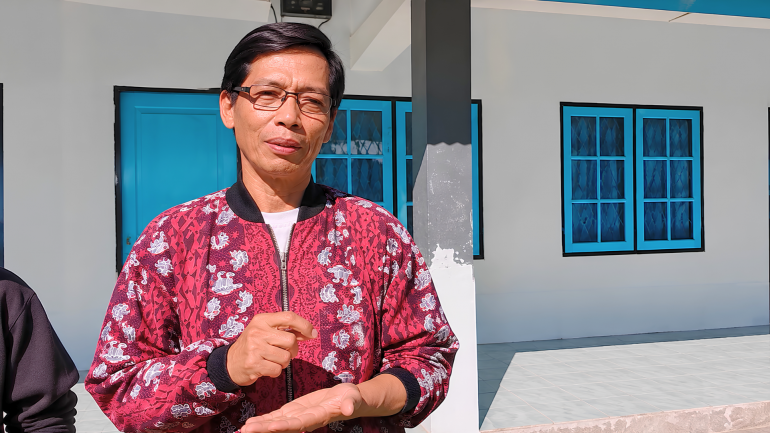
From the family of a Muslim religious leader in Yogyakarta, Indonesia, Brother Honorius Suyadi, FC, has taken an unexpected journey of faith that led him to dedicate 25 years of religious life to serving people marginalized by society.
A member of the Brothers of Charity, Brother Honorius has spent much of his ministry accompanying people with mental health conditions, people living with HIV and AIDS, and those struggling with drug addiction. His work has taken him across three Indonesian communities, where he has sought to make God's love tangible through compassionate care and personal accompaniment.
“God is love,” he said, describing the spirituality that guides his ministry. For him, this conviction means recognizing God's presence in every person, particularly those who experience rejection, stigma, and social isolation.
Brother Honorius was born in 1971 into a Muslim family in Yogyakarta, a city in central Java known for its cultural and religious heritage. His father was a kiai, a Muslim religious leader responsible for guiding the local community and overseeing religious practices, including funeral rites.
The family's transition to Christianity began when his mother became interested in Catholic worship after observing Catholic neighbors praying in Javanese. Inspired by their prayer, she decided to embrace Catholicism and shared her desire with her husband.
Although initially hesitant because of his position in the Muslim community, his father eventually agreed to accompany his wife in her decision. Their conversion, however, met opposition from some local residents. The family subsequently sold their land in Java and relocated to Seputih Banyak in Central Lampung, on the Indonesian island of Sumatra.
There, both parents entered the Catholic catechumenate and received formation before embracing the faith. His father later became a volunteer catechist, accompanying priests on pastoral visits to parishes and mission communities.
Growing up in this Catholic family, Brother Honorius gradually developed his own connection with the Church and began discerning a religious vocation.
After completing senior high school in 1995, he initially pursued the priesthood and entered St. Peter's Minor Seminary in Palembang, the capital of South Sumatra. During his formation, however, he became interested in religious congregations working in different areas of ministry.
His attention turned to the Brothers of Charity after he encountered an advertisement about the congregation in Hidup, an Indonesian Catholic magazine. Encouraged by his seminary rector, he applied and began his postulancy in Yogyakarta in 1997.
Of eight applicants, five were accepted. His formation subsequently brought him to Belgium for an international novitiate. Although language difficulties led two of the five postulants to withdraw, Brother Honorius and two companions persevered, attending language classes and completing the selection process.
In 2001, the three made their first religious profession, formally beginning their lives as Brothers of Charity.
His ministry began at Kunci, a social service institution in Yogyakarta that assists people with mental health conditions, those living with HIV and AIDS, and people struggling with drug addiction. Together with Brother Mikael and other religious brothers, he served there for approximately five years.
He was subsequently assigned to Panti Sahabat Kita in Purworejo, Central Java, another institution providing care for people with mental health conditions, where he spent about five years.
In February 2017, he was transferred to Renceng Mose in Ruteng, on the island of Flores in East Nusa Tenggara province, where he continues his ministry.
Among the experiences that have shaped his vocation is accompanying people with mental health conditions, many of whom face discrimination and are considered incapable of recovery.
Brother Honorius said that appropriate treatment, regular medication, and a supportive environment can help many people achieve greater stability and regain their ability to participate in daily life.
He recalled how some people initially arrive at the institution frightened, restless, and unable to communicate. Through patient interaction, gentle gestures, smiles, and consistent attention, they gradually develop trust in those caring for them.
Some eventually participate in prayer, share their personal struggles, and rebuild relationships with others. Brother Honorius seeks to become a father, mother, or sibling figure to those under his care, helping them experience the acceptance and security often missing from their lives.
“Anyone can experience mental health problems,” he said, urging society not to treat such conditions as grounds for exclusion.


He has also witnessed patients gradually regain everyday skills after receiving treatment. Some begin communicating again, working, tending gardens, and caring for animals. Although recovery does not always mean a complete cure, he said, consistent treatment and support can help people lead more stable and meaningful lives.
Providing this care, however, presents significant challenges. Limited personnel and financial resources make it difficult to meet the needs of some patients, particularly those requiring specialized medication that is not readily available in ordinary pharmacies.
The brothers sometimes have to order medicines through pharmaceutical distributors, increasing treatment costs. When expenses exceed the institution's capacity, they seek additional assistance to ensure that patients continue receiving medication.
Brother Honorius also recalled the difficulty of caring for patients who refuse medication because of symptoms associated with their conditions.
In one instance, a patient repeatedly rejected his medicine, throwing it away or spitting it out. The brothers eventually discovered that he liked mung bean porridge and found a way to administer the prescribed medication with the food. With continued care, the patient gradually became calmer and more willing to take his medicine.
For Brother Honorius, such experiences reinforce the importance of patience, creativity, and compassion in caring for people with mental health conditions.
After 25 years of religious life, he said his greatest satisfaction comes not from material possessions or recognition but from witnessing people regain their ability to live with dignity and reconnect with their families.
He recalled patients who had initially been brought to the institution under police or military escort because of aggressive behavior. After three or four months of treatment and care, some were able to return home without such assistance.
Seeing families arrive to take their loved ones home, sometimes traveling by motorcycle, remains among his most rewarding experiences.
“The people we serve truly reveal the face of God,” he said.
Brother Honorius encourages young people to explore religious life, particularly the vocation of a religious brother, and not to be afraid of discerning a life dedicated to service.
The Brothers of Charity, whose international headquarters is in Rome, carries out its mission in 32 countries. He invites those interested in its work to visit the congregation's communities and experience its ministry firsthand.
For Brother Honorius, the purpose of his vocation remains unchanged: to recognize the dignity of every person and make God's love visible through practical acts of care, acceptance, and accompaniment.
“The work I do may seem difficult, but when it is done with love and compassion, it becomes lighter,” he said.
Radio Veritas Asia (RVA), a media platform of the Catholic Church, aims to share Christ. RVA started in 1969 as a continental Catholic radio station to serve Asian countries in their respective local language, thus earning the tag “the Voice of Asian Christianity.” Responding to the emerging context, RVA embraced media platforms to connect with the global Asian audience via its 21 language websites and various social media platforms.
Latest News