Can We See Others as Jesus Sees Them? Cardinal David Calls Asian Synod Teams to a Conversion of Seeing

Can Christians learn to see people beyond the labels, prejudices and assumptions they carry about them?
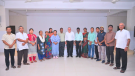
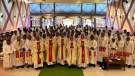
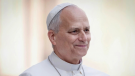
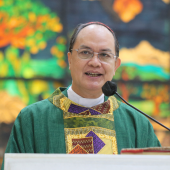
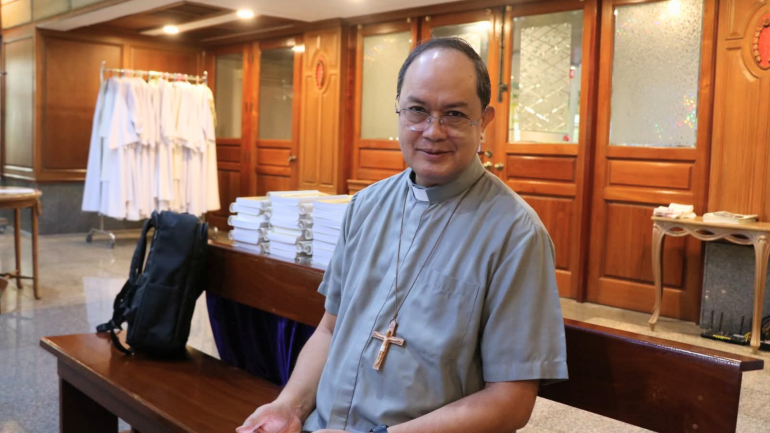
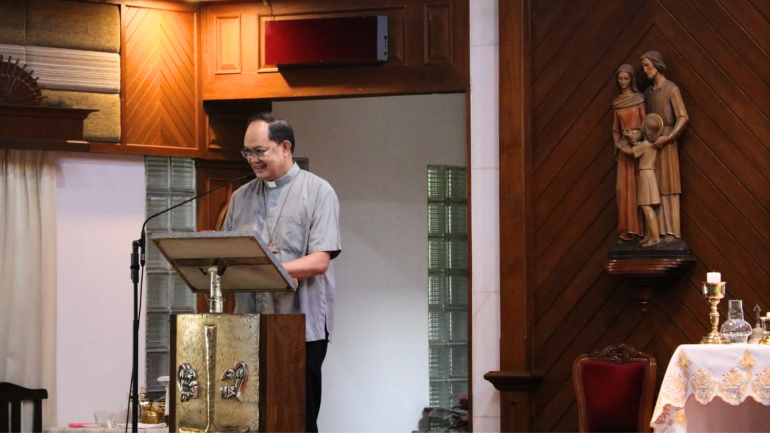
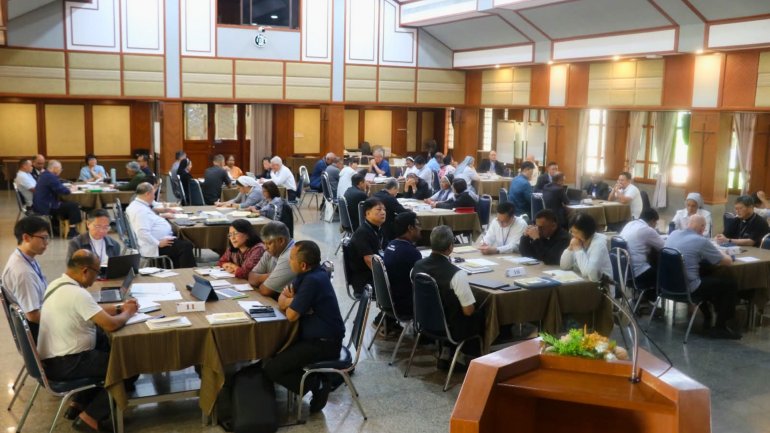
Cardinal Pablo Virgilio David placed this question at the heart of the first movement of synodal conversion as he addressed members of National Synod Teams from across Asia during a spiritual conference at St. Michael Chapel, Baan Phu Waan, Samparan, Thailand, on September 1.
During the hour-long conference, Cardinal David reflected on three movements of conversion emerging from the 12th Plenary Assembly of the Federation of Asian Bishops’ Conferences (FABC), held in Jakarta in July. The first, he said, is a conversion of seeing, moving from prejudices and preconceptions to learning to see as Jesus sees.
Cardinal David based his reflection on the encounter between Jesus and Nathanael in John 1:45-51. When Philip tells Nathanael that they have found Jesus of Nazareth, Nathanael responds, “Can anything good come from Nazareth?”
For Cardinal David, Nathanael's reaction illustrates how quickly people can form judgments before encountering others.
“He has not even met Jesus, and already he has an opinion about him,” Cardinal David said.
Jesus responds differently. Rather than returning the insult, he recognizes something good in Nathanael: “Here is truly an Israelite in whom there is no deceit!”
Nathanael sees a Nazarene; Jesus sees a true Israelite.
This contrast, Cardinal David said, points to the beginning of synodal conversion. Jesus does not begin with Nathanael's prejudice but with his possibility. He sees beyond the dismissive remark and recognizes the genuine seeker beneath it.
The cardinal challenged participants to examine their own ways of seeing: Can we see grace at work in people with whom we disagree? Can we recognize the presence of the Spirit outside the circles where we normally expect to find the Spirit? Can we recognize in people considered insignificant something God wants the Church to hear?
Cardinal David also stressed the difference between being looked at and being truly seen. The poor can be reduced to statistics, migrants to labor, young people to problems, women to expected functions and Indigenous peoples to minorities. People of other religions can likewise be viewed simply as those who do not share the Christian faith.
Such labels can prevent genuine encounter.
The Gospel offers another image when Jesus tells Nathanael, “I saw you under the fig tree before Philip called you.” Nathanael realizes that he has been seen.
For Cardinal David, the Church's deeper conversion is to become a community where people can say: “I have been seen. We see you. We hear you. Your story matters.”
This has particular relevance for the Church in Asia, where National Synod Teams work amid diverse cultures, religions and social realities. The participants at the FABC Plenary Assembly came from Churches with very different circumstances, including countries where Christians are a majority and others where they are a small minority. They also carried different assumptions about the Church, mission, Asia and synodality.
Cardinal David therefore returned to Philip's invitation to Nathanael: “Come and see.”
For the National Synod Teams, this means creating spaces where women, young people, the poor and those at the margins are not merely represented but genuinely heard. In Asia's religiously plural societies, it also means encountering Buddhist, Muslim, Hindu and other religious neighbors not simply as objects of mission, but as fellow pilgrims who share the joys and wounds of common humanity.
The conversion, Cardinal David said, begins before structures, meetings or pastoral plans.
It begins in the eyes.
The challenge for synodal leaders is therefore not only whether they are willing to listen, but whether they are willing to see people differently recognizing the Nathanaels they may have prematurely judged and the quiet work of God's grace in people and places they might otherwise overlook.
Radio Veritas Asia (RVA), a media platform of the Catholic Church, aims to share Christ. RVA started in 1969 as a continental Catholic radio station to serve Asian countries in their respective local language, thus earning the tag “the Voice of Asian Christianity.” Responding to the emerging context, RVA embraced media platforms to connect with the global Asian audience via its 21 language websites and various social media platforms.
Latest News