Caritas Philippines, the social action arm of the Catholic Bishops’ Conference of the Philippines (CBCP), has raised strong concerns over the Talim Wind Power Project in Rizal, warning that renewable energy must never come at the expense of communities and creation.
The project, which proposes 34 wind turbines across 3.4 million square meters in Binangonan and Cardona, has been touted as a step toward clean energy transition.
Yet Caritas emphasized that the Church supports renewable energy only when it upholds justice, ecological integrity, and meaningful participation in a statement issued August 6.
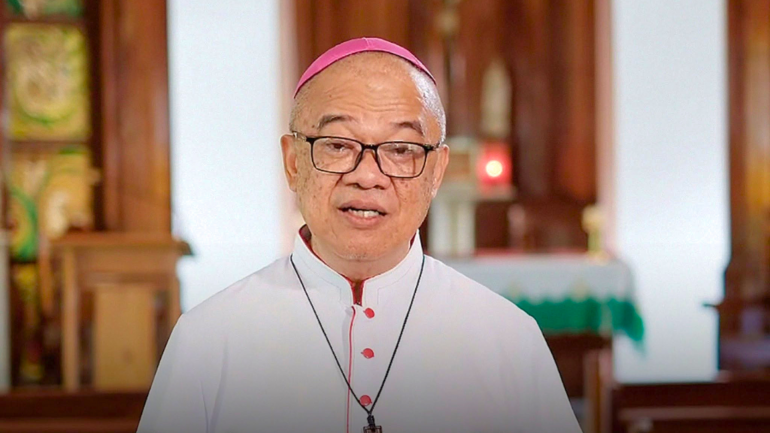
“Clean energy must protect communities and creation,” said Bishop Gerardo Alminaza, president of Caritas Philippines, stressing that the transition from fossil fuels cannot be pursued at the cost of local livelihoods, biodiversity, and safety.
Among the issues raised were tree cutting, flooding risks, erosion, and threats to fishing grounds and farms on Talim Island.
Caritas called for independent verification of environmental impacts, full disclosure of permits and hazard studies, and genuine consultation with residents before any construction proceeds.
“It is not enough to claim sustainability while silencing communities,” he warned. “Transparency, subsidiarity, and accountability are non-negotiable in projects that reshape local landscapes.”
The statement also urged suspension of all activities related to the wind farm until compliance is ensured.
Caritas outlined requirements including public release of environmental assessments, monitoring reports, and risk-management plans.
It further called for an independent study of effects on flooding, drainage, biodiversity, and community safety.
Bishop Alminaza underscored the moral dimension of energy development: “Justice, participation, and protection must guide our path. Renewable energy without these values is no true transition.”
Caritas advocated for community-led alternatives such as solar rooftops and micro-hydro systems, which it said better embody the principles of subsidiarity and ecological stewardship.
These distributed solutions, the group noted, empower households and local communities while reducing reliance on large-scale corporate projects.
The statement concluded with a call for vigilance and solidarity, urging Filipinos to demand energy systems that honor both the climate and the people most affected.
“We must ensure that the promise of clean energy is not betrayed by injustice,” he said.
Radio Veritas Asia (RVA), a media platform of the Catholic Church, aims to share Christ. RVA started in 1969 as a continental Catholic radio station to serve Asian countries in their respective local language, thus earning the tag “the Voice of Asian Christianity.” Responding to the emerging context, RVA embraced media platforms to connect with the global Asian audience via its 21 language websites and various social media platforms.
Latest News