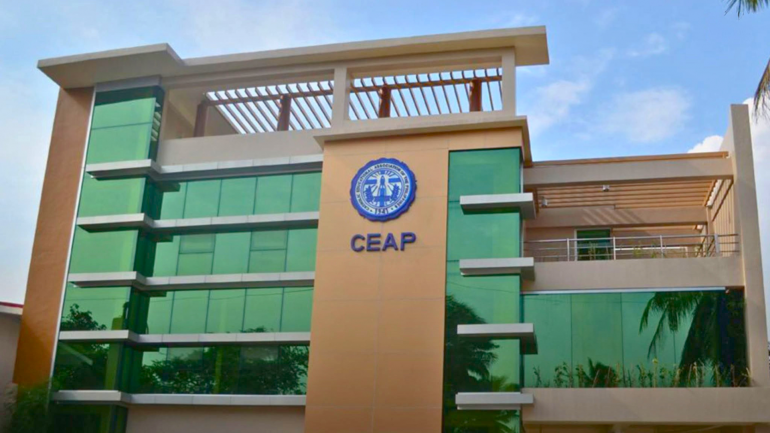
The Catholic Educational Association of the Philippines (CEAP), the country's largest network of Catholic schools, has joined growing Church calls for transparency and public accountability over the proposed Pax Silica Project, urging the government to address concerns through responsible governance, environmental stewardship, and meaningful community participation.
The statement, released on August 3, comes days after Cardinal Pablo Virgilio David publicly called for ethical scrutiny of the project, saying technological development must strengthen local capabilities while serving the common good.
CEAP said public skepticism toward the project stems from the Philippines' experience with past extractive industries that promised economic growth but often resulted in environmental degradation, weak regulatory oversight, and limited long-term benefits for local communities.
"These concerns should not be dismissed as opposition to development but recognized as important questions about intergenerational equity, environmental sustainability, and national economic strategy," the association said.
The proposed Pax Silica Project aims to position the Philippines as a major global supplier of high-purity silica, a critical material used in semiconductor wafers, fiber-optic cables, photovoltaic cells, and other technologies supporting artificial intelligence, renewable energy, and advanced manufacturing.
Government projections estimate the initiative could attract between US$40 billion and US$70 billion in investments and generate more than 130,000 skilled jobs for engineers, scientists, technicians, researchers, and other professionals.
While acknowledging the project's economic potential, CEAP said past experience has shown that resource extraction alone does not guarantee sustainable national development.
The association called for greater transparency throughout the project's implementation, independent environmental monitoring, meaningful public consultation, equitable sharing of benefits with host communities, and firm commitments to local processing and value-added industries rather than exporting raw materials.
Drawing on international experience, CEAP said countries derive the greatest long-term value from strategic mineral resources by investing not only in extraction but also in manufacturing, research, innovation, workforce development, and strong public institutions.
"The long-term success of high-purity silica development depends less on the resource itself than on the strength of governance, regulatory institutions, environmental stewardship, and industrial policy," the association said.
CEAP added that responsible governance and sustained public trust will be crucial if the project is to contribute to national development while protecting communities and the environment.
The statement reflects the Catholic Church's growing engagement with the ethical and social implications of emerging technologies, emphasizing that economic development should always uphold human dignity, environmental responsibility, and the common good.
Radio Veritas Asia (RVA), a media platform of the Catholic Church, aims to share Christ. RVA started in 1969 as a continental Catholic radio station to serve Asian countries in their respective local language, thus earning the tag “the Voice of Asian Christianity.” Responding to the emerging context, RVA embraced media platforms to connect with the global Asian audience via its 21 language websites and various social media platforms.
Latest News