Catholic Schools Can Form Students as ‘Synodal Missionaries,’ Says Top Philippine Prelate

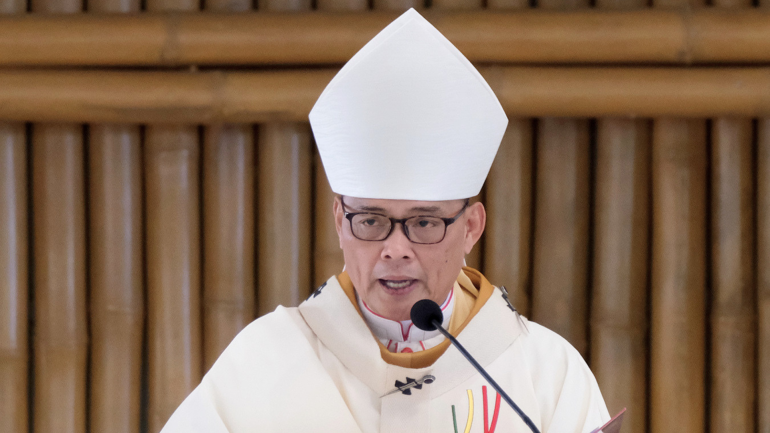
Catholic schools should become “laboratories of synodality” where young people are heard, trusted and given opportunities to lead, the president of the Catholic Bishops’ Conference of the Philippines (CBCP) said August 10.
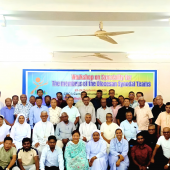
Speaking at the Catholic Educational Association of the Philippines’ Superintendent’s Academy in Quezon City, Archbishop Gilbert Garcera urged Catholic educators to move beyond teaching synodality as a concept and create school communities where students can experience and practice communion, participation and mission.
“I propose that our Catholic schools become laboratories of synodality, living environments where young people do not merely learn about communion, participation, and mission, but actually experience and practice them,” Archbishop Garcera said in his keynote address.
The archbishop called on schools to take students’ questions and experiences seriously and give them meaningful opportunities to participate in decisions affecting their communities. He proposed student-led listening circles, synodal conversations, peer accompaniment, service initiatives, formation groups and discernment gatherings as practical ways of involving young people.
“If we truly believe that young people are the ‘now’ of God, then we must not treat them merely as recipients of formation,” he said. “They must also become participants and co-responsible protagonists in the mission of our schools and of the Church.”
He challenged school leaders to examine whether students have a genuine voice, whether their concerns are heard and whether they are entrusted with meaningful responsibilities.
Schools that practice synodality can help young people develop the ability to listen, discern, collaborate, lead and serve the Church and wider society, he said.
“These young people can become the synodal missionaries that the Church needs,” Archbishop Garcera said, describing them as young people rooted in Christ and attentive to the poor and vulnerable.
Archbishop Garcera described synodality as a way of being Church centered on communion, participation and mission, in which leadership is understood as service rather than the exercise of authority.
“A synodal leader does not ask only, ‘Who has authority?’ but also, ‘How can I serve?’” he said.
He encouraged Catholic schools to study the final document of the Synod on Synodality as part of ongoing formation for educators, school leaders and students.
The archbishop also urged Catholic schools to respond to artificial intelligence, digital culture and the constant flow of information shaping young people’s lives.
Schools should cultivate patience, reflection, critical thinking, meaningful dialogue and trustworthy relationships rather than simply follow the speed of digital technology, he said. He also called for the formation of responsible technology users who can eventually serve as “digital catechists” and contribute to the Church’s evangelizing mission.
For Archbishop Garcera, Catholic education must go beyond academic achievement to form missionary disciples prepared for service, vocation and life.
“A Catholic school is not merely an institution,” he said. “It is an ecclesial community of communion, participation and mission.”
He urged educators to see teaching as a vocation and ministry that participates in Christ’s mission, helping Catholic schools become communities of hope where young people encounter Christ and learn to serve others
Radio Veritas Asia (RVA), a media platform of the Catholic Church, aims to share Christ. RVA started in 1969 as a continental Catholic radio station to serve Asian countries in their respective local language, thus earning the tag “the Voice of Asian Christianity.” Responding to the emerging context, RVA embraced media platforms to connect with the global Asian audience via its 21 language websites and various social media platforms.
Latest News