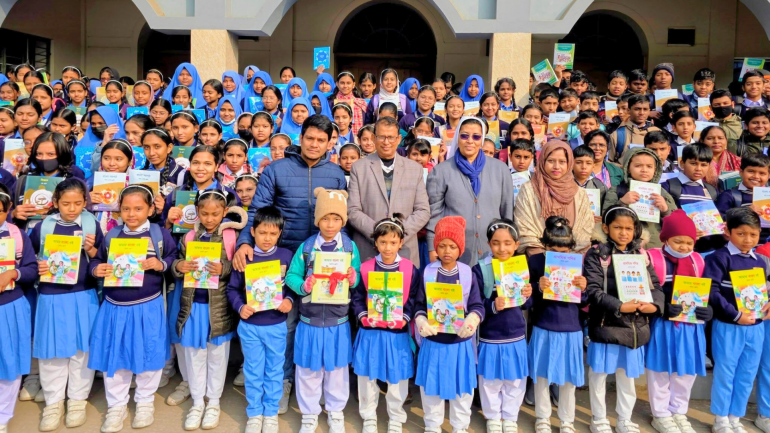
A wave of controversy has swept across Bangladesh following the government’s announcement that the long-standing lottery system for school admissions will be abolished. The decision, revealed by Education Minister ANM Ehsanul Haque Milon, has sparked intense public debate, raising concerns among parents, education experts, and child rights advocates who fear it will place new academic burdens on young students.
For years, Bangladesh relied on a digital lottery system to admit students from Class One to Nine in both government and private schools. Introduced to reduce influence, favoritism, and corruption in admissions, the system was seen as a way to ensure equal opportunities for children regardless of background.
The process gained further importance during the COVID-19 pandemic, when digital lotteries became the standard for all government schools.
The new policy, which calls for reintroducing entrance exams, has been met with strong criticism. Many parents argue that children aged five to seven should not be pushed into academic competition at such an early stage. They say Class One should remain a stress-free entry point into school life, as envisioned in the National Education Policy 2010.
Educationists echo these concerns. They warn that a test-based admission system for early grades could intensify pressure on young children and revive an aggressive private coaching culture that the lottery system had helped reduce. Some fear the return of a highly commercialized admission season dominated by coaching centers.
The minister, however, has defended the move. Speaking at the Secondary and Higher Education Department in Dhaka, he said the lottery “cannot be part of any education system,” insisting that admission tests will be simple and appropriate for children. He dismissed fears of a coaching boom and pledged that the government would monitor any misuse of the system. “We will not try to make neurosurgeons in Class One,” he said, adding that the state would create “in-house coaching” if necessary to counter commercialization.
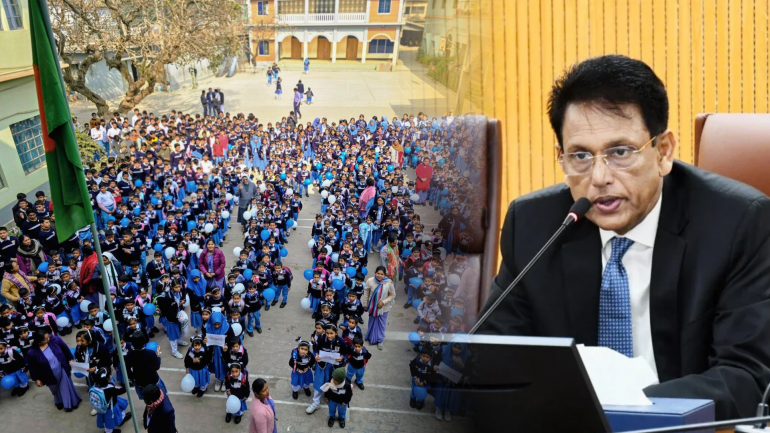
His explanation, however, has not eased public frustration. Social media discussions surged after the announcement, with teachers, researchers, and parents voicing their concerns. While many do not necessarily support keeping the lottery system, they insist that children should not be drawn into competitive exams at the very start of their education.
Some have proposed a “catchment area” model, where children would attend the school closest to their homes. Advocates say this would reduce competition and eliminate the need for both tests and lotteries. They also argue that the government should ensure equal quality across schools so parents feel confident sending their children to local institutions.
Cornelius D’Cruze, vice principal of Heed International School, suggested a mixed approach. He supports lotteries for kindergarten and Class One, with exams introduced from Class Two onward. He warned that without such safeguards, children from privileged backgrounds, those who can afford coaching, will dominate admissions to top schools.
“Everyone has the right to education,” he said. “If admission depends on tests from the beginning, only children with special preparation will succeed, and others will be left behind.”
“I don’t want my five-year-old son to sit for an admission test at the very start of his schooling. I urge the education minister to reconsider this decision,” said Puspa Rozario, a Catholic mother in Dhaka.
The debate remains far from settled. As the government prepares to implement the new policy, families across Bangladesh are watching closely, hoping for an approach that protects children’s well-being while ensuring fairness in access to education.
Radio Veritas Asia (RVA), a media platform of the Catholic Church, aims to share Christ. RVA started in 1969 as a continental Catholic radio station to serve Asian countries in their respective local language, thus earning the tag “the Voice of Asian Christianity.” Responding to the emerging context, RVA embraced media platforms to connect with the global Asian audience via its 21 language websites and various social media platforms.
Latest News