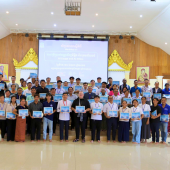


“Digital Highways Are Waiting,” FABC Social Communication Head Tells Asian Digital Missionaries


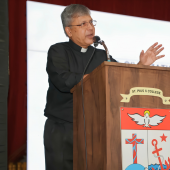
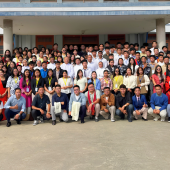
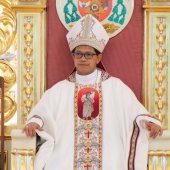
“The digital highways are waiting,” Bishop Marcelino Antonio “Junie” Maralit Jr., chairman of the FABC Office of Social Communication, told more than 100 Catholic digital missionaries gathered in the Philippines for the First Asian Catholic Digital Missionary Assembly.
Bishop Maralit made the call during his keynote address, “From Algorithm to Altar: Weaving a Synodal Network of Witnesses in the Digital Peripheries of Asia,” on September 11 at the Pope John Paul II Auditorium on the Radio Veritas Asia (RVA) campus in Quezon City.
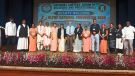
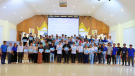
His keynote was the first major event on the second day of the four-day assembly, which runs from September 10–13 under the theme “Influencers to Witnesses: Synodal Way for Digital Mission in Asia.” The assembly is hosted by RVA in collaboration with the FABC Office of Social Communication, bringing together digital missionaries, communicators and influencers from across Asia.
Bishop Junie began by pointing to a reality confronting the Church across the region: people are already living, searching, forming relationships and seeking meaning in digital spaces.
“The debate is over. The Church is already there,” he said, emphasizing that the question is no longer whether the Church should enter the digital world, but what kind of Church people will encounter when they meet it there.
He urged participants to move beyond an approach centered on producing content and measuring success through views, likes and followers.
Instead, digital mission must become a synodal journey of listening, encounter, discernment and community-building.
For Bishop Junie, digital content should not simply project the missionary's personality or build a personal brand. It should open a door to Christ and help people encounter the Gospel through authentic Christian witness.
He encouraged participants to “open the door and present the thread,” allowing their presence on digital platforms to plant seeds of faith and lead people toward deeper encounters with Christ.
The challenge is particularly significant in Asia, where digital communities reflect a vast diversity of cultures, languages, religions and social realities. Bishop Maralit described Asia as a “living symphony” whose digital mission must remain rooted in dialogue with cultures, religions and the poor.
He also contrasted the logic of the digital attention economy with the logic of the Gospel.
Algorithms often reward speed, novelty, controversy and content that keeps people online. The Gospel, by contrast, calls for patience, closeness, compassion and relationships that lead to transformation.


This means that digital missionaries must resist becoming part of the noise of the internet and instead create spaces where people can encounter one another and discover the presence of God.
Bishop Junie presented four elements of a synodal methodology for digital mission: listen first, seek encounter, practice discernment and empower the laity.
He also proposed five conversions for digital missionaries: moving from content to encounter, audiences to communities, virality to fidelity, competition to collaboration, and influence to witness.
The shift from influence to witness, he said, means that credibility should come not primarily from production quality or audience size but from fidelity to Christ and the authenticity of Christian life.
“Social media is an appetizer; Eucharist is the destination,” he said, underscoring that digital evangelization should ultimately lead people beyond online engagement toward real Christian community and sacramental life.
As the keynote concluded, Bishop Junie sent the participants with a clear mission: “The digital highways are waiting.”
“Go with the wisdom of the heart, stand up for human dignity, and tell the beautiful stories of faith in Asia,” he said.
The goal, he added, is for people in Asia's digital spaces to encounter not merely another influencer, but “a true community, and ultimately, the living face of Jesus Christ.”
Radio Veritas Asia (RVA), a media platform of the Catholic Church, aims to share Christ. RVA started in 1969 as a continental Catholic radio station to serve Asian countries in their respective local language, thus earning the tag “the Voice of Asian Christianity.” Responding to the emerging context, RVA embraced media platforms to connect with the global Asian audience via its 21 language websites and various social media platforms.
Latest News