East and Central Asian Synodal Teams Call for Regular Lay Exchanges, Multilingual Resources

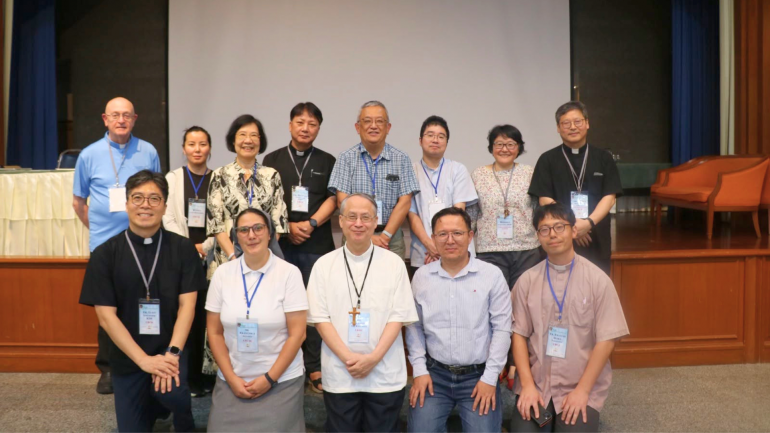
East and Central Asian synodal team members have called for regular regional exchanges among lay leaders and greater access to synodality resources in local languages, saying stronger relationships are needed to sustain the synodal journey across the region.
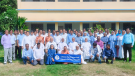
The proposals came from more than 10 delegates in the East and Central Asia regional group during the National Synodal Teams Meeting in Bangkok, held September 1–3 at the Baan Phu Waan Pastoral Training Center.
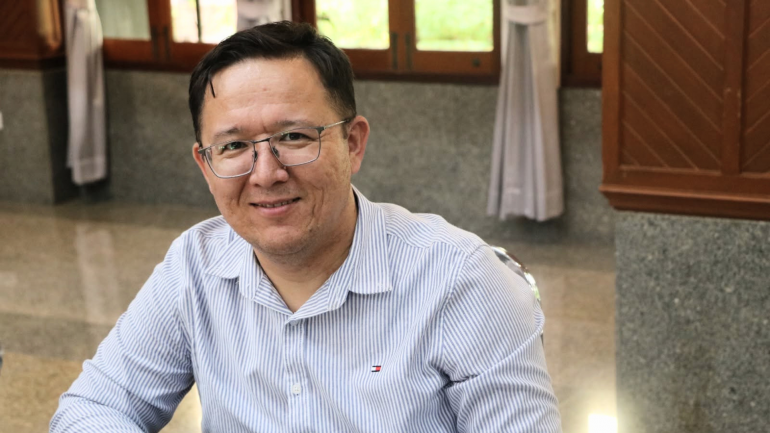
Mr. Shermakhammat Abdugapirov of the Central Asian Bishops’ Conference (CECAC), Kyrgyzstan, presented the group’s report on September 3, the final day of the gathering, during regional conversations at Joseph Nattaya Conference Hall.
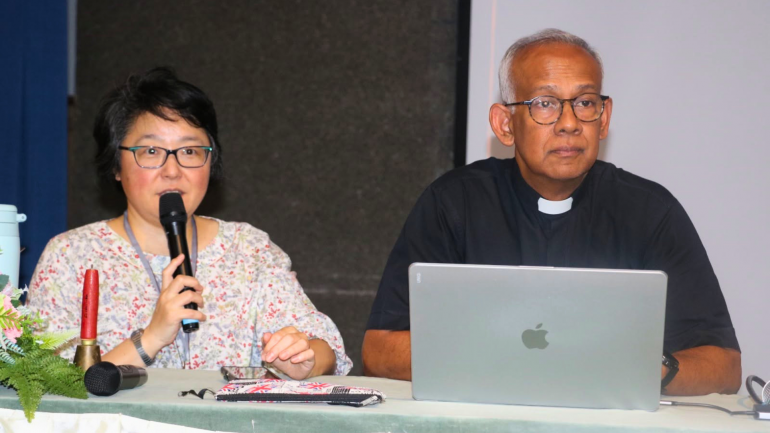
The session was moderated by Fr. Clarence Devadass, executive secretary of the FABC Commission for Synodality, with Sr. Momoko Nishimura, a member of the commission, also participating.
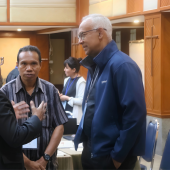
Delegates were divided into three groups representing South Asia, Southeast Asia, and East and Central Asia. They discussed concrete actions that could strengthen collaboration, mutual support and resource-sharing, as well as what the Federation of Asian Bishops’ Conferences (FABC) could do to sustain synodality in their countries and dioceses.
A key concern raised by the East and Central Asia group was the limited opportunity for lay leaders and synodal team members to meet regularly across countries.
Mr. Abdugapirov noted that bishops in different parts of the region already have established opportunities for regular meetings. Bishops from Central Asia, Japan and South Korea, as well as Taiwan, Hong Kong, and Macau China, meet periodically.
Lay leaders, however, often lack similar opportunities.
“We met each other only today, on September 1,” Mr. Abdugapirov said, referring to the delegates from Central Asia who gathered in Bangkok.
The group therefore proposed regular meetings for lay leaders and members of diocesan synodal teams to help them know one another better and develop more relevant forms of cooperation.
The delegates also called for inter-regional meetings linking East and Central Asian Churches, including opportunities for participants from one area to attend synodal gatherings in another.
Mr. Abdugapirov cited the possibility of participants from Mongolia joining meetings in East Asia as an example, allowing Churches to exchange information, pastoral resources and experiences despite not sharing direct borders.
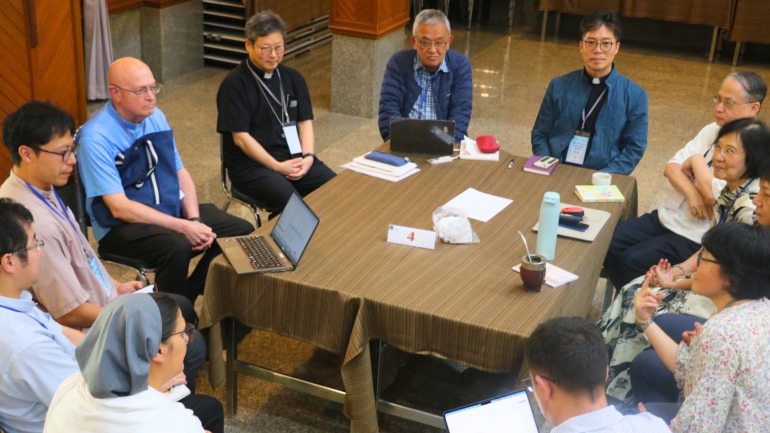
The group also stressed the importance of creating opportunities to experience synodality rather than simply discussing it.
“Synodality is not something that you learn only by talking,” Abdugapirov said, explaining that people need opportunities to experience prayerful listening, discernment and participation in practice.
For support from the FABC, the group proposed inviting synodality experts to countries and regional gatherings to help local Churches deepen their understanding and practice of synodality.
It also called for FABC accompaniment of the newly established Central Asian Bishops’ Conference, particularly as it develops its structures and continues engaging with the synodal process.
Language was identified as another significant challenge for cooperation across East and Central Asia.
The delegates urged the FABC to make synodality resources available in a wider range of languages so that the process does not remain dependent on materials available primarily in major international languages.
The recommendations also called for stronger information and resource-sharing among Churches, with opportunities for diocesan synodal teams to learn from one another.
The emphasis on regular lay exchanges reflects the region’s particular pastoral reality. East and Central Asia encompass Churches with very different histories, cultures, languages and pastoral circumstances, making sustained personal relationships particularly important for effective collaboration.
The September 1–3 National Synodal Teams Meeting brought together national synodal team members from across Asia to reflect on their experiences and identify practical ways to continue the synodal journey.
The East and Central Asia group’s proposals seek to build that continuation through direct relationships: bringing lay leaders together more regularly, creating opportunities to experience synodality in different local Churches, and ensuring that resources can reach communities in the languages they understand.
For the delegates, stronger connections among the region’s Churches can help transform synodality from a process discussed at meetings into an experience shared across communities.
Radio Veritas Asia (RVA), a media platform of the Catholic Church, aims to share Christ. RVA started in 1969 as a continental Catholic radio station to serve Asian countries in their respective local language, thus earning the tag “the Voice of Asian Christianity.” Responding to the emerging context, RVA embraced media platforms to connect with the global Asian audience via its 21 language websites and various social media platforms.
Latest News