At FABC Assembly, Missio Munich Says Personal Encounters Build Stronger Church Partnerships

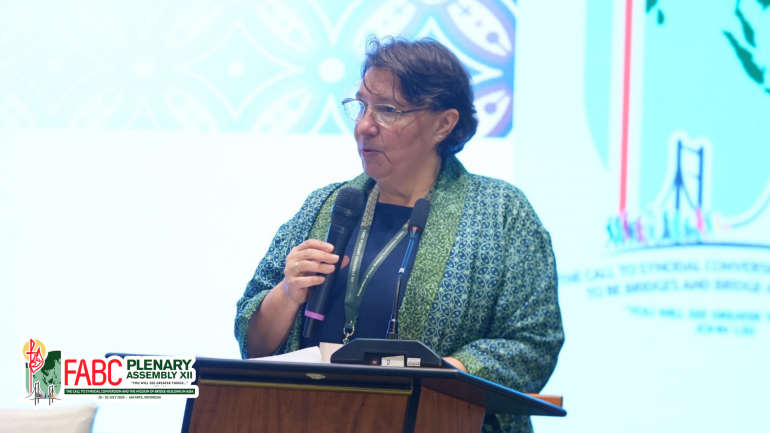
International partnerships flourish not primarily through funding or shared projects, but through personal encounters rooted in listening, mutual learning, and a willingness to journey together as one universal Church.
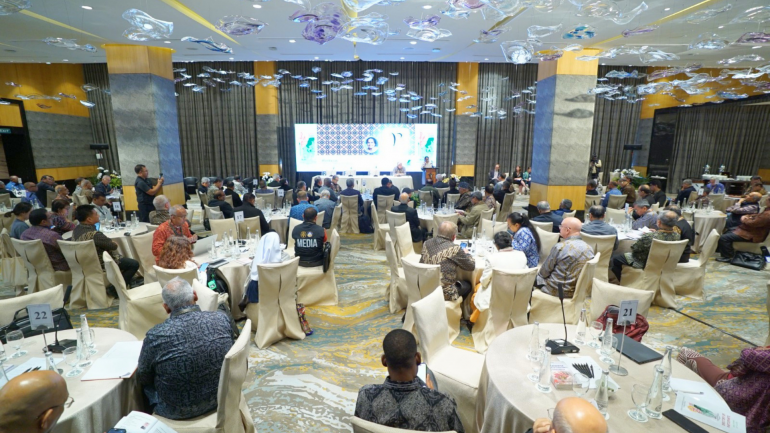
That was the central message of Mrs. Branka Begic, Program Manager for Asia at Missio Munich, during the 12th Plenary Assembly of the Federation of Asian Bishops' Conferences (FABC) at Hotel Mulia in Jakarta on July 23.
Representing Missio Munich, one of the two German branches of the Pontifical Mission Societies, Begic reflected on nearly three decades of accompanying Church projects across Asia. Although this was her first time attending an FABC Plenary Assembly, she said she has long witnessed the vitality of the Church throughout the continent.
Her remarks came as Catholic leaders from across Asia gathered for the week-long assembly under the theme, "The Call to Synodal Conversion and the Mission to Be Bridges and Bridge-Builders in Asia."
Drawing from her experience, Begic said the Church in Asia continues to inspire through its closeness to local communities, commitment to dialogue, and vibrant pastoral life.
"For many years we have witnessed the Church in Asia building bridges, fostering meaningful dialogue, and bringing real hope to many people. We have seen these 'greater things' become a reality through the pastoral leadership and commitment of the local Churches," she said.
While acknowledging the many successful projects supported by Missio Munich across Asia, Begic emphasized that authentic partnership extends far beyond administrative cooperation or financial assistance.
"For us at Missio Munich, personal relationships are of great importance. We do not simply want to express solidarity; above all, we want to listen to you and learn from you," she said.
She stressed that the universal Church should never be understood as a relationship between donors and recipients. Instead, every local Church has unique gifts, experiences, and faith traditions that enrich the wider Catholic community.

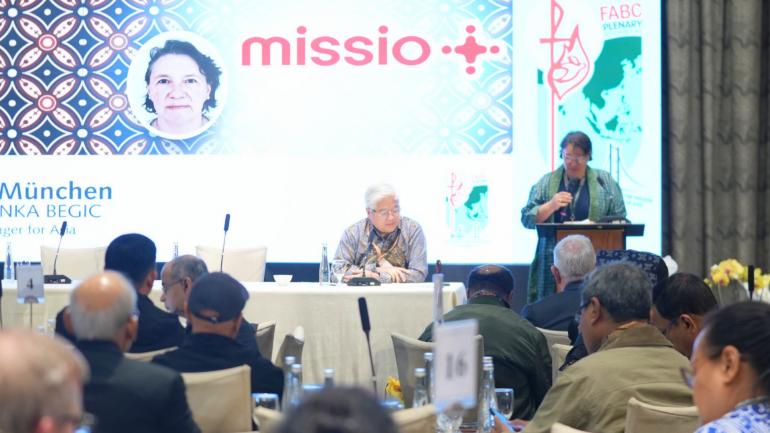
"Partnership in the universal Church is a relationship in which both sides have something to give and something to receive as brothers and sisters in Christ," she said.
Begic explained that Missio Munich seeks not only to support pastoral initiatives in Asia but also to share the experiences of Asian Churches with Catholics in Germany. By doing so, she said, German Catholics gain a deeper appreciation of the Church's vitality, challenges, and witness across the continent.
Although Missio Munich is not a large organization, Begic said partnerships built on trust and personal relationships often produce more lasting results than those based solely on institutional structures.
Her reflection echoed one of the central themes emerging from the FABC Plenary Assembly: synodality is lived through relationships marked by dialogue, participation, and mutual respect.
As the Church in Asia continues its synodal journey, Begic said listening to one another across cultures and continents is essential for fulfilling the Church's mission of building bridges.
She concluded by expressing hope that the partnerships fostered through the FABC will continue to deepen communion among local Churches and international mission organizations, creating opportunities to share faith, learn from one another, and advance the Church's common mission throughout Asia.
Founded in Munich, Germany, Missio Munich supports the Church's missionary work worldwide through pastoral formation, evangelization, and solidarity with local Churches. As one of Germany's Pontifical Mission Societies, it promotes partnerships based on mutual trust, shared responsibility, and respect for the leadership of local Churches.
Radio Veritas Asia (RVA), a media platform of the Catholic Church, aims to share Christ. RVA started in 1969 as a continental Catholic radio station to serve Asian countries in their respective local language, thus earning the tag “the Voice of Asian Christianity.” Responding to the emerging context, RVA embraced media platforms to connect with the global Asian audience via its 21 language websites and various social media platforms.
Latest News