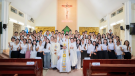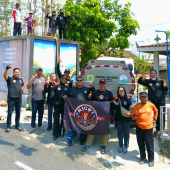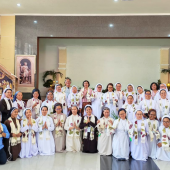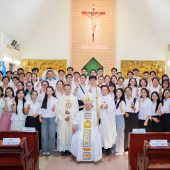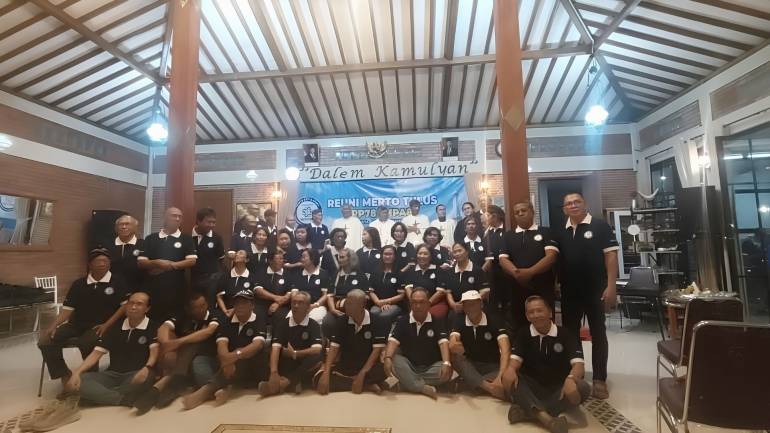
Former seminarians of St. Peter Canisius Minor Seminary in Mertoyudan, Central Java, Indonesia, gathered for a reunion on September 22–23 to reflect on aging, illness and how their remaining years can become an opportunity to serve others.
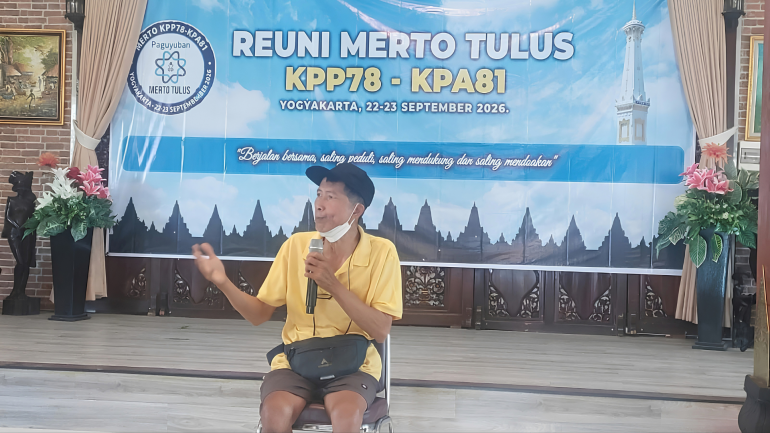
The reunion of the KPP 78 and KP 81 cohorts, collectively known as “Merto Tulus 78/81,” was held at Dalem Kamulyan in Pakem District, Sleman Regency, Yogyakarta. Many of the alumni are now in their 60s and beyond.
Several shared personal experiences of serious illness, including tumors, liver disease, stroke and heart problems. Their reflections focused on accepting their health conditions, entrusting their lives to God and using the time and strength they have to benefit others.
Alumnus Primaryutomo spoke about learning to love and respect oneself while accepting one's health condition without denial. Such acceptance, he said, does not mean giving up but recognizing one's situation and facing difficulties with greater inner peace.
For Mathias Hariyadi, serious heart and liver problems became a turning point. Recovery led him to see his continued life as another opportunity to serve the Church and society.
That experience contributed to the establishment of Sesawi.Net, an Indonesian Catholic online news portal for communication and evangelization. The initiative later expanded into social and educational programs, including “Pintu Depan” and the Yayasan Karsa Cipta Asa (YKCA).
Another alumnus, Herry Respatia, a former diocesan seminarian from Denpasar who later became a teacher, recalled a serious health crisis that brought him close to death. The experience strengthened his awareness of life as a gift and an opportunity to help others.
Since 2009, Herry has developed LPJ in Denpasar, Bali, an institution that prepares young Indonesians for employment in Japan. Its programs cover elderly care, fisheries, livestock, food processing and construction. He later took responsibility for coordinating the LPJ network in Bali and East Nusa Tenggara.
Petrus Damianus Prasetyohadi, another alumnus and former Jesuit who studied Islamic studies, shared his work with farming communities. His involvement began with research into farmers struggling to obtain adequate agricultural land and later shifted toward accompanying small-scale coffee farmers in remote areas.
He provides training and mentoring to help farmers improve cultivation and coffee-processing methods while preserving the characteristics of coffee from their regions.
“I have no personal ambition to become a coffee exporter despite the potential huge financial benefits,” he said. “I don't want to entertain coffee producers who are already well established.”
Instead, he said, he prefers to accompany traditional and household-scale farmers who still need knowledge and mentoring.
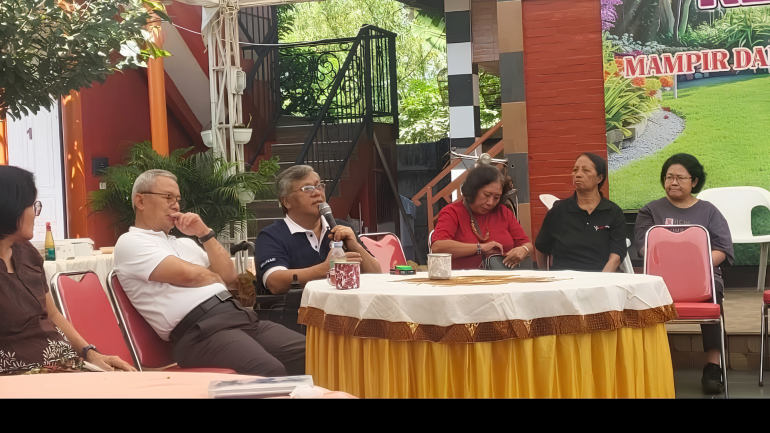
The alumni also discussed challenges facing younger generations, particularly the impact of artificial intelligence on education.
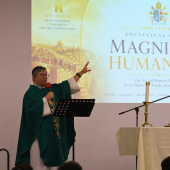
Fr. Ignatius Swasono, SJ, now involved in campus ministry at Universitas Sanata Dharma in Yogyakarta, has spent much of his ministry accompanying young people. Before his current assignment, he served for about 30 years in the Archdiocese of Jakarta, including as chief of Caritas Indonesia under the Indonesian Bishops' Conference, university chaplain and parish priest.
He said AI has made it easier for students to obtain information and produce written work with limited personal effort. The challenge, he said, is not technology itself but how it is used.
Students still need to develop independent thinking, research skills, creativity and personal responsibility rather than relying entirely on AI tools.
The experiences shared at the reunion showed how the alumni have continued to turn their personal journeys into service through Catholic communication, education, employment preparation, farming and youth ministry.
As illness and aging become more tangible realities, their reflections focused not only on how much time remains but on how that time can be used.
For the former seminarians of Mertoyudan, their years of formation are part of their past, but the values and experiences they received continue to shape their lives and service to others.
Radio Veritas Asia (RVA), a media platform of the Catholic Church, aims to share Christ. RVA started in 1969 as a continental Catholic radio station to serve Asian countries in their respective local language, thus earning the tag “the Voice of Asian Christianity.” Responding to the emerging context, RVA embraced media platforms to connect with the global Asian audience via its 21 language websites and various social media platforms.
Latest News