

Global Ecumenical Forum Launched in Philippines to Strengthen Advocacy for Peace and Human Rights

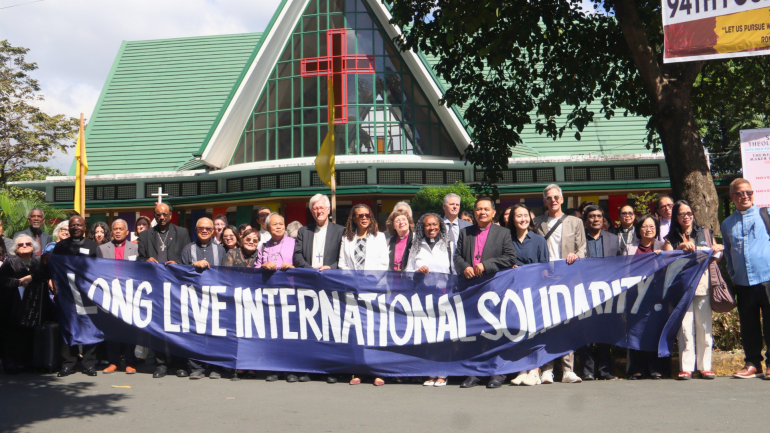
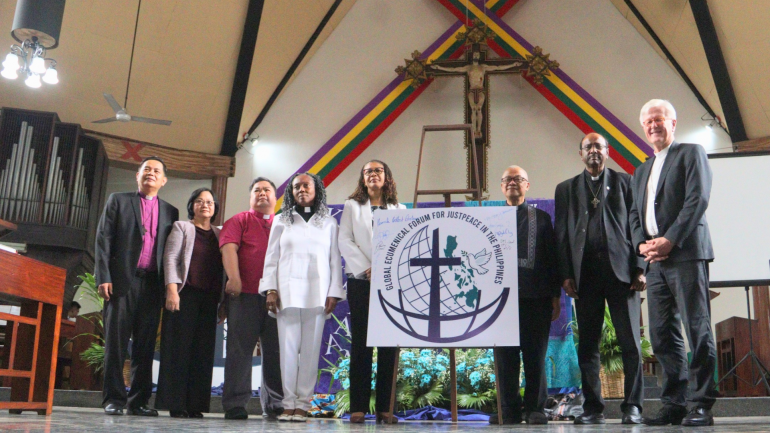
International Christian organizations and Philippine church leaders launched the Global Ecumenical Forum for Just Peace in the Philippines (GEF-PH) on Nov. 24, establishing an international network to support human rights, peace initiatives, and structural reforms while addressing militarization and systemic violence in the country.
The forum also aims to strengthen solidarity between Philippine churches and grassroots movements and similar initiatives in other regions, including Palestine, Korea, Taiwan, West Papua, and Cuba.
Bishop Gerardo Alminaza, chairperson of the Catholic Bishops' Conference of the Philippines (CBCP) Episcopal Commission on Social Action, Justice and Peace, said the Philippines was experiencing a state of “unpeace,” citing widespread poverty, extreme inequality, systemic corruption, and government subservience to foreign powers.
He also pointed to rising tensions across the Asia-Pacific region as a concern requiring stronger international cooperation.
“This situation calls not only for the active engagement of the Philippine ecumenical movement, but for the solidarity of our international Christian and interfaith partners,” Alminaza said.
The GEF-PH brings together international church councils, ecumenical organizations, Christian denominations, and Philippine church and ecumenical leaders. Its principal conveners include the World Council of Churches (WCC), World Communion of Reformed Churches (WCRC), World Student Christian Federation (WSCF), World Methodist Council (WMC), and the National Council of Churches in the Philippines (NCCP).
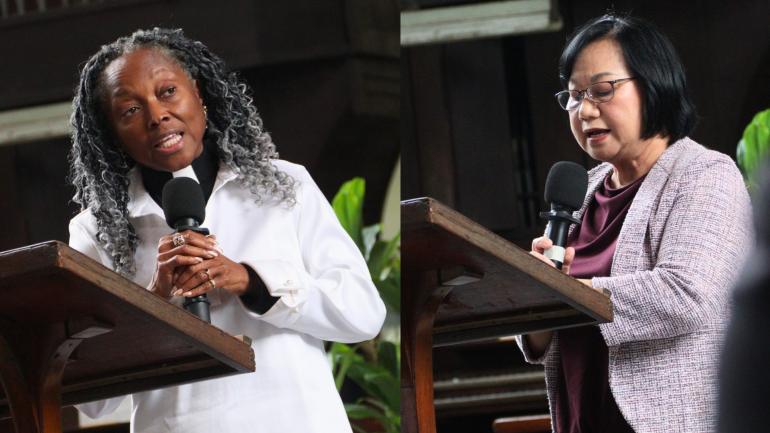
Minnie Anne Mata-Calub, NCCP general secretary, said the forum seeks to mobilize church leaders, faith communities, and institutions to address injustice and examine the causes of systemic violence and repression in the Philippines.
She said the initiative would also highlight connections between violence in the country, global militarization, and regional instability in the Asia-Pacific.
“As a global peace movement, we want to mobilize church leaders, faith communities, and institutions to call out injustice and speak truth to power, while exposing and deepening global understanding of the root causes and manifestations of systemic violence and repression in the Philippines, as well as their links to global militarization and regional instability in the Asia Pacific region,” Mata-Calub said.
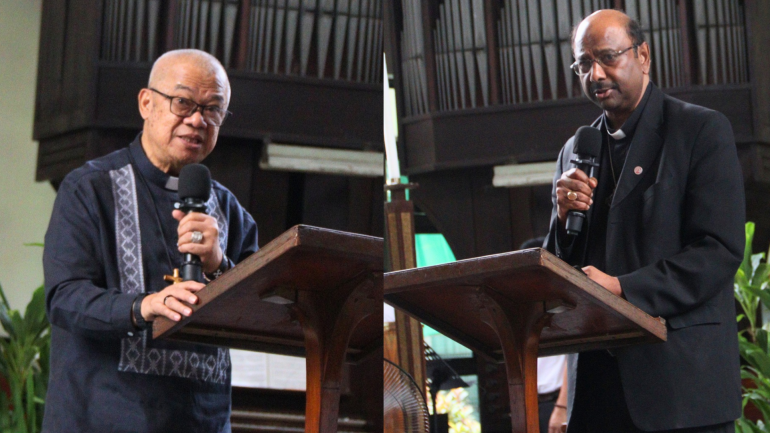
In a solidarity message, Rev. Prof. Dr. Jerry Pillay, general secretary of the WCC, said international partners had come to listen to Filipino communities and strengthen their existing efforts rather than speak on their behalf.
“International solidarity must never replace local leadership. It must strengthen it,” Pillay said.
Rev. Dr. Karen Georgia Thompson, president of the WCRC, called on churches to confront political and economic systems that contribute to oppression, displacement, and environmental destruction.
In her message, Thompson urged the international church community to challenge the military-industrial complex, multinational corporations, governments, technology companies, and mining industries that contribute to the exploitation of communities and natural resources.
“Go, bring the indigenous and the poor, the women and the children out of the systems of oppression,” Thompson said, urging participants to work toward societies where peace prevails, communities flourish, and people have access to food and safe housing.
The forum's launch establishes a platform for international Christian cooperation on human rights and peacebuilding, linking concerns in the Philippines with wider ecumenical efforts to address conflict, inequality, and militarization across different regions.
Radio Veritas Asia (RVA), a media platform of the Catholic Church, aims to share Christ. RVA started in 1969 as a continental Catholic radio station to serve Asian countries in their respective local language, thus earning the tag “the Voice of Asian Christianity.” Responding to the emerging context, RVA embraced media platforms to connect with the global Asian audience via its 21 language websites and various social media platforms.
Latest News