Holy Land Media Expert Urges Asian Digital Missionaries to Meet People Where They Are

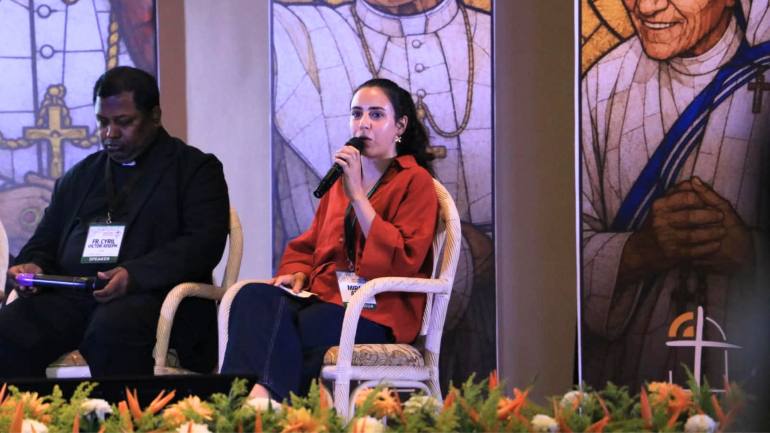
Catholic digital missionaries need to begin with people and their lived experiences, listening to them before deciding what to say or how to minister to them, a media officer from the Holy Land said.
Miral Atik, Media Officer for the Diocese of Jerusalem at the Latin Patriarchate of Jerusalem, emphasized the importance of personal encounter during the “Understanding Asia Realities” panel on September 11 at the First Asian Catholic Digital Missionary Assembly in Quezon City.
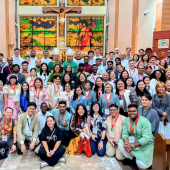
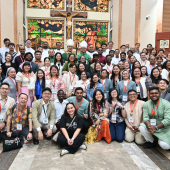
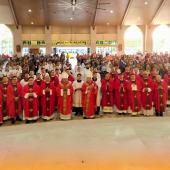
The September 11–13 assembly brings together Catholic digital missionaries, communicators and content creators from across Asia to reflect on the Church’s mission in a rapidly changing digital culture.
“It's important to listen and to know what each person is experiencing before ministering to them,” Atik said.
She said this approach is especially important in the Holy Land, where the Diocese of Jerusalem serves Catholic communities across Jordan, Palestine, Israel and Cyprus. The region encompasses different languages, cultures and social realities, while continuing conflict and suffering have created vastly different experiences from one place to another.
“People who live up north have faced different realities than people who live in the West Bank than people who live in Gaza,” she said.
For Atik, these differences mean that Church communicators cannot approach people with a single message without first understanding their circumstances.
Instead, they must first listen, learn what people are experiencing and then find ways to accompany them within those realities.
She linked this approach to the ministry of Jesus, who encountered people personally and responded to them within the circumstances of their lives.
“He met them where they are,” Atik said.
The principle has particular relevance for Catholic digital missionaries, who can reach large audiences across geographical and cultural boundaries with a single post, video or message.
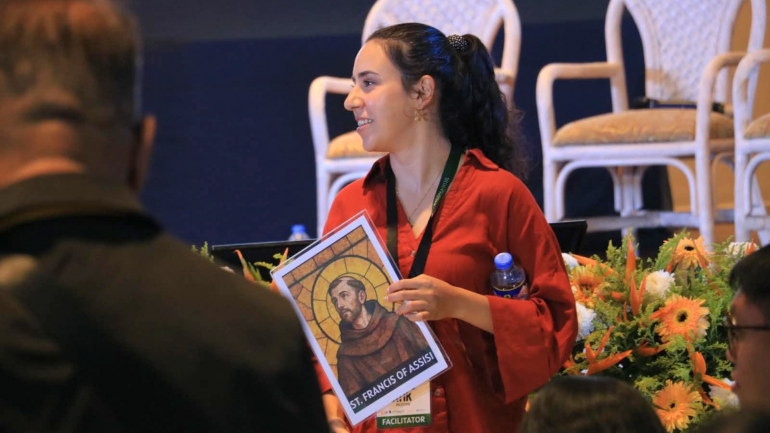


But broad digital reach does not remove the need to understand the people behind the screens.
For Atik, communication begins with encounter. Content should emerge from real people, their experiences and the questions and hopes that shape their lives.
Her own work reflects this approach. As a media officer for the Diocese of Jerusalem, she writes, edits and produces multimedia content documenting the life of the local Church across Jordan, Palestine, Israel and Cyprus for audiences around the world.
Working in a region marked by conflict also presents a delicate communication challenge. Atik said Church communicators need to acknowledge people's suffering and the realities around them without allowing Catholic communication to become merely political.
The Gospel, she said, cannot be separated from the lives of the people to whom it is proclaimed, but communication must remain rooted in the Church's mission.
For Asian digital missionaries working in societies marked by cultural, religious and social diversity, Atik's experience offers a practical principle: meet people where they are before asking them to come where the Church is.
Digital platforms can extend the Church's reach, but meaningful evangelization still requires attention to the individual person and the reality of the community.
In the end, Atik's message was not simply about producing better digital content. It was about developing a missionary habit of listening first, understanding people and allowing their lived realities to shape how the Church accompanies and communicates with them.
Radio Veritas Asia (RVA), a media platform of the Catholic Church, aims to share Christ. RVA started in 1969 as a continental Catholic radio station to serve Asian countries in their respective local language, thus earning the tag “the Voice of Asian Christianity.” Responding to the emerging context, RVA embraced media platforms to connect with the global Asian audience via its 21 language websites and various social media platforms.
Latest News