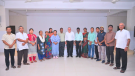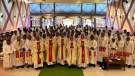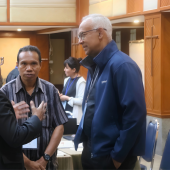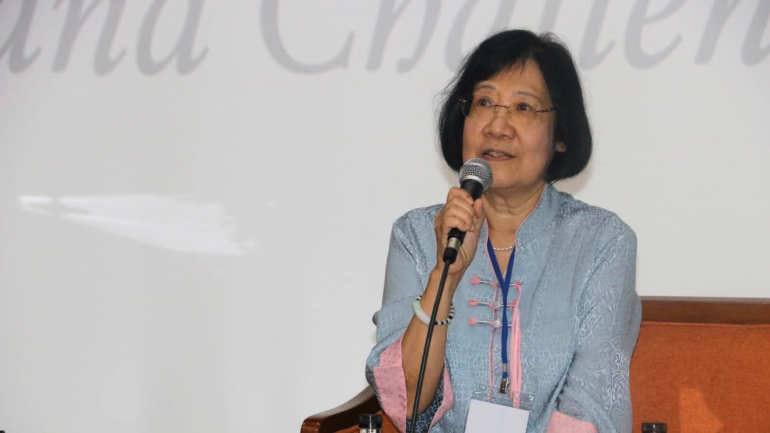
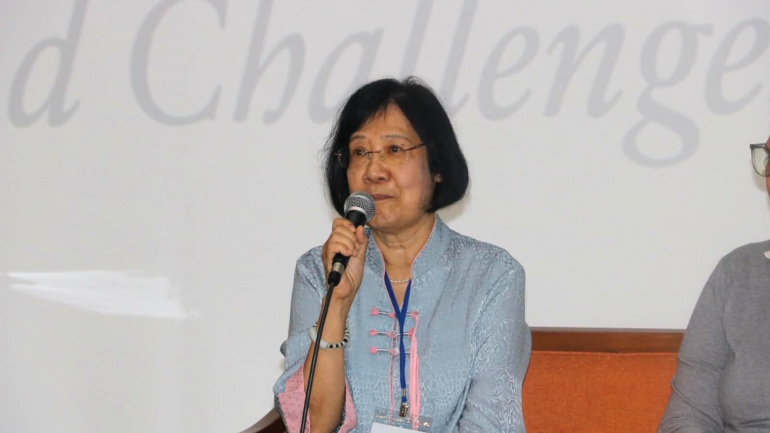
The Catholic Church in Hong Kong is increasingly using “conversation in the Spirit” in parish, diocesan and formation settings as it seeks to develop a deeper culture of synodality, said Ms. Vania Cheng, a panelist from Hong Kong, China, representing East Asia.
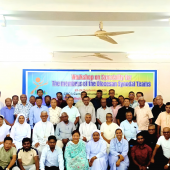
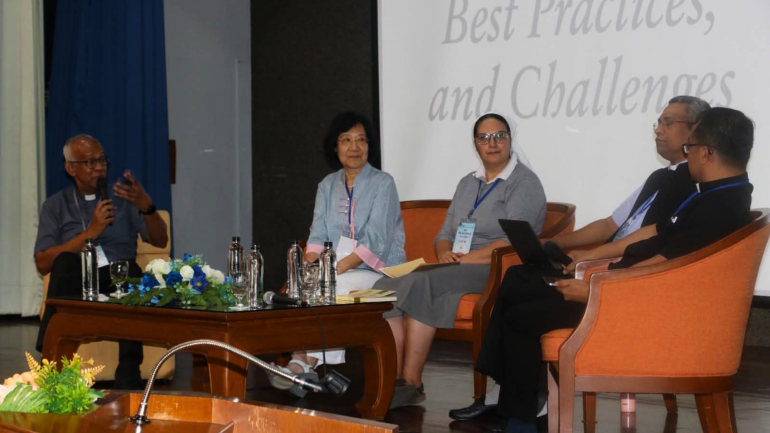
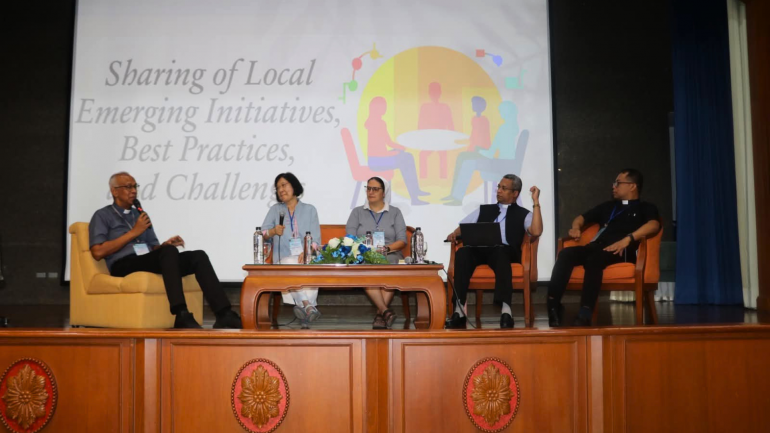
Ms. Cheng, who participated in the Synod on Synodality from 2021 to 2024, currently serves as a member of the Hong Kong Diocesan Synodal Team and as a lecturer in theology. She was one of four panelists in a discussion entitled “Sharing of Local Emerging Initiatives: Best Practices and Challenges” during the three‑day Asian Synodal Meeting held at Baan Phu Waan, Bangkok.
The session, the first activity of the second day on September 2, was held at the Joseph Nattaya Conference Hall and moderated by Fr. Clarence Devadass, executive secretary of the Commission for Synodality.
Ms. Cheng described several emerging initiatives in Hong Kong that seek to make synodality part of ordinary Church life rather than simply a subject of discussion.
One recent example is the meeting of the Legion of Mary, whose spiritual director also serves as a member of the diocesan synodal team. The group has begun employing Conversation in the Spirit as a means of planning new initiatives involving parishes and school communities. The fruits of these discussions are carefully documented and subsequently shared with members.
The approach is also being used by different sectors and commissions of the Diocese of Hong Kong, particularly in preparing work plans and identifying objectives.
Ms. Cheng said the Holy Spirit Research Centre has similarly used conversation in the Spirit to evaluate its work and identify new directions, bringing together staff, researchers and members of its board of governors.
For the past three years, Hong Kong has hosted theological seminars on Synodality and its relationship with Sinicization, welcoming priests, religious, and lay faithful from various regions of China. These seminars have provided participants with opportunities to explore new possibilities for deepening their understanding of the synodal process and for discerning ways to enter more fully into it within their own contexts.
Responding to a question from Fr. Clarence about the relationship between culture and synodality, Ms. Cheng said her experience in Hong Kong shows that the process involves both opportunities and challenges.
She pointed to cooperation among men and women, as well as lay people and priests, as a positive element in the local context that can support synodal participation.
At the same time, she cautioned that listening is not as simple as it may appear.
Although Chinese culture includes elements of silence and listening, conversation in the Spirit takes listening to another level, she said.
“We learn by doing,” Ms. Cheng observed, emphasizing that people need opportunities to experience the process firsthand rather than merely grasping its principles and methodology on an intellectual level.
She also noted that respect for authority is deeply rooted in many Asian societies, producing hierarchical structures that can also be reflected in Church life.
This can make the introduction of synodality more difficult, particularly where people are accustomed to clear distinctions between those who exercise authority and those who are expected to follow.
For Ms. Cheng, however, listening remains the starting point.
“Everybody can find a place or space to listen to the others,” she said.
Asked about challenges to synodality, Ms. Cheng warned against reducing the process to a single method.
Because conversation in the Spirit is increasingly being used in parishes and diocesan sectors, there is a risk that people may come to equate synodality simply with learning and practicing the method, she said.
She also identified Hong Kong's emphasis on speed and efficiency as another challenge. A process that requires time for listening, reflection and discernment can appear difficult in a society where efficiency is highly valued.
Ms. Cheng said synodality must also move beyond discernment toward building consensus and sharing responsibility for implementation.
After a decision is reached through discernment, she said, the Church must continue to learn how to take responsibility together for putting that decision into practice.
Her reflections highlighted a broader question for synodal communities across Asia: how to move from consultation to genuine participation while respecting the cultural contexts in which local Churches live and minister.
Radio Veritas Asia (RVA), a media platform of the Catholic Church, aims to share Christ. RVA started in 1969 as a continental Catholic radio station to serve Asian countries in their respective local language, thus earning the tag “the Voice of Asian Christianity.” Responding to the emerging context, RVA embraced media platforms to connect with the global Asian audience via its 21 language websites and various social media platforms.
Latest News