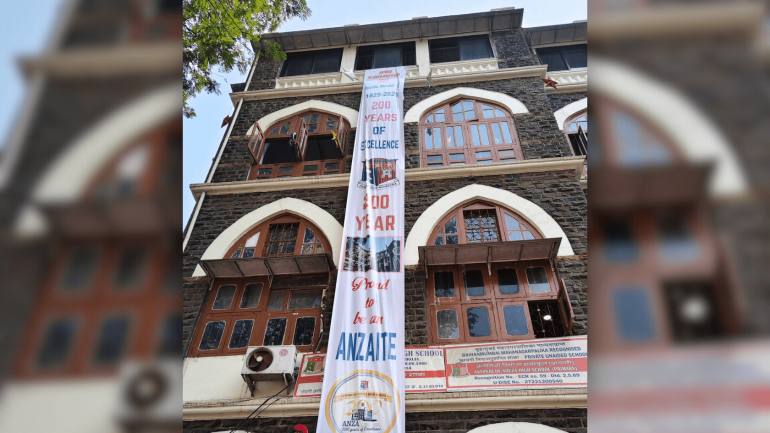
Reaching the age of two hundred is a rare achievement for any institution, and even more so for a school. Antonio De Souza (ANZA) High School, located in Byculla, South Mumbai, has reached this remarkable milestone, completing two centuries of continuous service in education.
The bicentenary celebrations will be held on the school campus from January 23 to 25, featuring a Thanksgiving Mass, multi-faith service, cultural programmes, ANZA Family Day, and a gala alumni dinner.
The origins of ANZA date back to Mazagaon, one of the earliest islands of Bombay. In 1548, Captain Antonio Peso built a private chapel dedicated to Nossa Senhora da Glória (Our Lady of Glories). This eventually led to the construction of Gloria Church in 1632 at the foot of the Mazagaon hill. In 1795, a Goan merchant, Antonio De Souza, donated the substantial sum of Rs. 40,000 to the Church trustees to establish a free primary school for Catholic children. Instruction was initially in Portuguese and Latin, and the institution was later named Antonio De Souza High School, in honour of its chief benefactor.
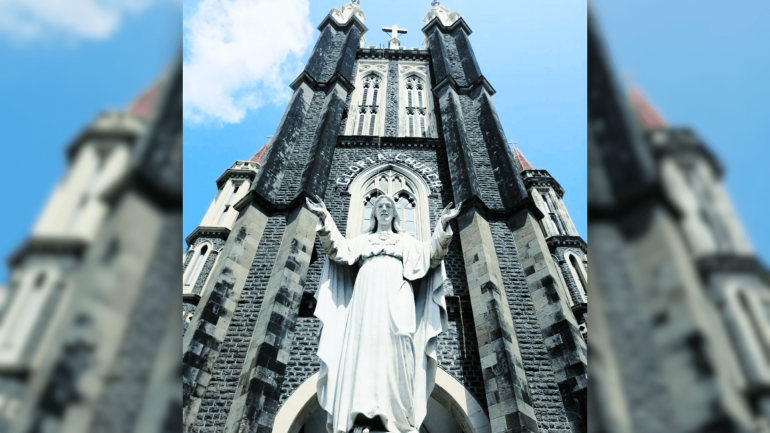
In 1911, both the original Gloria Church and the school were demolished and relocated to their present site in Byculla, with reconstruction completed in 1913. Built in the English Gothic Revival style, the present-day ANZA School and Gloria Church have since become recognized heritage landmarks of Mumbai.
Situated in one of the city’s most culturally vibrant neighbourhoods, Byculla has long been a melting pot of communities, faiths, and traditions. Surrounded historically by textile mills and located near iconic landmarks such as the Jijamata Udyan, the area reflects Mumbai’s working-class roots and pluralistic ethos. In this setting, ANZA grew as a truly cosmopolitan school, welcoming students from diverse religious, ethnic, and socio-economic backgrounds—Christians, Hindus, Muslims, Parsis, Jews, and others, including children of migrant workers who had made Bombay their home.
Over the decades, ANZA came to be known not for elitism but for its inclusive spirit. It remained a school for ordinary families who valued good English-medium education and strong values. Friendships forged across religious and cultural lines during school years often endured for life, giving rise to a deep sense of belonging that continues to define the ANZA spirit.
ANZA is a school of the Archdiocese of Bombay and has been guided over the years by dedicated priests, principals, and educators, supported by committed teaching, administrative, and support staff. Thousands of students have passed through its portals, many of whom have gone on to serve the city and the nation with distinction. Today, the school has around 3,000 students, under the leadership of Fr. Sachin Lopes, Principal, and Fr. Cajetan Pinto, Manager.
The school motto, Per Ardua ad Astra—“Through adversity to the stars”—has remained a guiding principle. Despite limited resources, including the absence of its own playground, ANZA has consistently offered a holistic education, encouraging students to strive for excellence in academics, sports, arts, and life.
Among its distinguished alumni are Raj Kapoor, legendary Bollywood actor and filmmaker; Trilok Gurtu, internationally acclaimed percussionist; Nissim Ezekiel, pioneer of modern Indian English poetry; Libia Lobo Sardesai, freedom fighter; and R. M. Sawant, eminent jurist. In sports, ANZA has produced luminaries such as Leo Pinto, Olympic gold medallist in hockey (1948); Gulam Abbas Moontasir, national basketball captain; Nasir Khan, hockey player and coach; and Banoo Gazdar and Pat Mendonca, medal winners at the 1951 Asian Games.
What sets ANZA apart is its quiet ordinariness—a school rooted in simplicity, resilience, and service. Neither elite nor exclusive, it has remained true to its mission of educating generations to face life’s challenges with courage and integrity.
As the school celebrates 200 years of faithful service, it does so with gratitude for the past and hope for the future—continuing its journey of shaping lives through education.
Radio Veritas Asia (RVA), a media platform of the Catholic Church, aims to share Christ. RVA started in 1969 as a continental Catholic radio station to serve Asian countries in their respective local language, thus earning the tag “the Voice of Asian Christianity.” Responding to the emerging context, RVA embraced media platforms to connect with the global Asian audience via its 21 language websites and various social media platforms.
Latest News