India: Church, civil society renew commitment to protect migrant workers at Ranchi workshop

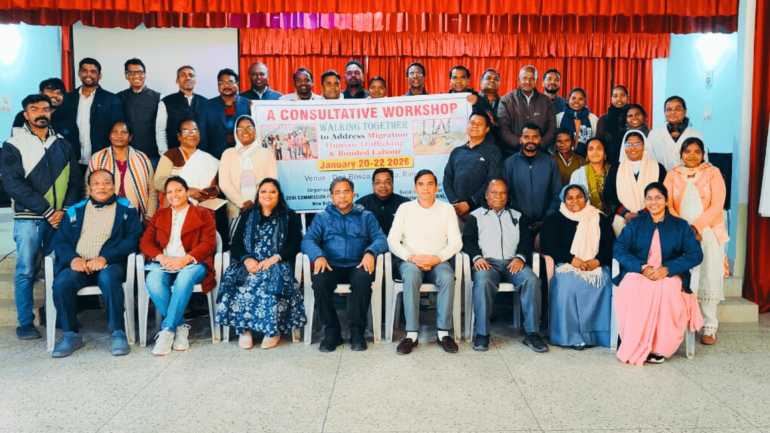
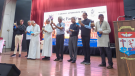
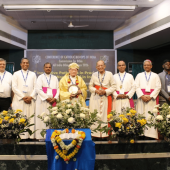
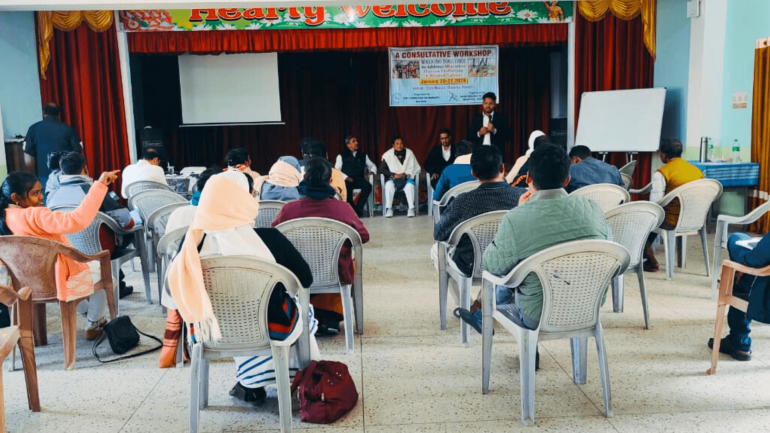
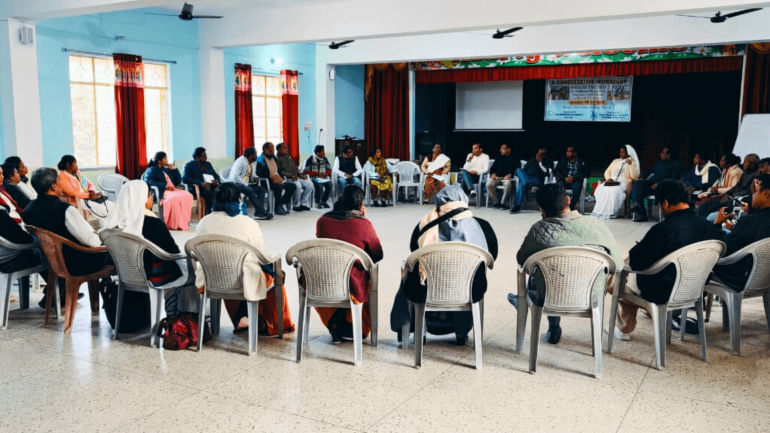
Church leaders, religious, and civil society representatives renewed a strong collective commitment to address the challenges faced by migrant workers—particularly human trafficking and bonded labour—during a three-day training and consultative workshop held in Ranchi, the capital of Jharkhand in eastern India.
The workshop, titled “Walking Together to Address Migration, Human Trafficking and Bonded Labour,” was held from January 20 to 22 at Don Bosco Youth and Educational Services, Bariatu, Ranchi. It was organised by the Conference of Catholic Bishops of India (CCBI) Commission for Migrants in collaboration with Social Initiatives for Growth and Networking (SIGN), Ranchi, and locally coordinated by Fr. Bipin Pani.
A total of 42 participants from eight dioceses, Church-based organisations, and civil society groups attended the programme. They included priests, religious sisters, and social workers actively engaged with migrant communities in Jharkhand and neighbouring regions. The workshop aimed to strengthen understanding, collaboration, and concrete action on migration-related concerns.
The programme opened with a reflective session led by Dr. Charles Leon of the CCBI Commission for Vocations, Seminaries, Clergy and Religious (VSCR Commission), Bengaluru. He introduced the SOAR framework—Strengths, Opportunities, Aspirations, and Results—encouraging participants to recognise the resilience and potential of migrant communities and to build responses based on these strengths rather than focusing solely on vulnerabilities.
Sessions throughout the workshop were highly interactive, especially those led by Fr. Jaison Vadassery, Executive Secretary of the CCBI Commission for Migrants. His dynamic facilitation engaged participants in discussions on migrant rights, legal frameworks, and the complementary roles of Church and civil society in protecting migrant workers.
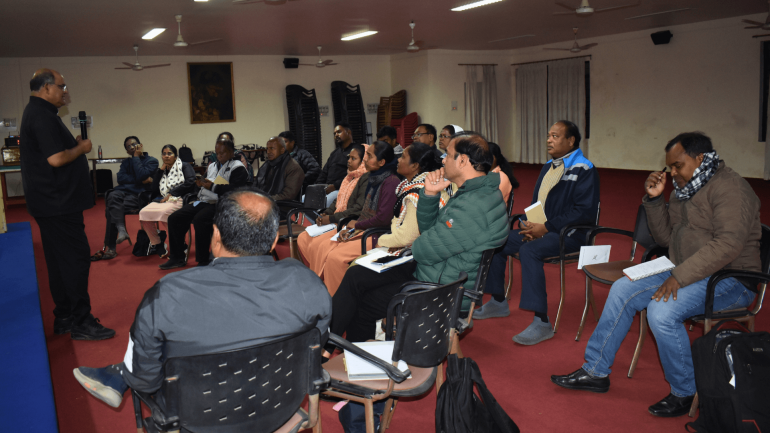
In subsequent sessions, participants examined bonded labour, human trafficking, and inter-state migration in greater depth. Mr. Nirmal Gorana Agni of the National Campaign Committee for Eradication of Bonded Labour, New Delhi, highlighted that bonded labour continues in hidden and evolving forms. He stressed that rescue operations alone are insufficient and must be accompanied by rehabilitation, legal follow-up, and long-term community engagement.
Offering a government perspective, Dr. Shikha Lakara of the Jharkhand Labour Department outlined welfare and social security schemes available to migrant workers. She noted that lack of awareness and registration often prevents migrants from accessing benefits and urged outreach efforts in source villages to promote safe and informed migration. She also assured the department’s support for community-based initiatives.
The workshop concluded with participants sharing concrete commitments. Fr. Marc Mukul Lakra, SJ, from Ranchi pledged to focus on skilling migrant workers to enhance their safety and livelihoods. Sr. Amrita Beck, DSA, a recent MSW graduate, expressed her intention to dedicate her professional training to migrant-related work. Sr. Premdani Xess, Ursuline, emphasized the need for sustained awareness campaigns and shared plans to implement them in her area of ministry. Fr. Maria Luis, SJ, from Daltonganj Diocese underscored the importance of identifying migrants at the source and ensuring their registration at village and state levels. Adv. Fr. Siby, CMF, said he has already begun parish-level awareness program and felt encouraged to expand them further.
Overall, participants described the workshop as motivating and enriching. They resolved to strengthen networking among dioceses, Church bodies, and civil society organizations for continued advocacy, data collection, and awareness-building initiatives. The workshop concluded with a shared commitment to coordinated action and pastoral accompaniment to safeguard the dignity, rights, and safety of migrant workers and their families.
Radio Veritas Asia (RVA), a media platform of the Catholic Church, aims to share Christ. RVA started in 1969 as a continental Catholic radio station to serve Asian countries in their respective local language, thus earning the tag “the Voice of Asian Christianity.” Responding to the emerging context, RVA embraced media platforms to connect with the global Asian audience via its 21 language websites and various social media platforms.
Latest News