

India: Vatican Prefect Urges Human-Centered Education at CBCI Consultation Amid AI Revolution

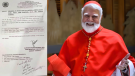
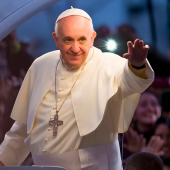
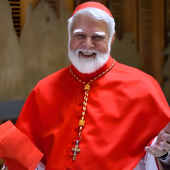
Cardinal José Tolentino de Mendonça, Prefect of the Vatican Dicastery for Culture and Education, has called on Catholic educational institutions to place the dignity of the human person, moral integrity and spiritual formation at the heart of education, warning that technological progress and artificial intelligence must not come at the expense of human development.
“Education must strengthen what is human within us and free the person from everything that diminishes their humanity,” Cardinal Mendonça said in his keynote address at the Catholic Bishops’ Conference of India (CBCI) National Consultation on Education 2026 in Goa, western India, on November 26.
Speaking on the theme “The Soul of Education: Culture, Faith and the Future of the Human Person,” the cardinal challenged Catholic educators to look beyond academic achievement, professional qualifications and technological competence to nurture students capable of discernment, compassion, responsibility and meaningful relationships.
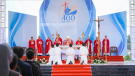
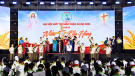
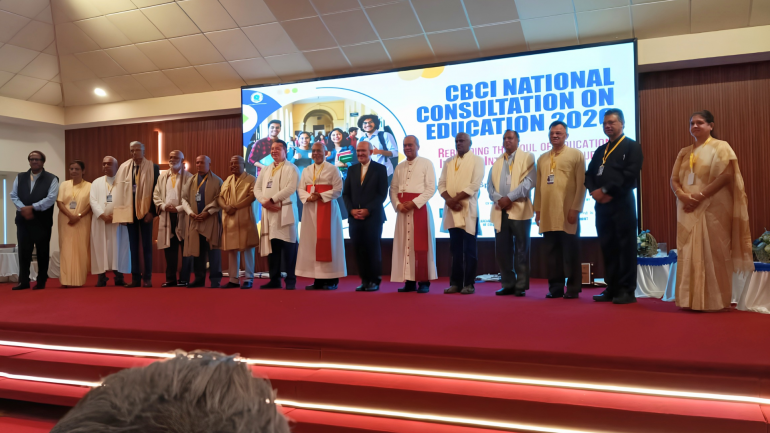
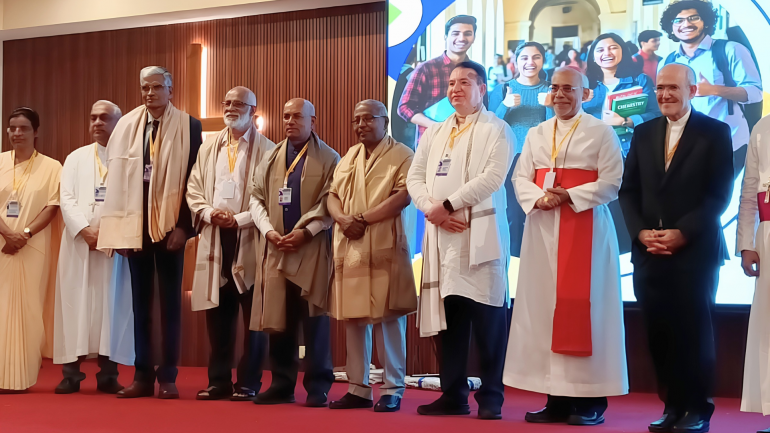
The three-day national consultation, held November 25–27 at St. Joseph Vaz Spiritual Renewal Centre in Goa, brings together Church leaders, education administrators, university representatives and educators to reflect on the future of Catholic education in India.
Organized by the CBCI Office for Education and Culture, with the Archdiocesan Board of Education, Goa, as a co-organizer, the gathering carries the theme “Rebuilding the Soul of Education: Identity, Integrity, and Influence.” It seeks to develop a shared vision and national roadmap for Catholic education toward 2040.
Archbishop Elias Gonsalves of Nagpur, chairperson of the CBCI Office for Education and Culture, Archbishop Filipe Neri Ferrão of Goa and Daman, and Cardinal Mendonça were among the Church leaders addressing the gathering. The program also featured sessions on education policy, artificial intelligence, higher education, student well-being and the future of Catholic universities.
Cardinal Mendonça highlighted the extensive contribution of the Catholic Church to education in India, which operates approximately 14,000 schools, more than 600 colleges, 11 universities and hundreds of technical and vocational institutions.
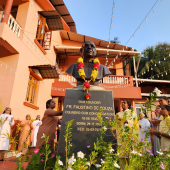
He recalled the educational contributions of Indian saints, particularly St. Kuriakose Elias Chavara and St. Teresa of Calcutta, as examples of an educational mission rooted in service, inclusion and concern for the poor.
Referring to St. Teresa's early efforts to educate street children in Kolkata, he said her simple act of teaching the alphabet under a tree communicated a powerful message: “You matter, someone believes in you, someone will come back tomorrow.”
On artificial intelligence, the cardinal said the challenge was not simply whether Catholic institutions should adopt emerging technologies, but what understanding of human intelligence they wished to promote through them.
While acknowledging AI's potential to improve research, personalized learning and access to knowledge, he warned against cognitive dependence, widening inequalities and the weakening of independent thinking.
“An artificial system can process enormous quantities of data, but the quantity of information is not the same as wisdom,” he said, stressing that machines cannot assume moral responsibility for human decisions.
He also urged educational institutions to give greater attention to students' interior lives, including silence, reflection, conscience and the search for meaning, rather than filling their schedules exclusively with academic activities and assessments.
Drawing on Pope Leo XIV's apostolic letter Drawing New Maps of Hope, Cardinal Mendonça highlighted three priorities for the renewed Global Compact on Education: nurturing the inner life, building a human-centered digital world and promoting disarmed and disarming peace.
He said Catholic schools and universities must become communities where Gospel values shape relationships, teaching and institutional decisions, describing Christian identity not as a wall separating communities but as a source that makes genuine encounter possible.
“Educational communities guided by the word of Christ do not build walls; they build bridges,” he said.
The consultation concludes November 27 with discussions on Catholic education toward 2040, including institutional collaboration, innovation, educational quality and the development of a national roadmap for Catholic schools, colleges and universities.
Radio Veritas Asia (RVA), a media platform of the Catholic Church, aims to share Christ. RVA started in 1969 as a continental Catholic radio station to serve Asian countries in their respective local language, thus earning the tag “the Voice of Asian Christianity.” Responding to the emerging context, RVA embraced media platforms to connect with the global Asian audience via its 21 language websites and various social media platforms.
Latest News