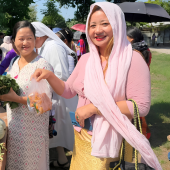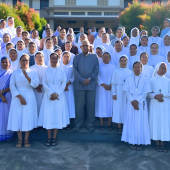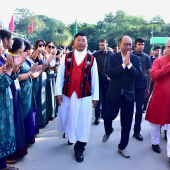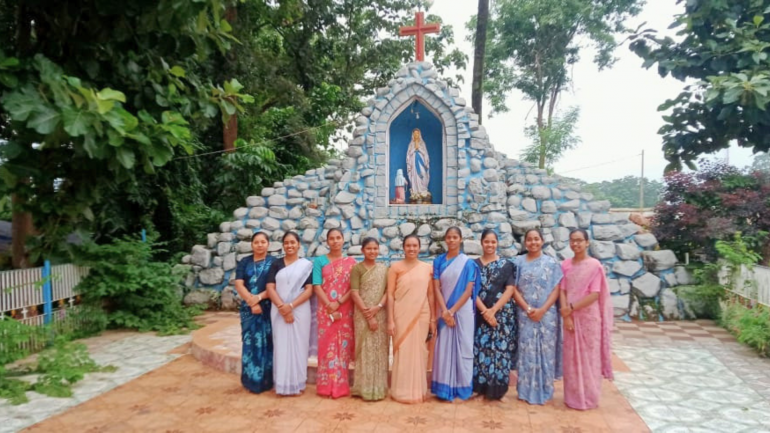
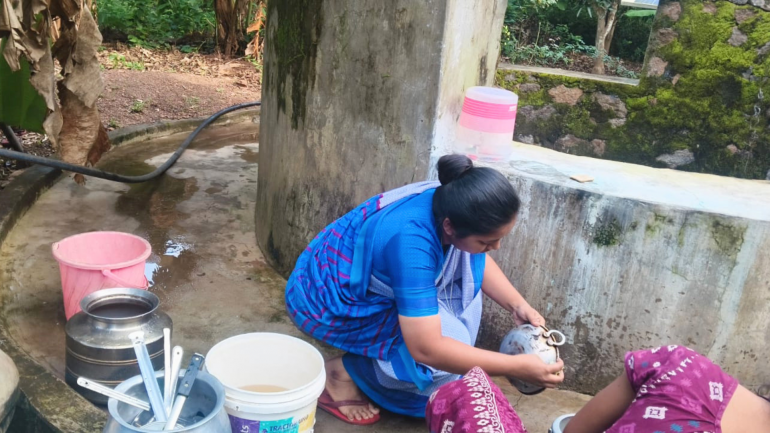
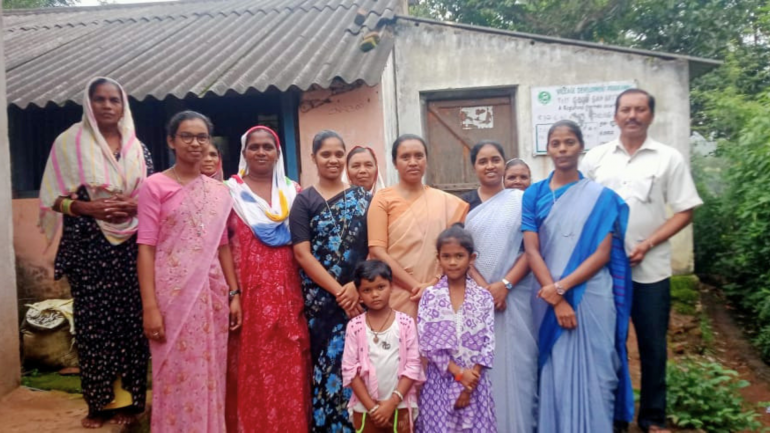
Eight candidates of the Sisters of St. Joseph of Annecy (SJA) are undertaking a pastoral immersion across Catholic communities in Kandhamal, eastern India, to deepen their understanding of faith, community life and religious service among people who have experienced poverty, social challenges and persecution.
The candidates, five from Odisha and three from neighboring Andhra Pradesh, are spending time with Catholic families, pastoral workers, religious communities and parish groups during the immersion program from August 26 to Sept. 10.
Kandhamal is a predominantly hilly district in Odisha, a state on India's eastern coast along the Bay of Bengal. The region has a significant Christian population and has a history of social and religious tensions, including widespread anti-Christian violence in 2007 and 2008.
The candidates are being encouraged to listen to local people's experiences, participate in parish activities and encounter the realities of grassroots pastoral ministry rather than treating the program simply as an academic exercise.
“Pastoral formation begins when we learn to walk with people, listen to their stories and recognize God's presence in their struggles and hopes,” said Rebika, a religious sister who serves as assistant in-charge of the pre-novices and accompanies the candidates as a pastoral guide.
The immersion also provides an opportunity for mutual sharing between the candidates and the Catholic communities they visit.
“For the Christian communities of Kandhamal, the presence of SJA candidates is also an opportunity for mutual sharing,” said Fr. Manoj Kumar Nayak, parish priest of Miraculous Medal Parish, Mondasoro, who organized the immersion program.
“Their visit brings together generations of faith, allowing local communities to share their experiences while the candidates discover the importance of accompaniment, solidarity and compassionate service,” he said.
Fr. Nayak said the experience was intended to help the candidates understand that pastoral ministry extended beyond church structures.
“It includes accompanying families, empowering young people, serving the poor, promoting reconciliation and standing with communities in moments of difficulty,” he said.
For the candidates, encounters with local Catholics have also provided an opportunity to reflect on the meaning of religious vocation.
“We are inspired and moved by the faith of Kandhamal people. We salute them for being firm in faith in Jesus Christ despite persecution, threat, pain and agony in life, especially during the 2007–2008 anti-Christian violence,” said Sameera, one of the candidates from Andhra Pradesh.
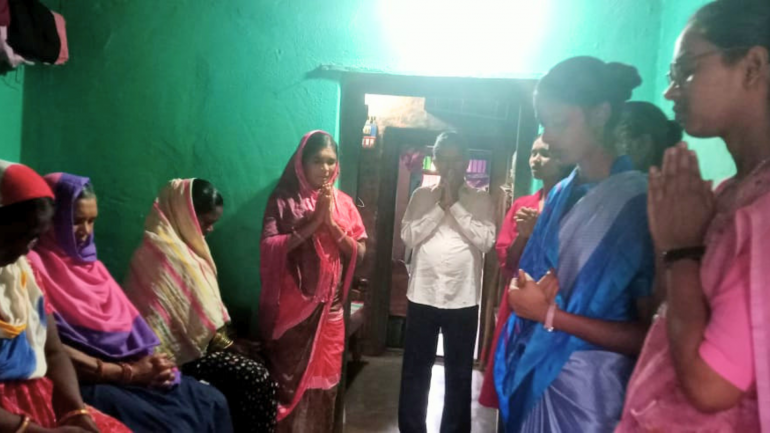
“As we continue our journey through Kandhamal, our experience is becoming an important part of our vocational formation — transforming pastoral learning from something studied in classrooms into a reality encountered through people, relationships and lived faith,” she added.
Christianity was introduced to parts of southern Odisha in the 19th century. The Missionaries of St. Francis de Sales (MSFS) were involved in pastoral work in areas including Ganjam, Puri, Asika and Cuttack between 1850 and 1922.
The Sisters of St. Joseph trace their origins to France, where the congregation was founded by Jesuit priest Fr. Jean-Pierre Médaille in 1650 to serve the sick and poor, particularly in their homes. The congregation later expanded to other parts of France and eventually to India.
The sisters arrived in India in 1849 through the intermediary of MSFS priests and established a presence in the Diocese of Visakhapatnam in present-day Andhra Pradesh.
In March 1872, Mother Justina, then provincial superior at Waltair, sent Sisters Parrone, Ignatius and Mary of the Annunciation to establish a foundation in Cuttack, Odisha.
Today, the Sisters of St. Joseph of Annecy have five communities in the Archdiocese of Cuttack-Bhubaneswar, including in Kandhamal district.
The pastoral immersion forms part of the candidates' preparation for religious life, helping them connect vocational formation with the lived experiences of Catholic communities and the wider social realities they may encounter in ministry.
Radio Veritas Asia (RVA), a media platform of the Catholic Church, aims to share Christ. RVA started in 1969 as a continental Catholic radio station to serve Asian countries in their respective local language, thus earning the tag “the Voice of Asian Christianity.” Responding to the emerging context, RVA embraced media platforms to connect with the global Asian audience via its 21 language websites and various social media platforms.
Latest News