India’s Synodal Journey Seeks Wider Participation in Church Mission, Says Bishops’ Conference Official

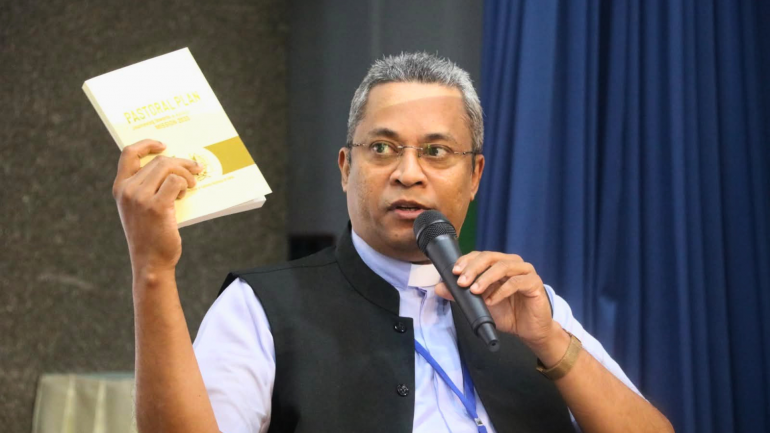
The Catholic Church in India is expanding consultation, lay participation and regional collaboration as part of its effort to build a more synodal and missionary Church, said Fr. Stephen George Alathara, representing South Asia.
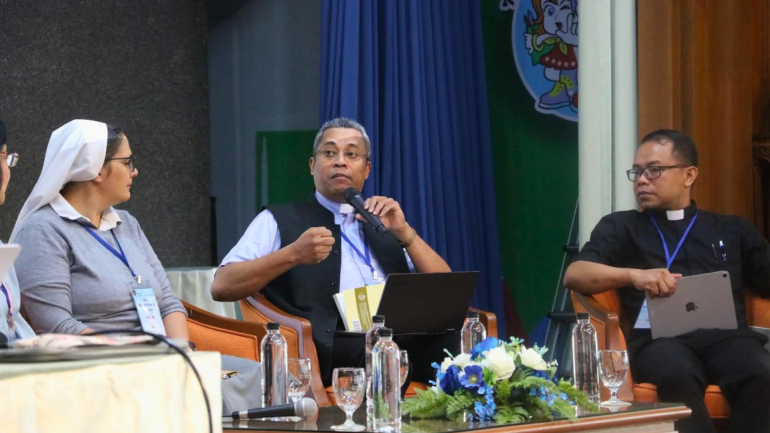
Fr. Alathara was one of four panelists in a discussion titled “Sharing of Local Emerging Initiatives: Best Practices and Challenges” during the three-day National Synodal Teams meeting at Baan Phu Waan, Bangkok.
He is a priest of the Archdiocese of Verapoly, Kerala, and a prolific author, columnist, educator, theologian and visiting professor at several ecclesiastical universities. He is known for his lectures and workshops and has authored 21 books and hundreds of articles. His book Introduction to Catechetics is used as a catechetics textbook in major seminaries in India and abroad. He currently serves as deputy secretary general of the Conference of Catholic Bishops of India (CCBI),
The session, the first activity of the second day on September 2, was held at the Joseph Nattaya Conference Hall and moderated by Fr. Clarence Devadass, executive secretary of the Commission for Synodality.
Fr. Alathara outlined five initiatives aimed at making the Church in India more synodal and missionary.
He noted that India has 132 dioceses and about 18 million Latin Catholic faithful. The country's vast cultural, linguistic and geographical diversity presents both challenges and opportunities for developing a common synodal approach.
The first initiative he highlighted was the development of a national synodal pastoral plan, Journeying towards a Synodal Church: Misson 2033.
The CCBI consulted dioceses, priest councils, pastoral councils and commission secretaries in preparing the plan. More than 5,000 stakeholders were consulted before the pastoral plan was published in 2024.
The plan provides a roadmap for developing a more synodal and missionary Church in India by 2033.
Fr. Alathara also described changes to the structure of national commissions. A 12-member National Council for each commission has been established, bringing together lay experts, religious and priests.
The CCBI has also strengthened its regional structures. India is divided into 14 regions, with regional councils and deputy secretaries helping promote networking, collaboration and dialogue and bringing synodal processes closer to local communities.
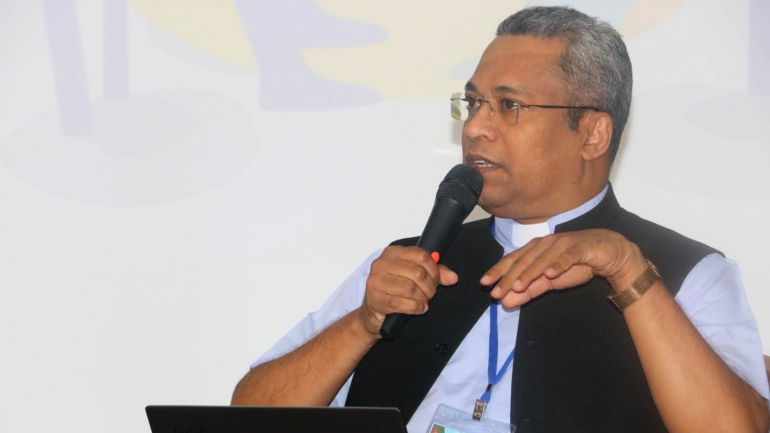
Another initiative involves transforming the CCBI's plenary assemblies into a more consultative process.
Preparatory documents are circulated in advance, allowing bishops to listen to lay people, priests and religious before making decisions. The process has also helped identify priorities for developing a more synodal Church.
Fr. Alathara highlighted the publication of the National Synthesis, the Bhubaneswar Document and other documents, noting that more than 12 books related to the synodal process have been published.
The fifth initiative is a lay missionary movement, through which young Catholics are being trained for missionary service.
About 150 young lay missionaries have been trained and given opportunities for exposure and service in rural India. Fr. Alathara described the initiative as an effort to help lay Catholics take greater ownership of the Church's mission.
Responding to Fr. Clarence's question about how India's cultural diversity affects synodality, Fr. Alathara said the synodal process is creating opportunities for cross-cultural learning.
India's many languages, cultures, ethnic communities and traditions can create challenges, but they also allow Catholics to learn from one another, he said.
National gatherings provide opportunities for participants from different parts of the country to encounter other cultures and identify practices that can be adapted to their own contexts.
He also linked synodality with inculturation, saying the process can help the Church express the Gospel more effectively within local cultural contexts.
Asked about the most significant obstacle to implementing synodality, Fr. Alathara identified clericalism.
He said clericalism can affect not only priests but also lay people and religious communities. A change of mindset is necessary so that members of the Church become more willing to listen to the Holy Spirit and to one another.
The CCBI is responding by organizing programs aimed at fostering this conversion and developing a more participatory Church culture.
Fr. Alathara’s presentation and responses illustrated how India's synodal journey is being pursued not only through consultation but also through changes in Church structures, regional networking, lay missionary formation and broader participation in pastoral planning.
Radio Veritas Asia (RVA), a media platform of the Catholic Church, aims to share Christ. RVA started in 1969 as a continental Catholic radio station to serve Asian countries in their respective local language, thus earning the tag “the Voice of Asian Christianity.” Responding to the emerging context, RVA embraced media platforms to connect with the global Asian audience via its 21 language websites and various social media platforms.
Latest News