A young Indigenous Catholic photographer from Bangladesh is using visual storytelling to preserve the heritage of his community and draw attention to growing threats to their ancestral homeland.
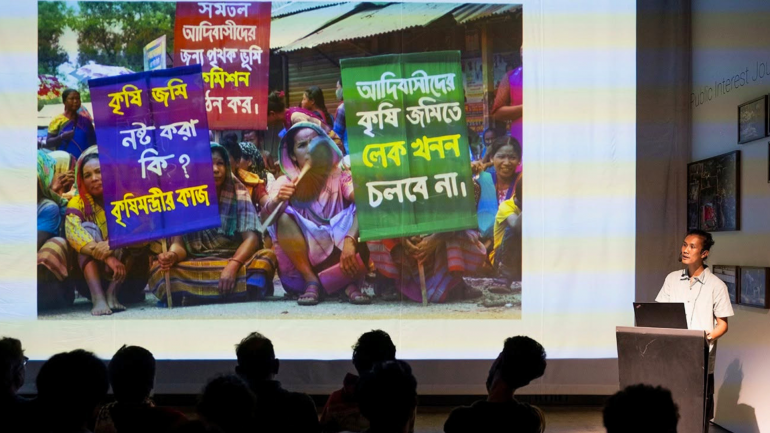
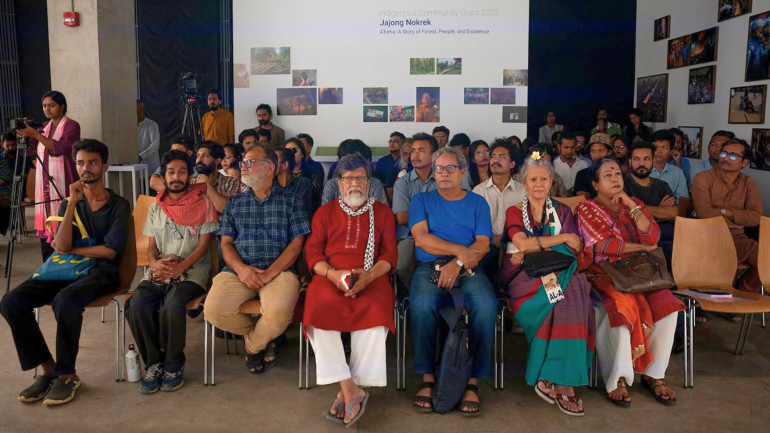
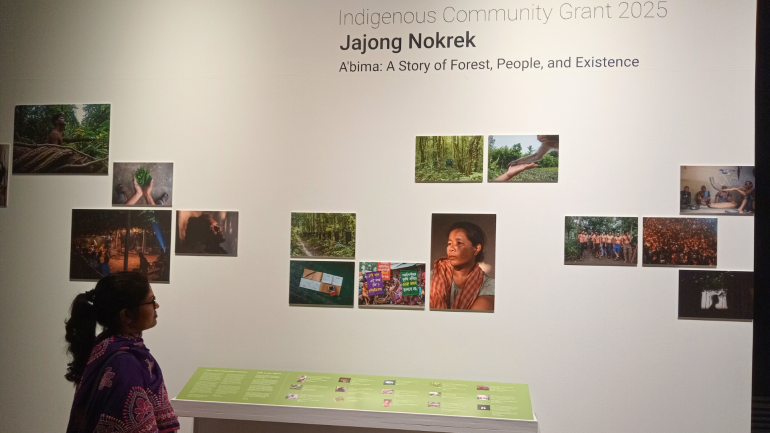
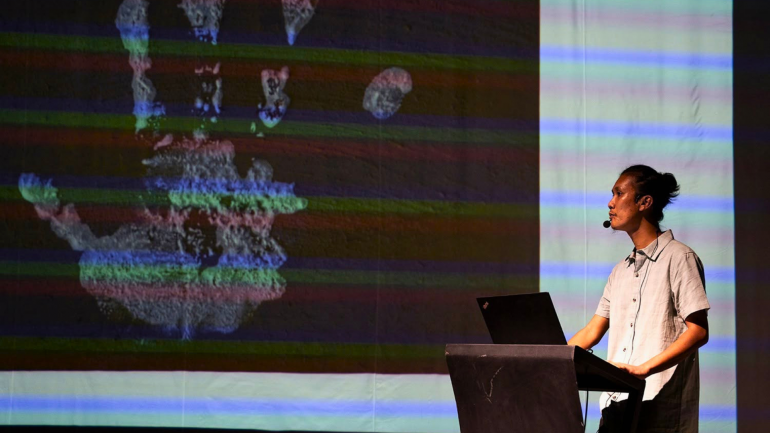
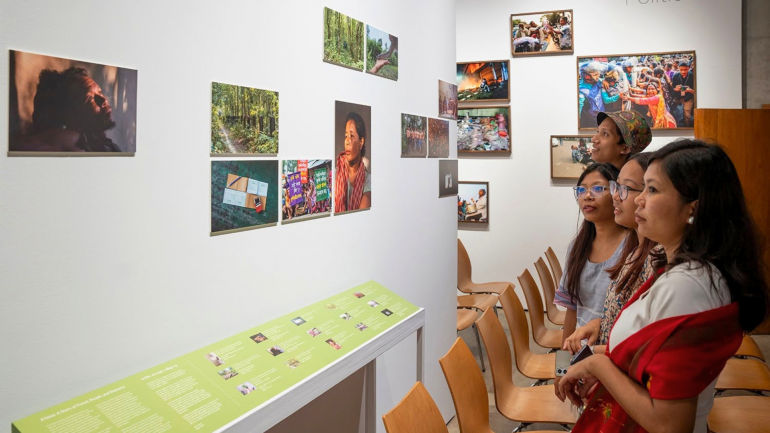
Jajong Nokrek, a member of the Indigenous Garo, or Mandi, community, presented his photo series, “A'bima: Stories of the Forest, People and Existence,” held at DrikPath Bhaban in Dhaka from August 2 to 2. The exhibition is part of the Bangladesh Press Photo Exhibition 2026.
The photographs document the lives, traditions and spiritual relationship of the Mandi people with the Madhupur Sal Forest in central Bangladesh. The region is home to more than 30,000 Garos, most of whom are Christians, and remains central to their identity and way of life.
Through his images, Nokrek captures both the beauty of the community’s relationship with the forest and the growing threats posed by deforestation, land dispossession, monoculture plantations and development projects.
“The original religion of the Garos was Sangsarek, but many of us later embraced Christianity,” Nokrek told RVA News. “Yet our cultural traditions, festivals, food, clothing and deep connection to the forest remain part of our lives. The Madhupur forest is at the center of our existence.”
He said continued damage to the Sal forest threatens not only the environment but also the future of Indigenous communities that depend on it.
“Protecting this forest is essential for the survival of the Garo people, and that is what I wanted to highlight through this exhibition,” he said.
Forest as home, heritage and identity
The exhibition grew out of a project supported by the Indigenous People Grant 2025 of the Bangladesh Press Photo Competition, which Nokrek won. A native of Madhupur in Tangail district, he developed the project after studying photography at Pathshala South Asian Media Institute, one of Bangladesh’s leading photography schools, founded by photographer and activist Shahidul Alam.
The title A'bima means “Mother Earth,” a term used by the Mandi people for the southwestern region of the Brahmaputra River basin. According to Mandi cosmology, humans, forests, animals and other living beings originate from the womb of the Mother Goddess Baguba Barombi.
“The Mandi people identify themselves as Mandi, which simply means ‘human,’” Nokrek explained. “For us, the relationship with the forest is not only ecological. It is spiritual, cultural and ancestral.”
For generations, the Madhupur Sal Forest has provided food, medicinal plants and agricultural resources while serving as a repository of memory, faith and oral tradition. Festivals, songs, stories and customs have developed in close relationship with the landscape.
That relationship, however, is increasingly under pressure.
“This long-standing relationship of coexistence is facing an unprecedented crisis,” Nokrek said. “Deforestation, rubber plantations, land dispossession, development projects and changing forest policies are shrinking the forest. At the same time, they are weakening Indigenous knowledge, language, rituals and cultural practices.”
He said environmental destruction and cultural loss cannot be separated.
“As the land changes, the language, beliefs and future visions of the Mandi people also change,” he said.
A call for environmental justice
Visitors said the photographs went beyond artistic expression to highlight concerns about Indigenous rights and environmental protection.
Nayan Sangma, who visited the exhibition, said the images conveyed a powerful human rights message.
“Through his photographs, Jajong Nokrek has expressed concerns that many human rights activists and journalists speak about, and it deeply touched me,” Sangma told RVA News. “If we want to protect both the Garo community and the environment of Bangladesh, the forest must be saved.”
Organized by Drik Picture Library, the exhibition has attracted visitors interested in photography, Indigenous culture and environmental conservation.
For Nokrek, A'bima is ultimately about more than the Mandi community. It invites a wider reflection on humanity’s relationship with nature and what is lost when forests disappear.
“This is not only the story of the Mandi people,” he said. “It is a story about the deep connection between people, forests and land. When a forest disappears, do we lose only trees, or do we also lose memory, knowledge and an entirely different way of seeing the world?”
Through his photographs, Nokrek hopes viewers will recognize that protecting forests is also a way of safeguarding culture, identity and human dignity
Radio Veritas Asia (RVA), a media platform of the Catholic Church, aims to share Christ. RVA started in 1969 as a continental Catholic radio station to serve Asian countries in their respective local language, thus earning the tag “the Voice of Asian Christianity.” Responding to the emerging context, RVA embraced media platforms to connect with the global Asian audience via its 21 language websites and various social media platforms.
Latest News