Indonesia: Cardinal Suharyo Calls Atma Jaya Community to Renewal and to Be a “Creative Minority”

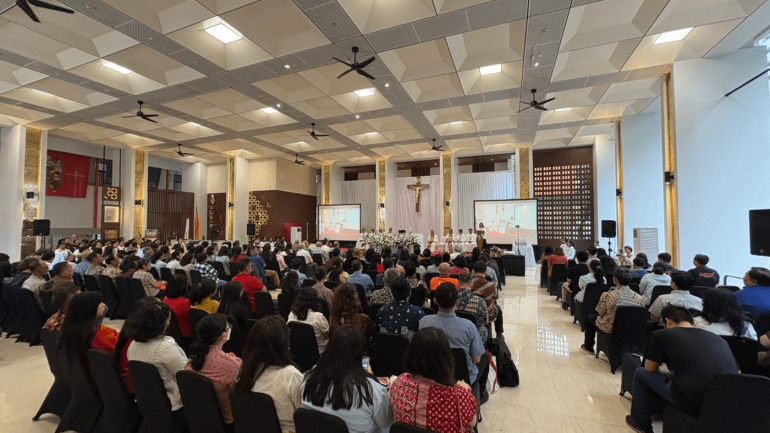
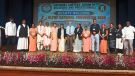
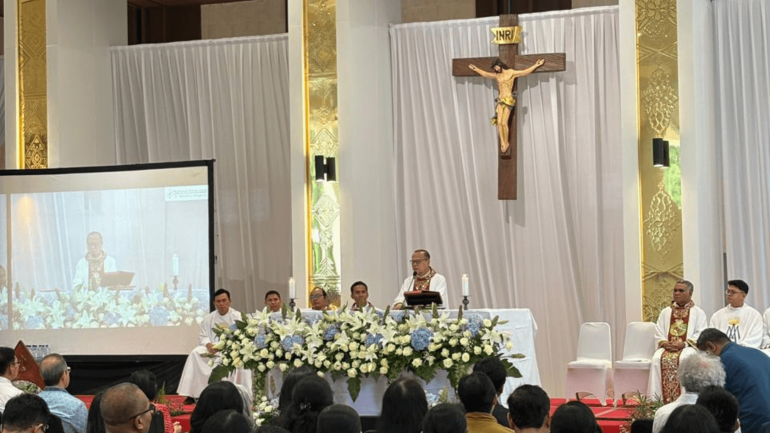
Amid Jakarta’s unpredictable weather, Atma Jaya Catholic University was filled with warmth and gratitude on January 22, as members of the academic community and the faithful gathered for a Thanksgiving Mass marking the inauguration of the newly renovated Hall G.
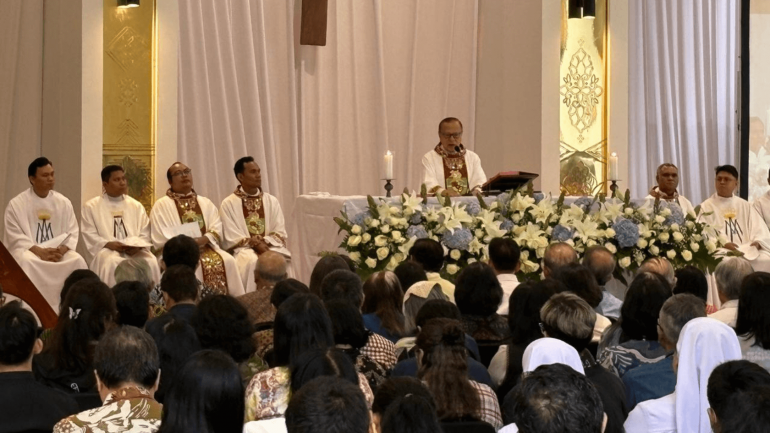
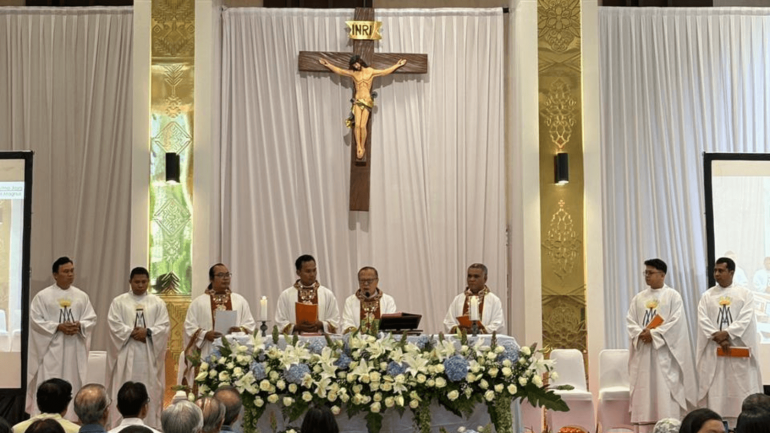
The celebration, held at the Karol Wojtyla Hall, drew such a large crowd that seating proved insufficient. The Mass was presided over by Cardinal Ignatius Suharyo, Archbishop of Jakarta and Chair of the Atma Jaya Foundation Board of Trustees.
More than the unveiling of a refurbished building, the occasion became a moment of reflection and renewal—an invitation to reaffirm the identity and mission of Atma Jaya as a Catholic academic institution in a changing world.
Renovation as a sign of commitment
In his homily, Cardinal Suharyo urged the congregation to look beyond the physical aspect of renovation. Renewal, he said, is not primarily about buildings or facilities, but about commitment—the resolve not to remain complacent or satisfied with the status quo.
“Buildings can be renewed, but what matters far more is the renewal of ourselves,” the Cardinal said.
Atma Jaya, he stressed, is continually called to renew itself so that it may truly become “jaya” (great)—not only in academic achievement and infrastructure, but above all in faithfulness to its Catholic identity.
It is in this context, he noted, that the university’s motto, “For God and Country,” takes on its full meaning. While the motto is inspiring, living it out is demanding, particularly amid rapid social and cultural change. Precisely because of these challenges, the Cardinal said, the university must constantly draw spiritual strength and clarity of direction.
Addressing lecturers, students, staff, and administrators alike, Cardinal Suharyo emphasized their shared responsibility for the institution’s journey and mission.
Learning from Israel’s loss of identity
As a biblical lens for reflection, the Cardinal turned to the history of the people of Israel. He recalled the story of King Saul, whose jealousy toward David grew into resentment and ultimately led to destruction.
Israel’s broader history, he noted, followed a similar pattern. Though liberated from Egypt and led into the Promised Land, the people eventually ended up in exile in Babylon. This tragedy, he said, was not the result of a single failure, but of repeated infidelity—particularly among leaders.
Even King Solomon, renowned for his wisdom, failed to remain faithful to the end of his life, leading to the division of the kingdom after his death. The roots of this crisis, Cardinal Suharyo explained, could already be seen during the time of the Prophet Samuel, when the Israelites demanded a king like other nations, despite being called to be different.
By choosing conformity over faithfulness, Israel gradually lost its identity.
Yet hope endured. From what Scripture calls the “remnant of Israel,” Jesus was born. The faithfulness of a small group became the seed of salvation.
The call to be a “creative minority”
Building on this reflection, Cardinal Suharyo quoted historian Arnold Toynbee, who observed that civilizations rise and fall. What prevents total collapse, Toynbee argued, is the presence of a “creative minority”—a small group that remains faithful to core values and resists being swept away by dominant trends.
Israel, the Cardinal said, was called to be such a contrast community but lost the courage to remain different.
Turning to the Atma Jaya community, he expressed confidence in the university’s idealism and its desire to pursue noble goals. For this reason, he said, Atma Jaya is called to live as a creative minority—not merely adapting to trends, and not allowing its identity to be slowly eroded.
“Then Atma Jaya will truly be ‘jaya’,” he affirmed.
Renewing more than buildings
In this light, the inauguration of Hall G stands as an outward sign of a deeper calling: the renewal of hearts, commitments, and vision.
By inheriting and internalizing the spirit of its founders, Cardinal Suharyo invited the entire academic community to continue walking the path of renewal—building not only structures and facilities, but also strengthening the soul of the institution.
In doing so, Atma Jaya Catholic University is called to remain faithful to its mission and thus truly live its motto: for God and for country.
Radio Veritas Asia (RVA), a media platform of the Catholic Church, aims to share Christ. RVA started in 1969 as a continental Catholic radio station to serve Asian countries in their respective local language, thus earning the tag “the Voice of Asian Christianity.” Responding to the emerging context, RVA embraced media platforms to connect with the global Asian audience via its 21 language websites and various social media platforms.
Latest News