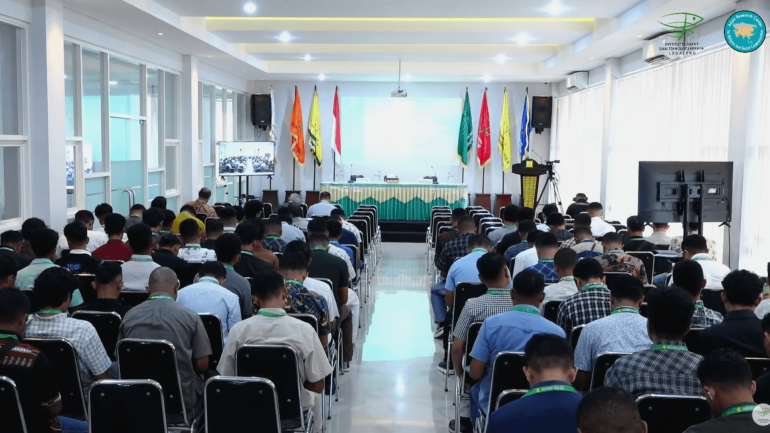
The Institut Filsafat dan Teknologi Kreatif Ledalero (IFTK Ledalero) in Flores, eastern Indonesia, formally opened the International Symposium on Religion, Media, and Culture in Southeast Asia on February 19, 2026, bringing together academics and researchers from Indonesia, the Philippines, Thailand, and Australia.
The three-day gathering, held from February 19–21 is organized in collaboration with the Asian Research Center for Religion and Social Communication of St. John's University, Thailand.
The symposium aims to critically explore how religion, media, and culture interact in a region undergoing rapid digital transformation, particularly in one of the world’s most religiously and culturally diverse contexts.
Digital Religion: Power, Ethics, and Responsibility
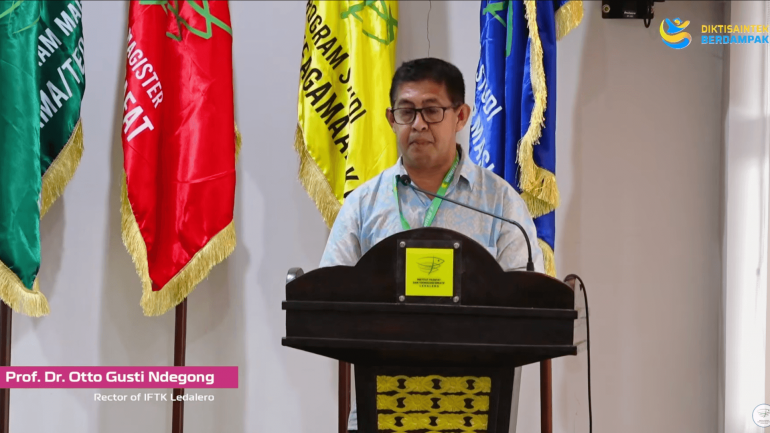
In his opening address, Rector Prof. Dr. Otto Gusti Ndegong Madung, SVD, emphasized that digital religion must be understood as a field shaped by power, ethics, and responsibility.
“Digital technology is not neutral,” he said. “It is a political and ethical arena where religious identity, moral norms, and citizenship are constantly negotiated.”
He explained that digital platforms and algorithmic systems do more than circulate information; they influence religious authority, shape narratives of “truth,” and affect how communities interpret faith and identity. States exercise influence through digital governance—regulating online religious discourse and monitoring content—while religious institutions actively use digital platforms to spread teachings and strengthen communal life.
At the same time, market-driven algorithms amplify certain religious voices while sidelining others, making digital religion a contested space shaped by state control, economic interests, and social expectations.
Fr. Otto called for critical reflection on digital governance that protects religious freedom, pluralism, and human rights. He also briefly traced the historical roots of IFTK Ledalero from St. Paul’s Major Seminary (established in 1932) and highlighted its growth into a higher education institution serving around 2,500 students across seven academic programs.
Media and the Public Imagination of Religion.
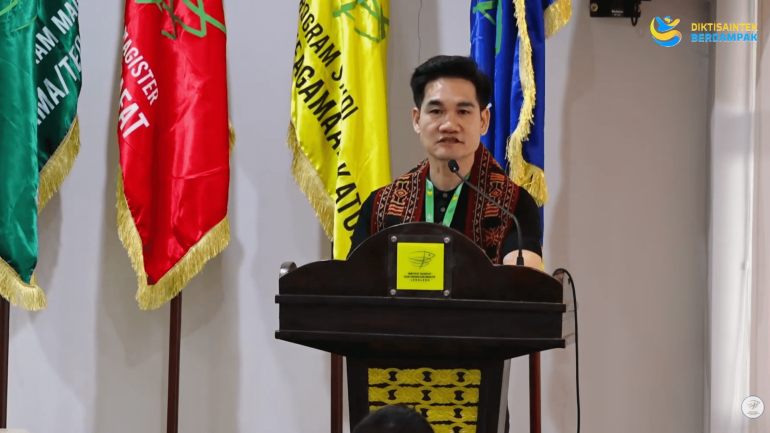
Dr. Anthony Leduc, SVD, of the Asian Research Center for Religion and Social Communication welcomed participants and underscored the inseparable relationship between religion, culture, and media.
“Religion is always expressed through cultural forms—language, symbols, rituals, and daily practices. Today, much of this expression unfolds in digital spaces,” he noted.
According to Dr. Leduc, media does not merely transmit religious messages but actively shapes how religion is represented, interpreted, and judged in the public imagination. In Southeast Asia, where societies are deeply plural, digital narratives can influence whether religion is seen as a source of solidarity and meaning—or as divisive and controversial.
He expressed gratitude for the collaboration between the two institutions under their Memorandum of Understanding and encouraged participants to engage in open, rigorous, and mutually enriching academic dialogue.
Embodying the Sacred in the Digital Age
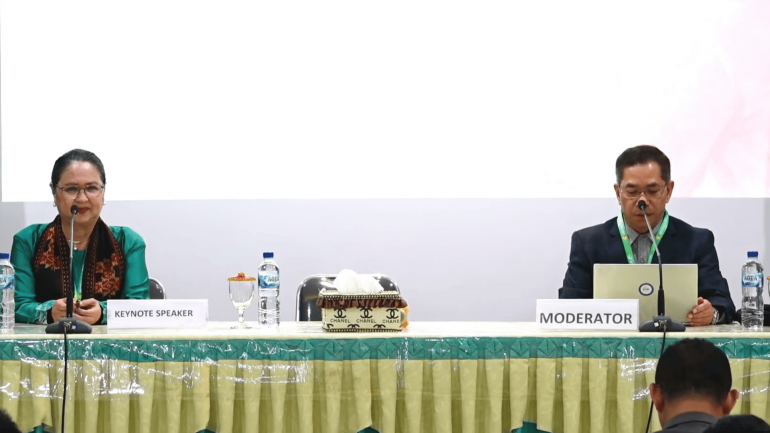
The first keynote lecture was delivered by Dr. Benjamina Paula Gonzalez Flor of the Philippines, who presented on “Embodying the Sacred in the Digital Age: A Communication Approach.”
Dr. Flor argued that digital communication has fundamentally reshaped everyday life, including spiritual practice. Online worship, she said, should not be viewed merely as a substitute for physical gatherings but as a reconfiguration of sacred experience. Through communicative practices mediated by technology, the sacred continues to be embodied and sustained.
Using the mnemonic “EMBODYING THE SACRED,” she described dimensions of digital sacred presence such as devotion, integrity, resilience, gratitude, engagement, and heartfelt participation. When grounded in sincere intention and moral responsibility, digital worship can foster authentic spiritual connection.
Her lecture prompted thoughtful discussion, particularly regarding the distinction between “the sacred” and “the sacrament” in Catholic theology.
Participants acknowledged that while sacraments require physical presence according to Church teaching, digital platforms serve as important tools for catechesis, evangelization, and spiritual accompaniment—especially for those unable to attend in person.
The exchange reflected both theological tensions and pastoral possibilities as faith communities navigate digital culture.
Strengthening Regional Academic Dialogue
The symposium also features panel discussions, including a session on Social Media, Religious Communication, and Peacebuilding, alongside 14 academic paper presentations. Topics range from religious commodification on social media and algorithmic identity formation to artificial intelligence in religious art and ecological awareness among youth inspired by Laudato si'.
By hosting this international forum, IFTK Ledalero reaffirms its commitment as a leading academic institution in Eastern Indonesia to promote interdisciplinary and cross-national dialogue on the future of religion and society in Southeast Asia.
As digital technologies continue to reshape public life, the symposium highlights the urgent need for thoughtful engagement—ensuring that faith, culture, and media interact in ways that promote human dignity, peace, and responsible citizenship in an increasingly interconnected world.