Indonesian Archdiocese Urges Stronger Pastoral Care for Migrant Workers, Trafficking Prevention

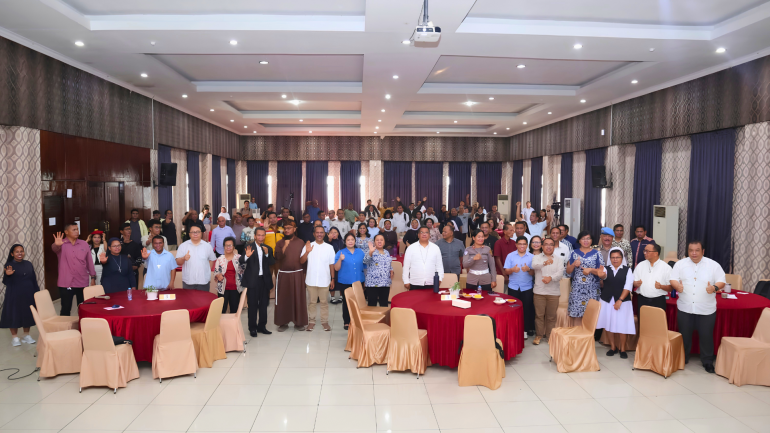
The Archdiocese of Medan in North Sumatra urged the Catholic Church to strengthen pastoral support for migrant workers and their families while taking greater preventive action against human trafficking.
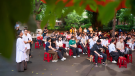
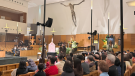
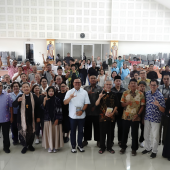
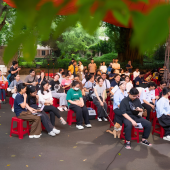
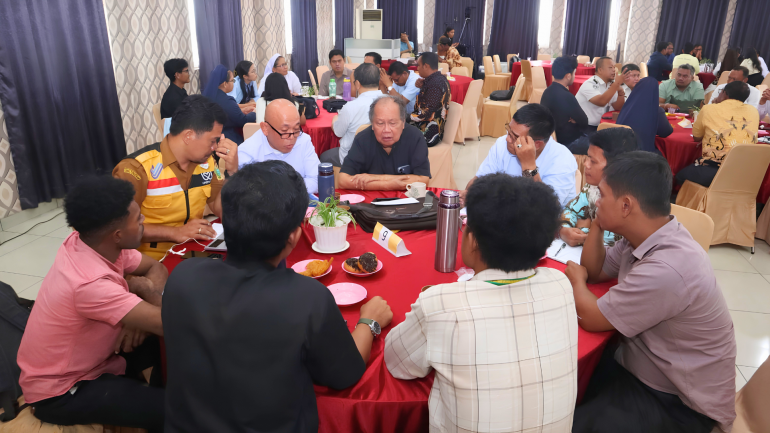
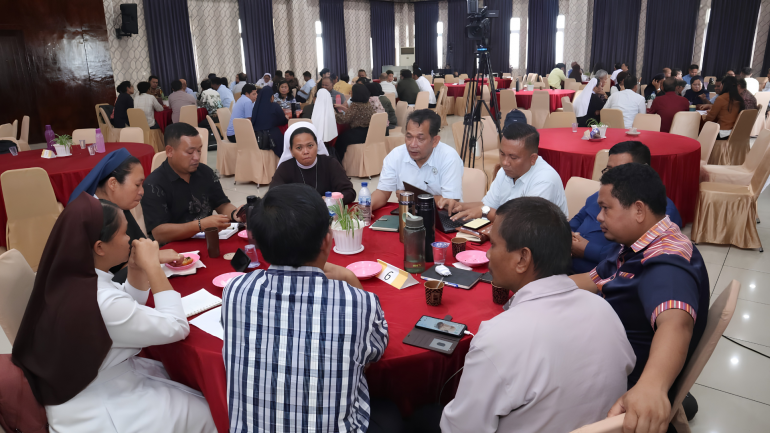
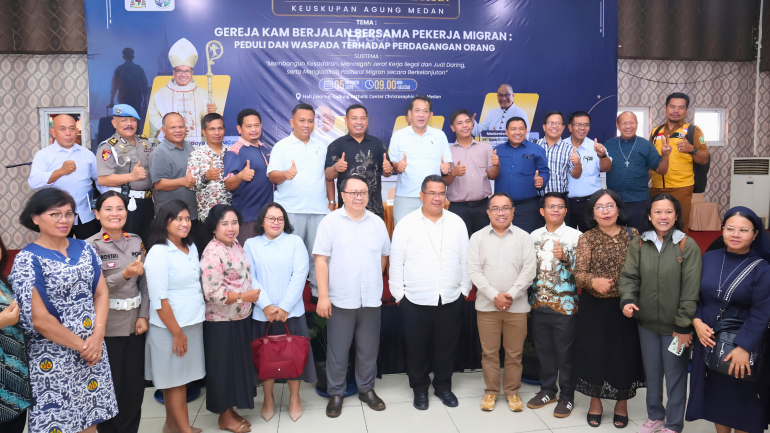
The call came during a migrant pastoral seminar on October 5 at the Catholic Center in Medan, a major city in North Sumatra, Indonesia’s westernmost province. More than 100 participants attended, including representatives from parishes, religious congregations, Catholic organizations, educational institutions and government agencies.
The seminar, organized by the Forum for Migrant and Perantau Pastoral Care of the Archdiocese of Medan (FPMP KAM), was themed “The Archdiocese of Medan Walks with Migrant Workers, Cares and Remains Vigilant Against Human Trafficking.”
Archbishop Kornelius Sipayung of Medan said migration and human trafficking are not merely social or legal concerns but matters of human dignity.
He said pastoral accompaniment should begin before a person leaves home, continue while the migrant worker is away and remain available after the worker returns.
The Church, he said, should move from a reactive approach to one that is preventive and transformative.
Archbishop Sipayung warned that trafficking can begin with seemingly attractive job offers shared through WhatsApp or social media, promises of high salaries and claims that migration procedures are easy. Poverty, limited employment opportunities, family pressure and low digital literacy can increase migrants’ vulnerability.
Referring to the example of St. Francis of Assisi, whose 800th death anniversary was commemorated during the event, the archbishop said the Church should ask who the marginalized people of today are.
They include migrant workers, trafficking victims, people trapped in illegal employment and families affected by online gambling, he said.
“The Church must become a home, a family, and a protector for migrant workers and their families,” Archbishop Sipayung said.
Fr. Marthen Jenarut, executive secretary of the Indonesian Bishops’ Conference Commission for Justice, Peace and Migrant and Perantau Pastoral Care, explained that not every problem involving migrant workers automatically constitutes human trafficking.
He said trafficking involves a process, means such as coercion, fraud or abuse of power, and an exploitative purpose. Fraudulent recruitment, however, can become an entry point to trafficking when workers are deceived and subsequently exploited.
North Sumatra requires particular vigilance, Fr. Marthen said. Malaysia is among the main destinations for migrant workers from the province, and he reported that 2,873 North Sumatra residents had been repatriated after working in the online scam sector as of August 2026.
The seminar identified economic, social, digital and personal vulnerabilities among young people considering migration. Warning signs include unrealistically high salaries, unverifiable recruiters, excessive placement fees, unclear contracts, inappropriate visas, passport confiscation, withheld wages and restrictions on movement.
Participants proposed practical measures including pre-departure screening, safe-migration education, parish-based “Migrant Friends” teams, digital pastoral care, emergency referral systems, victim protection and recovery, economic empowerment, and pastoral data collection.
The seminar also proposed seven principles for migrant pastoral care: Know, Educate, Verify, Connect, Protect, Empower and Restore.
FPMP KAM was recommended as a coordination and networking hub, while parishes would serve as the primary base for accompanying prospective migrants, workers, returning migrants, families and trafficking victims.
The seminar stressed that migration itself is not a problem. Safe and legal migration based on accurate information can improve family welfare and provide skills and work experience. The greater danger arises when migrants use unsafe channels, encounter fraudulent recruiters or are exploited because of their vulnerability.
Participants called for the recommendations to be translated into concrete parish and diocesan action plans, with assigned responsibilities, partners, timelines and regular evaluation.
Radio Veritas Asia (RVA), a media platform of the Catholic Church, aims to share Christ. RVA started in 1969 as a continental Catholic radio station to serve Asian countries in their respective local language, thus earning the tag “the Voice of Asian Christianity.” Responding to the emerging context, RVA embraced media platforms to connect with the global Asian audience via its 21 language websites and various social media platforms.
Latest News