


Indonesian Eco Camp Calls Catholics to Turn Laudato Si’ Spirituality Into Daily Action

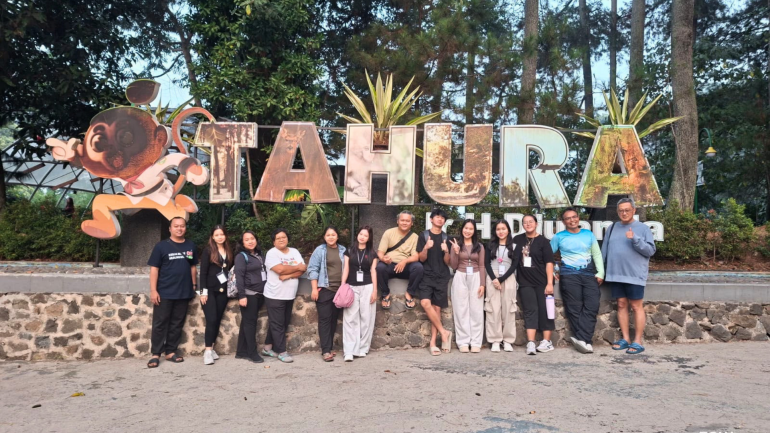
Priests, religious, teachers, university students and environmental advocates from across Indonesia gathered at Eco Camp Bandung in West Java province August 13–16 for an ecological formation program focused on translating Laudato Si’ spirituality into concrete action.
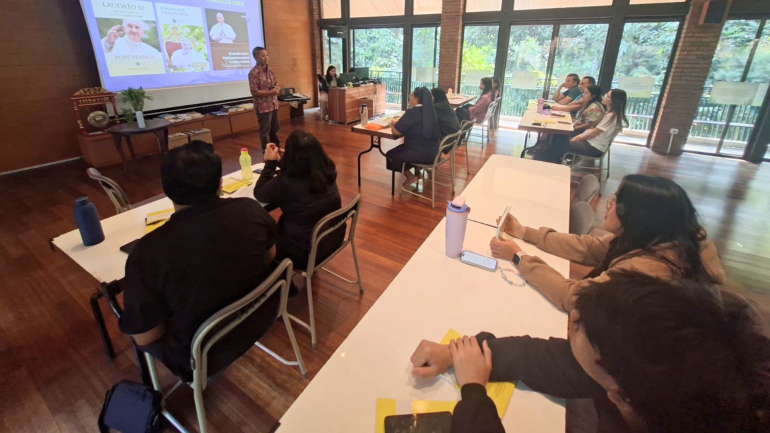
The three-day program, titled “Laudato Si’ Spirituality: Exploring Ecological Spirituality from the Perspectives of Pope Francis and Pope Leo XIV,” encouraged participants to deepen their Christian responsibility to care for the earth as a common home.
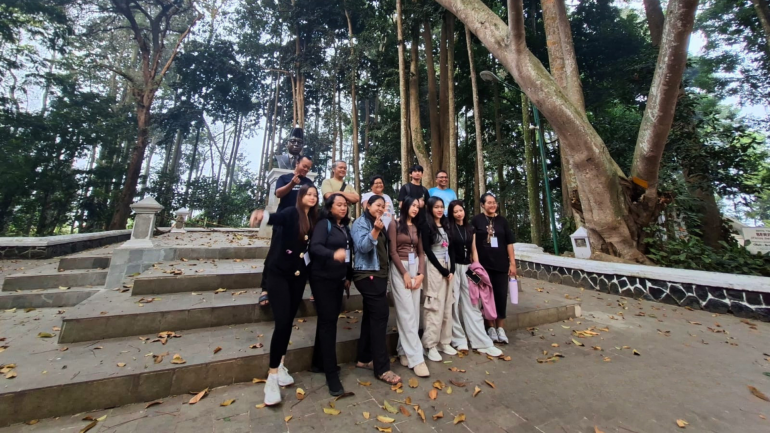
Rather than focusing only on classroom discussions, the program invited participants to experience an ecological lifestyle through practical activities, including waste reduction, food-waste management, energy conservation, mindful consumption and closer observation of nature.
Fr. Ferry Sutrisna Widjaja, Pr, an initiator of Eco Camp Bandung, said ecological conversion must be reflected in everyday choices.
“Begin with yourself. Show it through your actions. Only then invite others to follow,” Fr. Ferry said.
Participants reflected on Catholic social teaching, Laudato Si’, Laudate Deum, the film The Letter, ecological lifestyle practices and strategies for turning personal commitments into community action.
Among the participants were Fr. Yosef of the Diocese of Pangkalpinang, Sr. Tika, SPM, serving in Manokwari, West Papua, teachers from schools under the Strada Association in Jakarta, and university students from the Mentawai Islands in West Sumatra and Ketapang, West Kalimantan.
For some participants, the experience led to a renewed awareness of how ordinary choices affect the environment.
Julianna Sapumaijat, a university student from the Mentawai Islands, said she became more conscious of water, energy, air, food, waste, biodiversity and her own responsibility for the environment.
“I have become increasingly aware that human beings are an inseparable part of the web of life on Earth,” she said.
She said the experience encouraged her to reduce food waste, conserve water and electricity, carry reusable containers and avoid single-use plastics.
Maria Teresa, another participant from the Mentawai Islands, said the program helped her experience nature differently through silent walks, meditation, mindful meals and observation of the environment.
The largely plant-based meals also prompted her to reflect on the environmental impact of food choices.
“We do not have to wait until we can do something big. Change can begin with ourselves and with small habits in our everyday lives,” she said.
Angelika Muras from Ketapang said the program changed her understanding of food and its connection to the environment.
She began seeing a meal not simply as something to consume but as the result of a process involving seeds, soil, farmers, microorganisms and many other elements.
As a tourism student in Yogyakarta, Angelika said the experience could also influence her future work by encouraging more sustainable tourism practices that protect natural resources and benefit local communities.
The participants also discussed environmental challenges in their own areas. Fr. Yosef highlighted the effects of tin mining and oil palm plantations in Bangka, while others pointed to plastic waste, declining green spaces, water shortages and rising temperatures.
At the conclusion of the program, participants identified three areas for continued action: action, advocacy and education.
Commitments included waste segregation, composting, reducing plastic use, conserving electricity and water, reviving school gardens, choosing local and plant-based food where possible, and reducing food waste.
Teachers also planned to bring ecological education into schools and encourage students to live the spirit of Laudato Si’ through practical activities.
Fr. Ferry emphasized that ecological conversion should begin with those closest to us, families, friends, schools, parishes and local communities, rather than waiting for large-scale programs.
The Eco Camp experience, he said, should continue after participants return home.
Founded as Spirit Camp in 2002 and formally developed as Eco Camp Bandung from 2014, the center has provided ecological education and outdoor formation for children, young people and adults in collaboration with schools, academics, artists and environmental groups.
For the August participants, the central lesson was simple: caring for creation is not merely about discussing environmental problems. It is about changing how people live.
As Fr. Ferry reminded them, ecological conversion begins with personal choices that can gradually influence families, communities and society
Radio Veritas Asia (RVA), a media platform of the Catholic Church, aims to share Christ. RVA started in 1969 as a continental Catholic radio station to serve Asian countries in their respective local language, thus earning the tag “the Voice of Asian Christianity.” Responding to the emerging context, RVA embraced media platforms to connect with the global Asian audience via its 21 language websites and various social media platforms.
Comments

Latest News


- Reply
Permalink