

Indonesia’s Grassroots Collaboration Offers Model for Synodality amid Religious Diversity

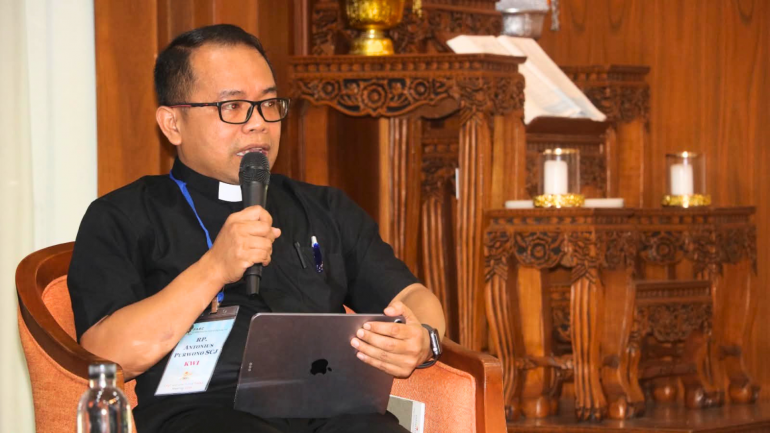
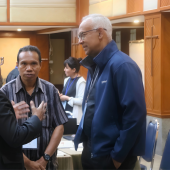
Existing traditions of community cooperation and strong lay leadership are providing important foundations for synodality in Indonesia, said Fr. Antonius Purwono, SCJ, head of the Department of Documentation and Information of the Indonesian Bishops’ Conference (KWI), representing Southeast Asia.
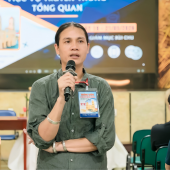
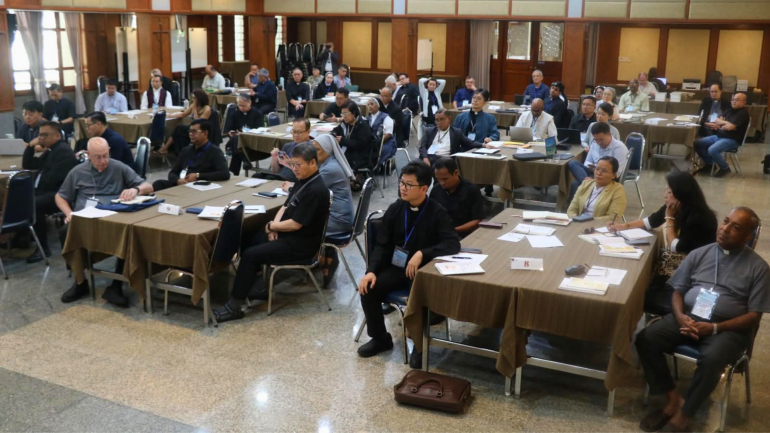
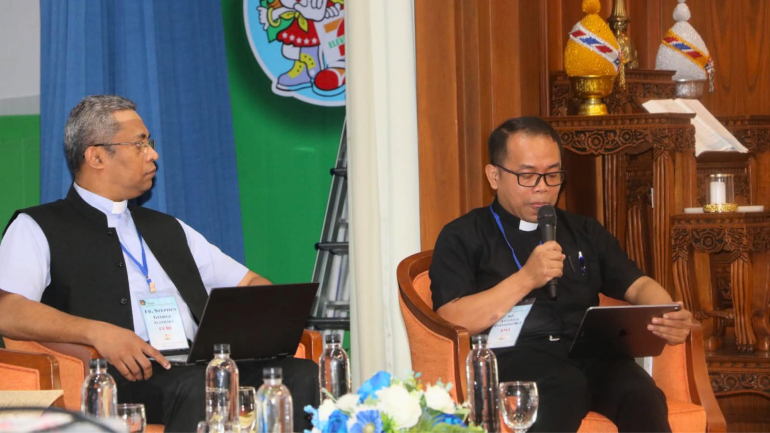
Fr. Purwono was one of four panelists in a discussion titled “Sharing of Local Emerging Initiatives: Best Practices and Challenges” during the three-day National Synodal Teams meeting at Baan Phu Waan, Bangkok.
The session, the first activity of the second day on September 2, was held at the Joseph Nattaya Conference Hall and moderated by Fr. Clarence Devadass, executive secretary of the Commission for Synodality.
Fr. Purwono said synodality in Indonesia is “not starting from zero.”
Many dioceses already have pastoral assemblies, diocesan and pastoral councils, basic ecclesial communities, youth forums and other forms of consultation.
He also highlighted Indonesian cultural practices such as musyawarah, or deliberation, and gotong royong, meaning mutual cooperation.
Such traditions, he said, can provide a cultural foundation for building consensus without simply imposing the will of the majority.
Indonesia's geography also makes lay leadership particularly important.
As one of the world's largest archipelagic countries, Indonesia stretches from Sumatra in the west to Papua in the east, encompassing thousands of islands and diverse cultures and languages.
In remote areas, Fr. Purwono said, lay people, particularly catechists and station leaders, frequently lead celebrations, accompany local communities and sustain the faith.
He presented this experience as an important example of how synodality can emerge organically from local circumstances.
Responding to a question from Fr. Clarence about interreligious dialogue, Fr. Purwono reflected on synodality in the context of Indonesia's predominantly Muslim population.
Catholics are a minority, he acknowledged, and living alongside people of other religions can present challenges. At the same time, everyday relationships between communities can create opportunities for dialogue.
Fr. Purwono drew on his own family experience, noting that some of his relatives are Muslim. He described the practice of visiting Muslim families during Eid and Muslims visiting Christian families during Christmas as examples of relationships that strengthen harmony.
For him, interreligious dialogue is not limited to formal conversations about religious beliefs.
It also involves sharing daily life and building friendship.
He suggested that this dimension of synodality could be an important contribution from Asia to the universal Church because many Asian Catholics live as minorities alongside people of other religious traditions.
Fr. Purwono also pointed to the prevalence of interreligious marriages in parts of Asia as another reason why interreligious relationships deserve greater attention in the continent's synodal journey.
Asked about the greatest challenge to implementing synodality, he identified clericalism, particularly when it creates a gap between consultation and genuine participation.
He said there are situations in which people's proposals may be ignored, some people may be reluctant to express their opinions in front of clergy, and young people and marginalized groups may not receive sufficient attention.
He also identified geography as a major challenge.
In Indonesia's remote islands and regions, long distances between mission stations and communities can make face-to-face participation difficult. As a result, communities on the periphery can become disconnected from decision-making at the center of a diocese.
Fr. Purwono's presentation and responses highlighted a model of synodality rooted in Indonesia's existing community traditions, grassroots lay leadership and everyday relationships across religious boundaries.
Rather than creating participation entirely through new structures, he suggested that the Church can also recognize and strengthen forms of collaboration that are already present in local communities
Radio Veritas Asia (RVA), a media platform of the Catholic Church, aims to share Christ. RVA started in 1969 as a continental Catholic radio station to serve Asian countries in their respective local language, thus earning the tag “the Voice of Asian Christianity.” Responding to the emerging context, RVA embraced media platforms to connect with the global Asian audience via its 21 language websites and various social media platforms.
Latest News