


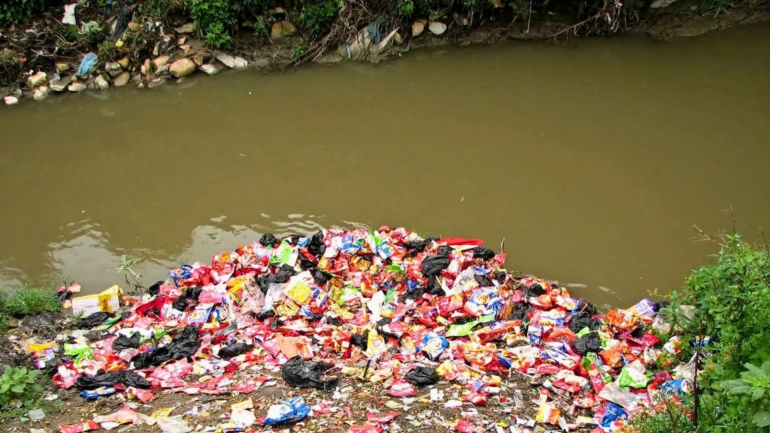
Catholic communities across Malaysia are marking the 2026 Season of Creation with a focus on water, not only as a biblical symbol of life and renewal, but as a resource increasingly threatened by pollution, waste and environmental degradation.
The Season of Creation, observed by Christians worldwide from September 1 to October 4, carries the ecumenical theme “Living Water,” inspired by the prophet Ezekiel’s vision of water flowing from the temple and bringing life wherever it goes.
For the Malaysian Catholic Church, the theme has taken on a local character as parishes, youth groups, and creation justice ministries turn their attention to rivers, forests, water sources, and the communities that depend on them.
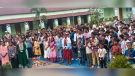
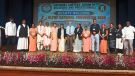
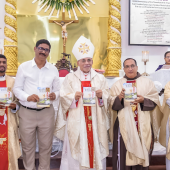
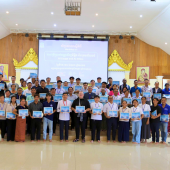
The Episcopal Commission for Creation Justice of Malaysia, Singapore and Brunei (ECCJ-MSB) launched the second year of its REGENERATE! initiative during a special Mass at the Church of St Alphonsus on August 30.
The initiative encourages Catholics to move beyond reflection on environmental problems towards practical action and ecological conversion.
From Scripture to local action
The biblical image behind this year's theme is found in Ezekiel 47:1-12. The prophet describes water flowing from the temple, deepening as it moves outward and bringing life to previously barren places.
The image has provided Malaysian Catholics with a framework for reflecting on the country's waterways and the ecosystems connected to them.
At the Church of Our Lady of Lourdes in Klang, Selangor, parish activities have focused on the meaning of living water and the Christian responsibility to protect creation.
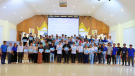
In Ipoh, Perak, the Oblates of Mary Immaculate parish incorporated the theme into youth activities, including a Season of Creation Youth Mass. Natural elements and running water were used to connect young people with Ezekiel's vision, followed by a youth creation camp.
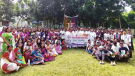
The Archdiocese of Kuala Lumpur has also organised activities around the theme. The Church of Our Lady of Fatima brought parishioners on an ecological excursion to Camp Red in Bukit Tinggi, Pahang, on September 20, while the archdiocese is running a 30-day digital faith journey pairing daily Scripture reflections with practical environmental actions.
In the Diocese of Penang, the Church of the Sacred Heart of Jesus in Kulim hosted an opening Mass on September 1, calling the community to renewed stewardship of creation.
Water connects people and ecosystems
For Malaysian Catholics, the emphasis on water comes as environmental concerns increasingly intersect with public health, food security, indigenous communities and development.
Forests regulate water systems, while rivers support agriculture, fisheries and settlements. When forests are degraded or waterways polluted, the consequences extend beyond nature to communities whose livelihoods depend on them.
Writing in the Catholic Herald Malaysia recently, Fr. Fabian Dicom, national director of Caritas Malaysia, highlighted the human dimension of water.
“Water is not simply another thing we consume. It is what makes life possible. And yet we waste it, pollute it, and increasingly compete for it. Some have too little; others use far more than they need,” he wrote.
His observation gives the Living Water theme a wider meaning. Water is not merely an environmental concern but also a question of human dignity and justice.
The theme invites Catholics to consider how everyday choices, including the use and disposal of water, consumption patterns and attitudes towards natural resources, affect others.
It also echoes the Church's teaching on “integral ecology,” in which concern for the natural environment cannot be separated from concern for people, particularly communities vulnerable to environmental damage.
This is particularly relevant in Malaysia, where indigenous communities in Sabah and Sarawak remain closely connected to forests, rivers and traditional lands.
From celebration to responsibility
The challenge for the Malaysian Church is to ensure that ecological spirituality does not remain confined to liturgies and seasonal campaigns.
The Ezekiel passage offers a demanding image: the water flowing from the temple does not remain there. It moves outward, transforming the landscape and bringing life.
That can also be a challenge to Christian communities. Faith must eventually move beyond church walls into concrete responsibility for the places where people live.
Across Malaysia, parishes are combining prayer, Scripture, youth formation, outdoor activities and environmental awareness. The activities differ, but the underlying message is similar: water is not merely a resource to be consumed. It is part of the web of life entrusted to humanity.
As the Season of Creation moves towards its October 4 conclusion, Malaysian Catholics are being invited to see “Living Water” not simply as a symbol of spiritual renewal, but as a reminder of the responsibility to protect the rivers, forests and communities through which life flows.
Radio Veritas Asia (RVA), a media platform of the Catholic Church, aims to share Christ. RVA started in 1969 as a continental Catholic radio station to serve Asian countries in their respective local language, thus earning the tag “the Voice of Asian Christianity.” Responding to the emerging context, RVA embraced media platforms to connect with the global Asian audience via its 21 language websites and various social media platforms.
Latest News