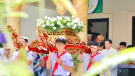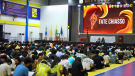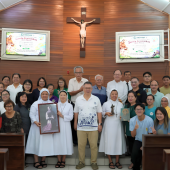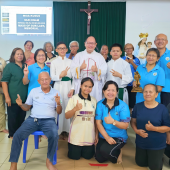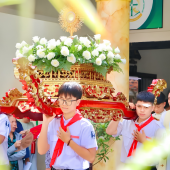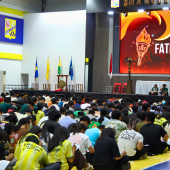



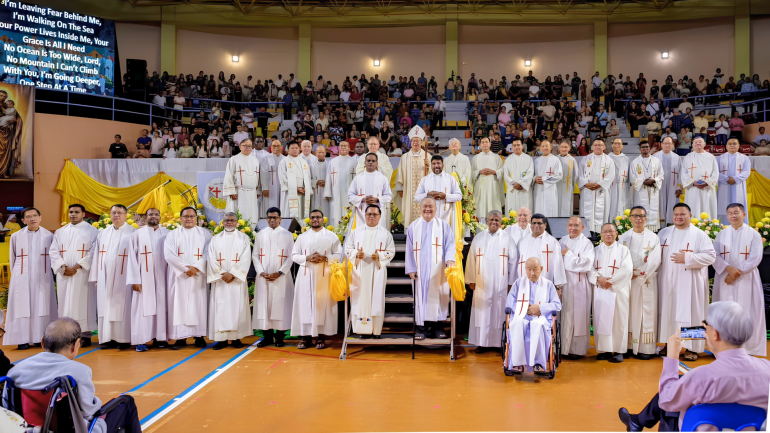
Bishop Richard Ng of Miri called Catholics to strengthen unity, collaborate in mission and trust in God’s providence as the Diocese of Miri celebrated its 50th anniversary with a Thanksgiving Mass attended by approximately 6,000 people in Sarawak, Malaysian Borneo.
“Into the deep,” the bishop’s call, drawn from the Gospel account of Jesus asking Peter to lower his nets for a catch, challenged the diocese to renew its missionary commitment as it looks toward the next chapter of its history.
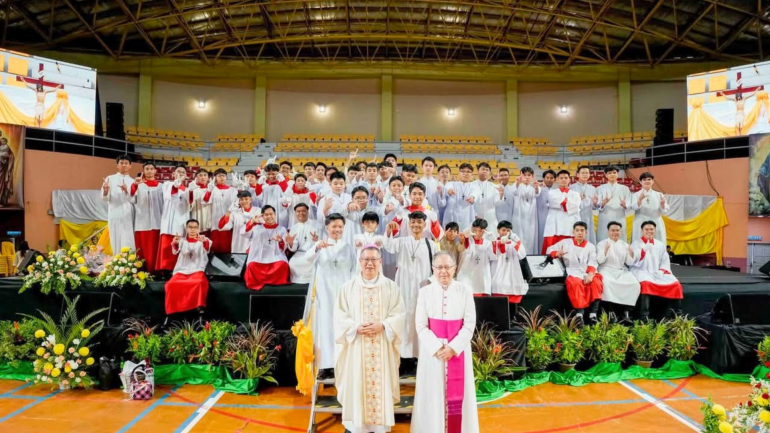
About 40 priests concelebrated the Mass on October 10 at the Miri Indoor Stadium. The celebration brought together clergy, religious, lay faithful from the diocese’s 14 parishes, Christian leaders from other denominations, community representatives and government officials. The diocesan 50th anniversary committee organized the event.
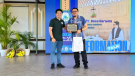
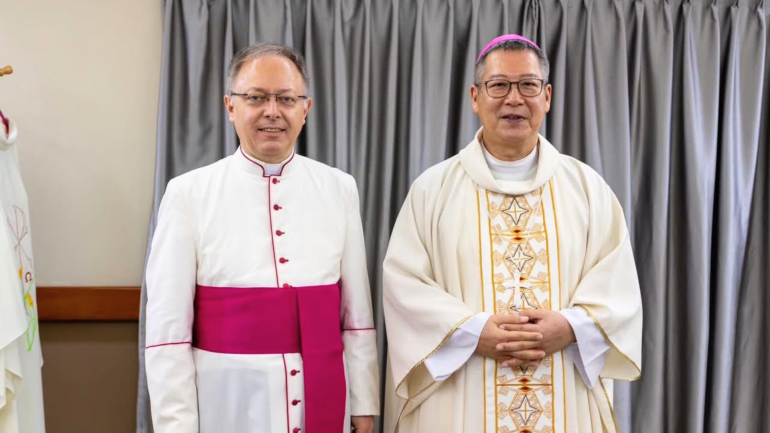
Among those present were Msgr. Marcel Šmejkal, chargé d’affaires of the Apostolic Nunciature in Malaysia; Archbishop Emeritus John Ha; Miri Mayor Adam Yii; Fr. Jesudoss, provincial of the Claretian Missionaries’ Chennai Province in India; Sr. Eva, superior general of the Mensa Domini Sisters in the Philippines; and Fr. Anselm Phang, commissar of the Discalced Carmelite Friars in Singapore.
Reflecting on the biblical readings, Bishop Ng identified thanksgiving, unity and mission as the three themes guiding the anniversary celebration.
Recalling the history of the local Church, he thanked God for the growth of a community whose foundations were laid by the pioneer Mill Hill missionaries.
“Similarly we recall with grateful hearts that the Diocese of Miri is called, chosen, blessed and sent by the Lord to build the kingdom of God in Sarawak,” he said.
The Catholic Church’s presence in Sarawak dates to 1881, approximately 145 years before the anniversary. The Diocese of Miri, established in 1976, serves Catholics in the northern part of the Malaysian state, where Indigenous communities form an important part of the Church’s life.
Bishop Ng emphasized that unity is essential to the diocese’s witness, particularly given its diversity of races, cultures, customs and languages.
Drawing on St. Paul’s Letter to the Ephesians, he recalled the call to be “one body, one Spirit, one hope, one Lord, one faith, one baptism and one God.”
He urged Catholics to examine whether harmony exists within their parishes, among clergy and religious, across communities and within families, and to consider how each person could contribute to greater unity.
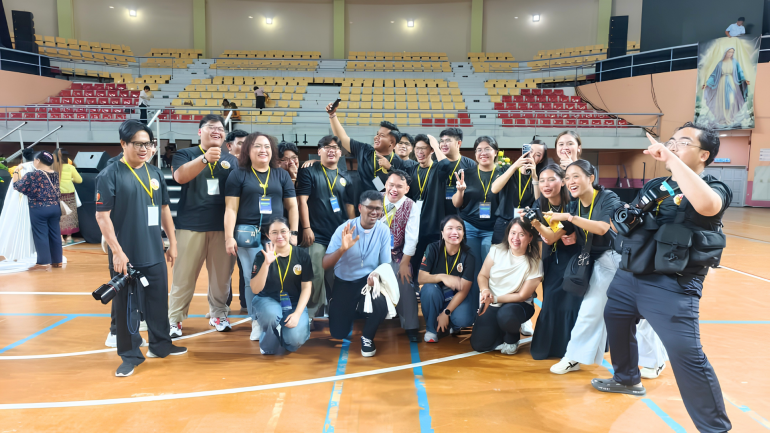
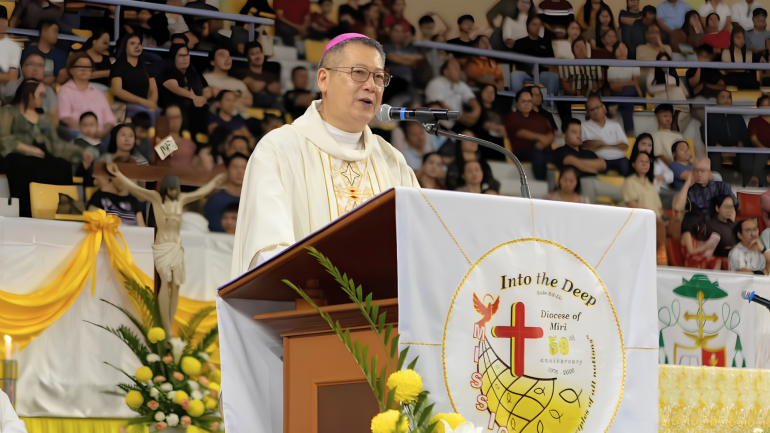
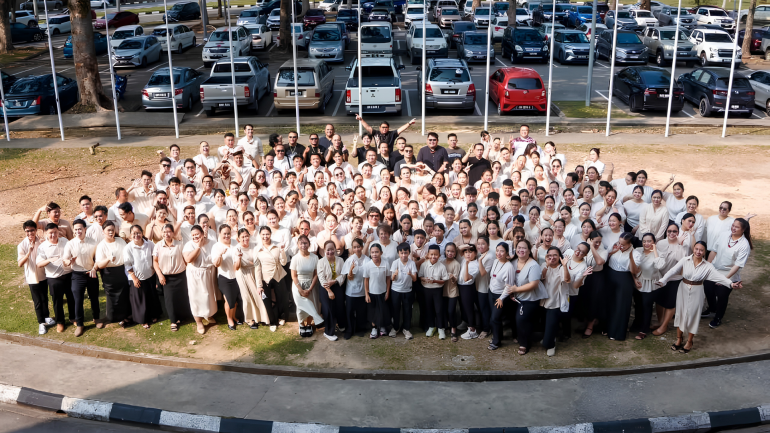
As an example, he cited the solidarity shown by the family and community of the late Fr. Francis Kuleh, whose wake at St. Dominic Church drew a continuous stream of mourners, some of whom stayed overnight. The church and hall were filled for his funeral Mass, he said.
Turning to the Gospel, Bishop Ng said Peter’s decision to lower his nets despite having caught nothing throughout the night illustrated the faith required for mission.
He also highlighted the collaboration of James and John, who helped Peter haul in the catch, as a reminder that evangelization requires the participation of the entire community.
“The Lord chose Peter, his successors and all the faithful to be fishers of men,” he said, adding that all the baptized are called to participate in building God’s kingdom.
Citing St. Mother Teresa of Calcutta, the bishop reminded the congregation: “We are not called to be successful, but faithful.” The fruits of mission, he said, may take years to become visible, requiring patience, perseverance and trust in God.
Looking ahead, Bishop Ng referred to the recent first Malaysian Pastoral Convention, where 900 delegates identified three pastoral priorities: strengthening family life through faith formation, empowering and accompanying young people, and building bridges of unity, dialogue and justice in society.
Radio Veritas Asia (RVA), a media platform of the Catholic Church, aims to share Christ. RVA started in 1969 as a continental Catholic radio station to serve Asian countries in their respective local language, thus earning the tag “the Voice of Asian Christianity.” Responding to the emerging context, RVA embraced media platforms to connect with the global Asian audience via its 21 language websites and various social media platforms.
Latest News