Misereor Urges FABC to Strengthen Church's Prophetic Voice for the Poor and Climate Justice

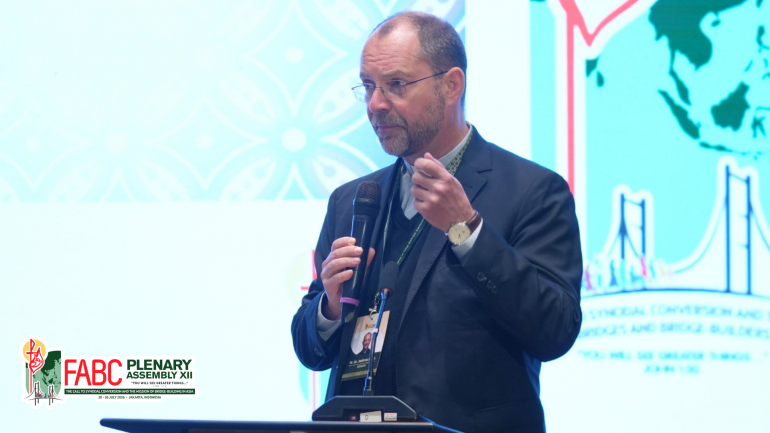
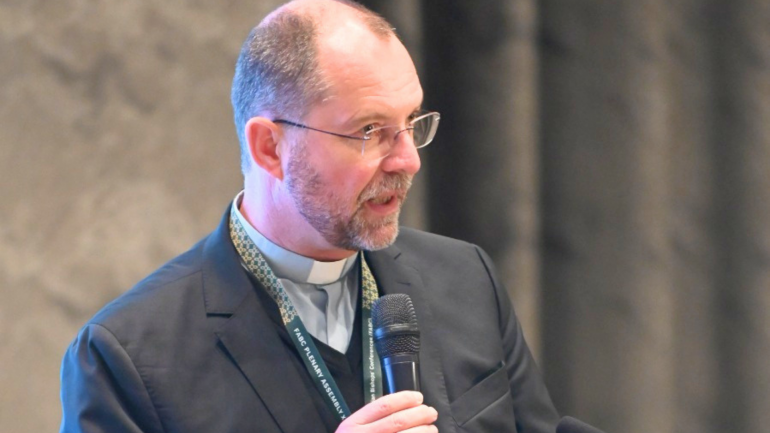
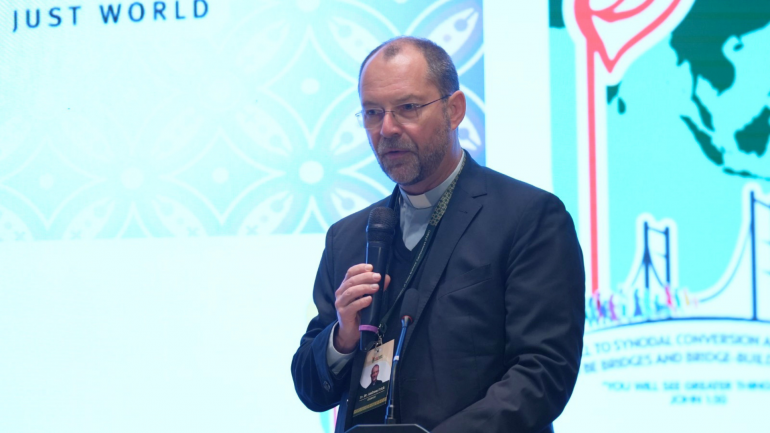
The Church in Asia must strengthen its role as a prophetic voice for the poor, migrants, and people most affected by the climate crisis if it is to remain credible in today's world, Fr. Dr. Andreas Frick, Director General of Misereor, told participants at the 12th Plenary Assembly of the Federation of Asian Bishops' Conferences (FABC).
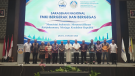
Addressing bishops, priests, religious, and Church leaders gathered in Jakarta on July 23, Fr. Andreas Frick said the Church's mission extends beyond internal renewal to advocating for justice, peace, and the protection of creation.
Representing Misereor, the German Catholic bishops' development agency, Fr. Andreas Frick expressed appreciation for the opportunity to participate in the assembly. He described the openness and spirit of dialogue among Asia's bishops as an important foundation for addressing the complex challenges facing both the Church and society.
Introducing Misereor's global mission, he said the organization currently supports nearly 3,000 development projects in 83 countries through partnerships with more than 1,600 organizations, including numerous dioceses and Church institutions throughout Asia.
Reflecting on his two years as the agency's director general, Fr. Andreas Frick said one question has continually shaped his ministry: "How can the Church respond credibly and meaningfully to the challenges of today and tomorrow?"
He said the same question lies at the heart of the FABC's commitment to becoming a more synodal and missionary Church.
Using the assembly's theme of bridge-building, Fr. Andreas Frick offered an image that drew attention to the importance of building lasting relationships.
"Part of building bridges is building tunnels—creating connections from below, with strong foundations," he said.
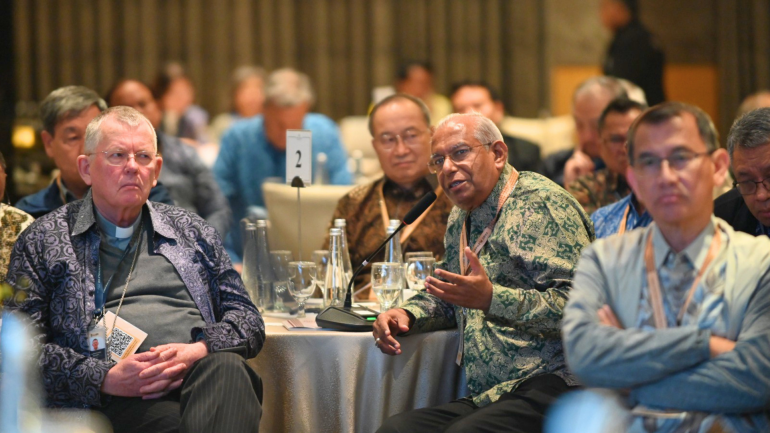

He explained that authentic partnership requires patient investment in trust and solidarity rather than temporary solutions.
For more than six decades, Misereor has worked alongside poor and marginalized communities while advocating for their concerns before policymakers. That mission, Fr. Andreas Frick said, remains rooted in the Gospel's call to uphold human dignity and promote justice.
"Together, we are committed to ensuring that the Church remains a prophetic voice for those on the margins and an advocate for justice, peace, and ecological conversion," he said.
He identified climate justice as one of the defining issues facing the Church today, noting that environmental degradation cannot be separated from poverty, migration, conflicts over natural resources, and social inequality.
Commending the FABC for addressing ecological concerns since 2011, Fr. Andreas Frick encouraged the Church in Asia to continue responding to these interconnected challenges through an integrated pastoral approach.
He also stressed that synodality requires greater participation by women, young people, and the laity, whose voices are essential to the Church's mission.
"Synodality depends on the voices of women, young people, and the laity. Ensuring dignity, respect, and safe spaces for them remains one of our important responsibilities."
He added that the Church must continue examining its structures and practices to ensure they reflect the synodal vision of participation and shared responsibility.
Concluding his address, Fr. Andreas Frick called on the bishops and delegates to continue walking together in solidarity with the poor, defending justice, and caring for creation.
His message reinforced one of the central themes emerging from the FABC assembly: that synodal conversion is measured not only by how the Church renews its internal life but also by how faithfully it stands with the vulnerable and gives prophetic witness to justice, peace, and the integrity of creation.
Radio Veritas Asia (RVA), a media platform of the Catholic Church, aims to share Christ. RVA started in 1969 as a continental Catholic radio station to serve Asian countries in their respective local language, thus earning the tag “the Voice of Asian Christianity.” Responding to the emerging context, RVA embraced media platforms to connect with the global Asian audience via its 21 language websites and various social media platforms.
Latest News