


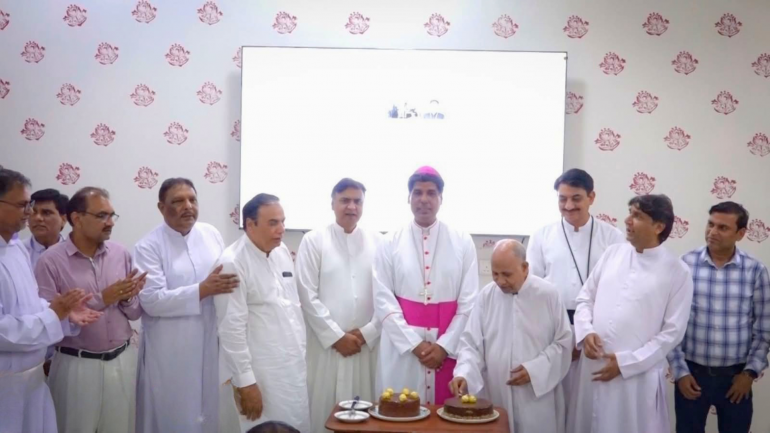
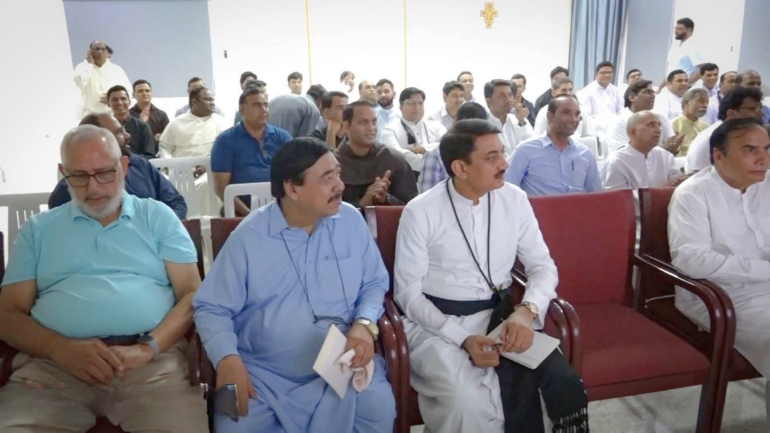
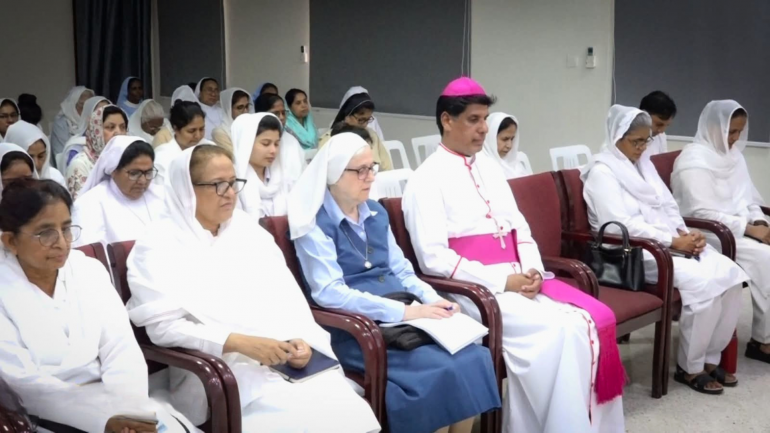
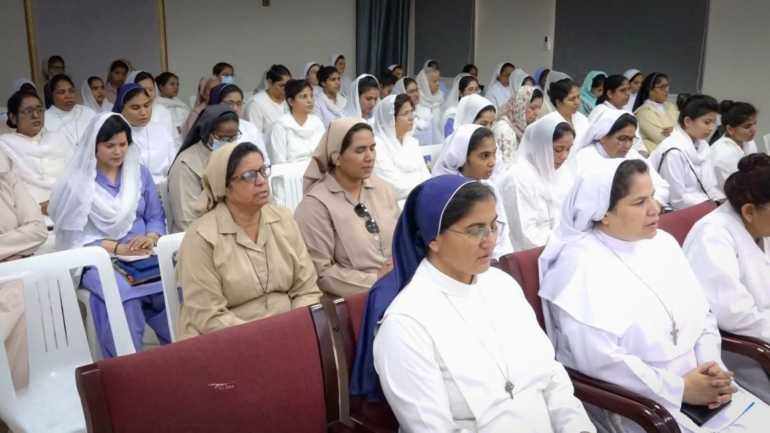
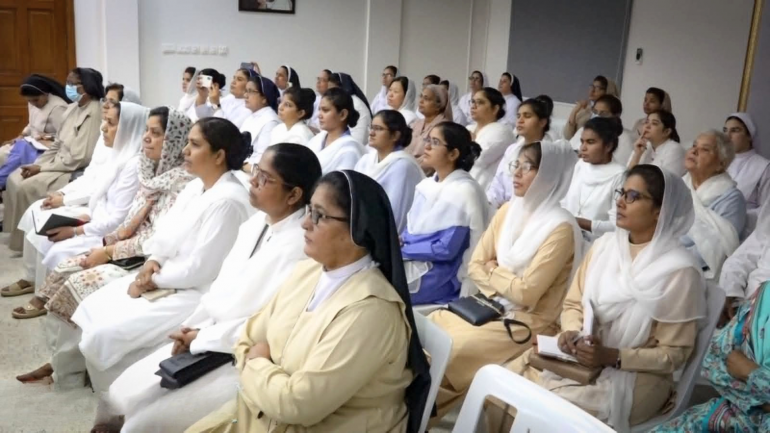
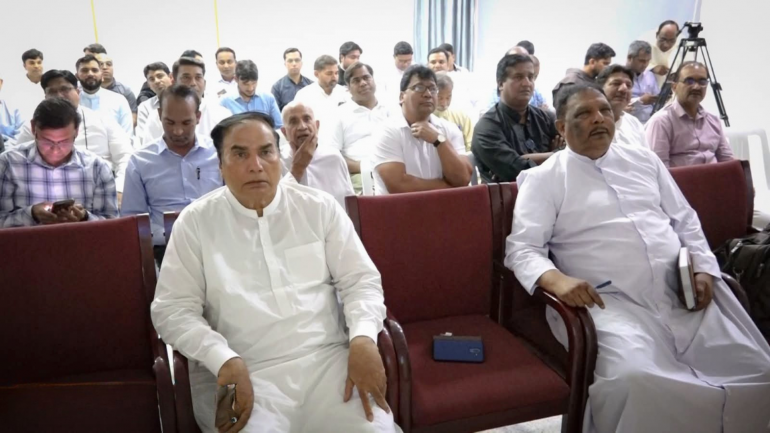
The clergy and the religious sisters of the Archdiocese of Lahore, eastern Pakistan, attended two separate study sessions focused on Pope Leo XIV’s Encyclical, Magnifica Humanitas on June 20, 2026.
Both seminars took place at the Archbishop's House Conference Hall in Lahore. Organized under the guidance of Archbishop Khalid Rehmat, the events brought together around 60 diocesan and religious priests for one session, and over 80 religious sisters for a parallel session, to examine the text and discuss its application to their daily pastoral work.
The dual gatherings served as collaborative forums where the priests and religious sisters separately examined the text to identify its practical application within their respective ministries.
Participants engaged in structured discussions to connect the papal directives directly to their daily pastoral work, analyzing how these global teachings affect local parish management, educational institutions, and community outreach.
Participants specifically debated how to safely integrate digital tools into parish schools while preventing online misinformation from alienating vulnerable community members.
By sharing insights within their respective operational roles, the attendees established shared pastoral strategies to address modern societal shifts uniformly throughout the archdiocese.
Archbishop Khalid Rehmat emphasized during the proceedings that the primary role of technological development must remain the preservation of human dignity, noting that artificial intelligence should serve as an instrument to support, rather than diminish, the intrinsic value of the human person.
"We must ensure that technological progress never outpaces our moral responsibility to protect the weak," the archbishop stated, reinforcing the pastoral urgency of the text.
He further stated that continuous formation on modern ethics is an operational necessity for the Church, as religious leadership must proactively understand technological shifts to guide communities safely.
Archbishop Rehmat concluded by saying that while AI presents distinct opportunities for communication, education, and ministry management, its implementation must be strictly monitored to promote unity, community development, and the protection of vulnerable groups.
Fr. Amjid Yousaf, director Renewal Center in Lahore, conducted both sessions, delivering a breakdown of the encyclical's core themes under its specific focus, Safeguarding the Human Person in the Time of Artificial Intelligence.
In his addresses to both groups, Fr. Yousaf explained the Vatican's teachings regarding the dignity of the human person, the mission of the Church, and the specific responsibilities of the clergy and religious orders.
He stated that the encyclical serves as an operational roadmap, instructing pastoral workers to protect human dignity while managing the practical challenges and utilizing the opportunities presented by artificial intelligence in modern society.
Attendees noted that the seminars provided continuous professional and spiritual formation, which renewed their commitment to their Gospel mission and enhanced cooperation across the archdiocese.
By grounding local ministry in these universal directives, the Archdiocese of Lahore aims to develop a more informed approach to community leadership in Pakistan.
Radio Veritas Asia (RVA), a media platform of the Catholic Church, aims to share Christ. RVA started in 1969 as a continental Catholic radio station to serve Asian countries in their respective local language, thus earning the tag “the Voice of Asian Christianity.” Responding to the emerging context, RVA embraced media platforms to connect with the global Asian audience via its 21 language websites and various social media platforms.
Latest News