

‘Peace Prophet’ Archbishop, Who Mediated Ethnic Conflicts in Northeast India, Dies at 90

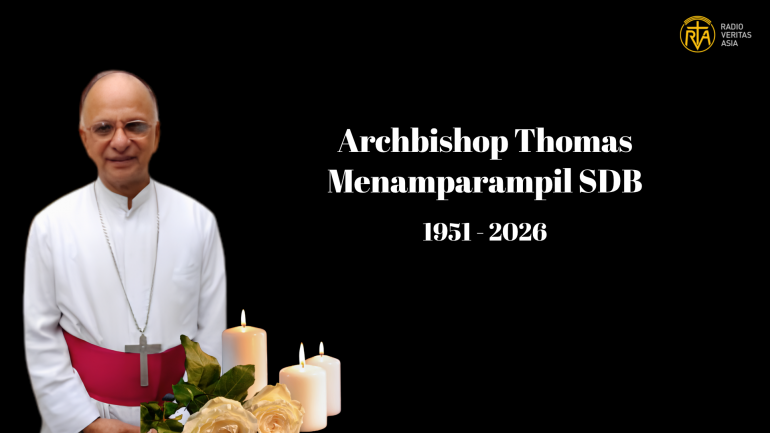
Archbishop Thomas Menamparampil, SDB, Archbishop Emeritus of Guwahati in northeastern India, known for his efforts to mediate ethnic conflicts and promote peace and reconciliation, died on November 25 at the age of 90.
He died at AIG Hospital in Hyderabad, southern India, according to the Conference of Catholic Bishops of India (CCBI). Details of his funeral were awaited.
Fondly known as the “Peace Prophet,” he served as Bishop of Dibrugarh from 1981 to 1992, the first Bishop of Guwahati from 1992 to 1995, and Archbishop of Guwahati from 1995 until his retirement in 2012. He also served as Apostolic Administrator of Jowai Diocese from 2014 to 2016.
Born on October 22, 1936, in Vakakkadu, Kerala, southern India, he completed his primary education at St. Thomas English School in Palai, Kerala, and his high school studies in Darjeeling, West Bengal.
After a year of religious formation in Yercaud, Tamil Nadu, he joined the Salesians of Don Bosco on May 24, 1955. He was ordained a priest on May 2, 1965.
Following his ordination, he was appointed headmaster of Savio Juniorate, a high school in Shillong, Meghalaya, in 1965. He later served as warden of Stephen Hall, the hostel of St. Anthony's College in Shillong, from 1969 to 1972. From 1972 to 1975, he served as vice-provincial of the Don Bosco Society in Northeast India.
Pope St. John Paul II appointed him Bishop of Dibrugarh on July 13, 1981. On April 21, 1992, he was appointed the first Bishop of the newly established Diocese of Guwahati. He was installed on August 16 that year by Archbishop George Zur, then Apostolic Nuncio to India.
When Guwahati was elevated to an archdiocese on August 1, 1995, he became its first archbishop.
During his leadership, Archbishop Menamparampil expanded Catholic education in lower Assam, establishing numerous schools with hostel facilities for boys and girls. His efforts also contributed to the establishment of the Diocese of Bongaigaon in 2000.
His most widely recognized contribution, however, was his involvement in peacebuilding efforts amid ethnic conflicts in Northeast India, a region marked by complex ethnic, cultural, and political tensions.
In 1996, ethnic violence in the Kokrajhar area of Assam forced approximately 250,000 Bodos and Adivasis, particularly members of the Santal community, to flee to more than 50 refugee camps. The conflict claimed more than 500 lives.
Archbishop Menamparampil helped provide relief to displaced communities and initiated dialogue between leaders of the opposing groups. Working with other Christian Churches and the local government administration, he brought representatives of the conflicting communities together to seek a peaceful settlement.
In 1999, he again played a mediation role following clashes between the Kuki and Paite communities in Churachandpur district of Manipur, a northeastern Indian state bordering Myanmar. The violence left more than 400 people dead and resulted in the destruction of hundreds of villages. Through dialogue with leaders of both communities, a settlement was reached.
He also intervened in conflicts between the Dimasa and Hmar communities near Haflong in Assam and between Kuki and Karbi communities near Diphu. Both initiatives contributed to restoring peace in the affected areas.
In August 2003, Churches across Northeast India established a Joint Peace Team, with Archbishop Menamparampil serving as its convener. Several subsequent peace initiatives involving the Social Forum, Don Bosco Youth Services, and Northeast health associations drew inspiration from his work.
In recognition of his contribution to peace and reconciliation, he received the prestigious Maschio Award in Mumbai in 1998. Previous recipients included St. Teresa of Calcutta and social activist Baba Amte.
His work also extended beyond the region. In 1998, he served as special secretary of the Asian Synod in Rome, a major gathering of Catholic bishops focused on the Church's mission in Asia. He was also appointed a member of the Vatican's Congregation for Institutes of Consecrated Life and Societies of Apostolic Life and served as chairman of the Catholic Bishops' Conference of India's Commission for Education and Culture.
In 2010, Pope Benedict XVI entrusted him with preparing the meditations for the Way of the Cross at the Colosseum in Rome on Good Friday.
Archbishop Menamparampil also wrote several books, booklets, and articles on culture, education, peace, and prayer.
Pope Benedict XVI accepted his resignation from the leadership of the Archdiocese of Guwahati in 2012, following his 75th birthday. After retirement, he continued his pastoral service as Apostolic Administrator of the Diocese of Jowai from 2014 to 2016, following the death of Bishop Vincent Kympat.
His efforts to bring communities divided by ethnic violence to the negotiating table earned him the enduring reputation of a peacebuilder in Northeast India, where his work extended beyond Church leadership to reconciliation, humanitarian assistance, and dialogue among communities.
Radio Veritas Asia (RVA), a media platform of the Catholic Church, aims to share Christ. RVA started in 1969 as a continental Catholic radio station to serve Asian countries in their respective local language, thus earning the tag “the Voice of Asian Christianity.” Responding to the emerging context, RVA embraced media platforms to connect with the global Asian audience via its 21 language websites and various social media platforms.
Latest News