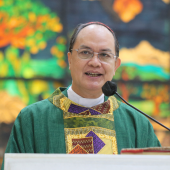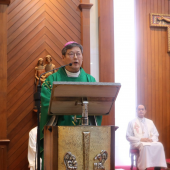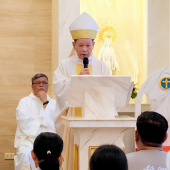



Filipino migrants working across the globe are emerging as “accidental missionaries,” quietly renewing Catholic communities abroad, according to Cardinal Pablo Virgilio David, Bishop of Kalookan and former President of the Catholic Bishops' Conference of the Philippines
Reflecting on the country’s vast diaspora, he described overseas Filipinos as “smugglers of the faith,” carrying religious devotion into homes, workplaces, and parishes far beyond the Philippines.
The Philippines, one of the world’s largest Catholic nations, has an estimated 10 to 11 million citizens living overseas. While migration is often framed in terms of economic sacrifice and family separation, Cardinal David said it is also giving rise to an unintended missionary movement, as Filipino workers bring their faith into everyday life abroad.
Most Filipino migrant workers are concentrated in Asia and the Middle East, particularly in countries such as Saudi Arabia, the United Arab Emirates, Kuwait, Qatar, Hong Kong, and Singapore, where they are employed in sectors ranging from healthcare and construction to domestic work.
Smaller but significant communities are also found in North America and Europe, especially in the United States, Canada, the United Kingdom, Italy, and Spain, where many have settled as professionals and long-term residents.
In these settings, Cardinal David said, Filipino migrants often find themselves entrusted with the most fragile dimensions of human life, as caregivers to the elderly, companions to the sick, and support to families, creating spaces where faith takes root.
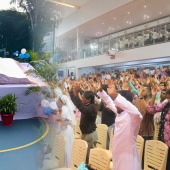
Many migrants, he noted, deepen their religious practice while abroad, turning to prayer and community as sources of stability amid the challenges of displacement and separation from loved ones.
He also pointed to the devotional practices Filipino migrants bring with them, including reverence for the Black Nazarene, the Santo Niño, the Divine Mercy, and Marian devotions such as Our Mother of Perpetual Help, often kept in homes and shared within communities abroad.
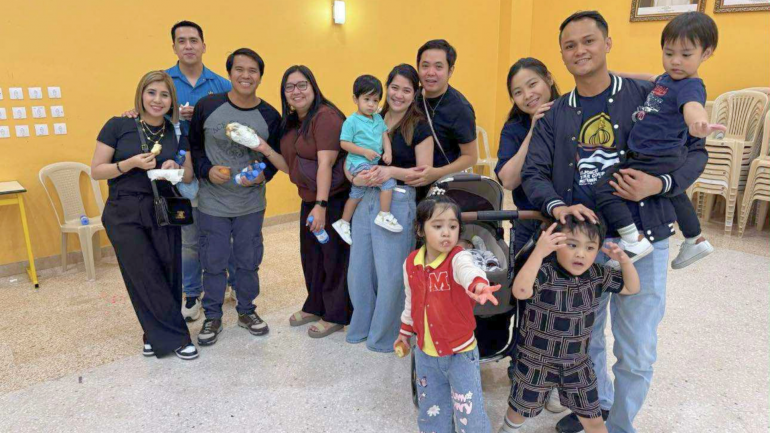
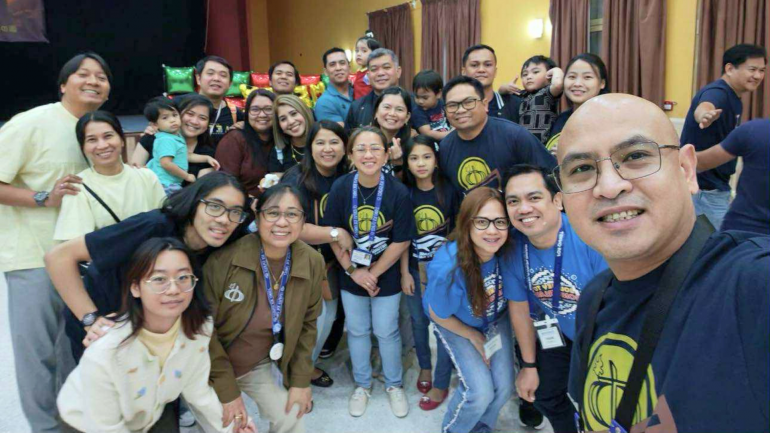
Cardinal David added that migrants also draw inspiration from Filipino saints such as St. Lorenzo Ruiz and St. Pedro Calungsod, whose lives of witness continue to resonate with those who leave home in search of work and opportunity.
“They leave as workers,” David said, “but many become witnesses of the faith.”
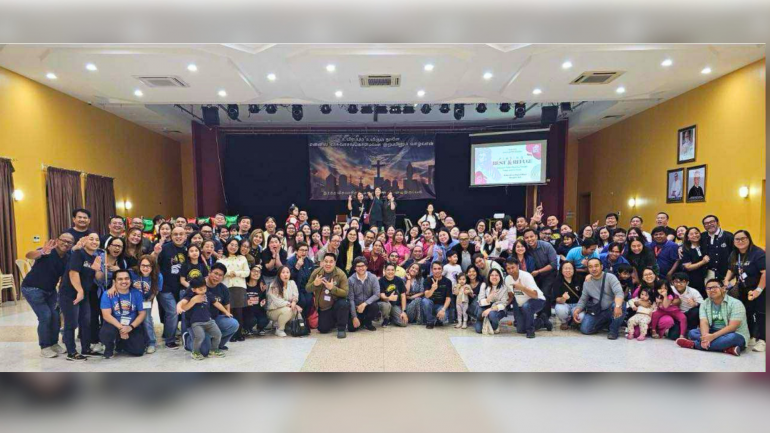
In many parts of the world, Filipino migrants have become a steady presence in parish life, serving in ministries and sustaining communities through their participation and devotion.
“They do not set out to evangelize, but in their fidelity, they become missionaries,” he said.
For Cardinal David, the experience of Filipino migrants points to a deeper reality: that even in the midst of displacement and hardship, faith continues to find new ground.
What begins as a search for livelihood, he said, often becomes a witness that reaches far beyond borders.
Radio Veritas Asia (RVA), a media platform of the Catholic Church, aims to share Christ. RVA started in 1969 as a continental Catholic radio station to serve Asian countries in their respective local language, thus earning the tag “the Voice of Asian Christianity.” Responding to the emerging context, RVA embraced media platforms to connect with the global Asian audience via its 21 language websites and various social media platforms.
Latest News