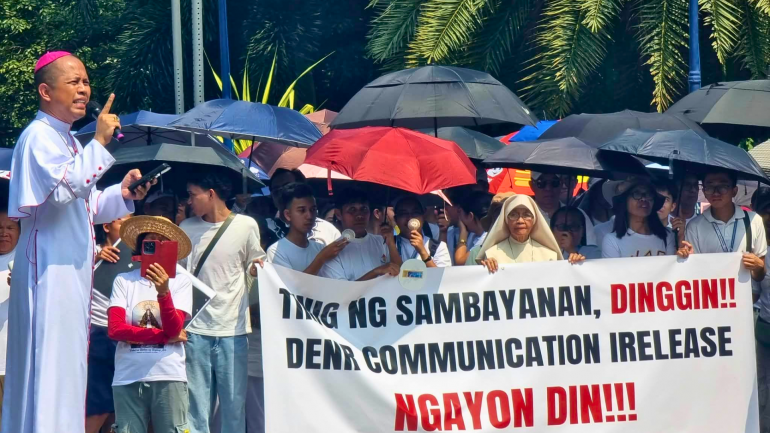
The Diocese of Boac and environmental advocates on the Philippine island province of Marinduque have welcomed the release of an official government communication related to a proposed US$100 million settlement involving Barrick Gold, while calling for urgent environmental rehabilitation and greater transparency in the use of the funds.
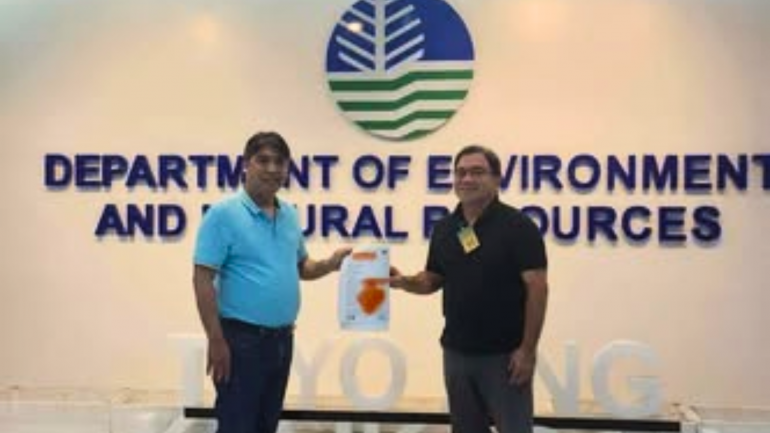
The Department of Environment and Natural Resources (DENR) issued the communication to lawyer Amelthon Sampayo, legal counsel for the original plaintiffs, and Fr. Arvin Anthony J. Madla, who represents the Marinduque Council for Environmental Concerns (MACEC) in a landmark environmental case.
Bishop Edwin O. Panergo of Boac described the release as a “moral and legal milestone” for communities that have endured decades of mining-related environmental damage.
“We receive this communication with gratitude and hope. This is not merely a legal document, it is a moral testament,” Bishop Panergo said.
He said the development recognized the suffering of affected residents and their constitutional right to a safe, healthy and balanced ecology.
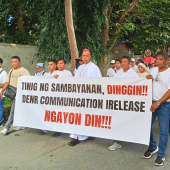
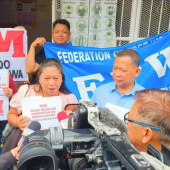
The release followed a September 28 interfaith prayer rally at the Marinduque Provincial Capitol, where residents, Church leaders, environmental advocates and civil society groups called for government communication ahead of an October 4 deadline connected to the proposed settlement.
Marinduque, part of the MIMAROPA region in the central Philippines, has faced the environmental consequences of mining disasters for more than three decades.
The proposed settlement would provide US$100 million over three years for claims and proceedings related to long-standing environmental issues associated with the Marcopper mine. The provincial government has sought technical guidance from the DENR on whether the settlement would adequately address rehabilitation and remediation needs.
The environmental crisis includes the December 6, 1993, collapse of the Maguila-guila Siltation Dam, which caused severe flooding in Mogpog and killed two children. The Diocese of Boac and MACEC said residents of Bocboc and Magapua had been seeking justice for more than 30 years.
In 1996, another disaster involving Marcopper released mine tailings into the Boac River system. The DENR declared the Mogpog River biologically dead about 15 years ago, according to the Diocese and MACEC.
The legal case brought by affected communities, with MACEC's support, remains pending before the Court of Appeals.
The latest development has also renewed concerns about the safety of abandoned mining infrastructure.
A Task Force San Antonio, established by Mogpog Mayor Senen Livelo on September 10, reportedly found severe structural deterioration at the Maguila-guila Siltation Dam and assessed it to be at critical risk of total collapse.
The Diocese and MACEC warned that the findings raised questions about the safety of other abandoned Marcopper structures, particularly the San Antonio Open Pit and Tapian Pit.
They called for immediate risk-reduction measures and environmental remediation, noting that Marcopper had yet to undertake concrete rehabilitation work despite routine DENR monitoring.
The Diocese and MACEC urged national and provincial authorities to ensure that settlement funds were used exclusively for genuine, community-based environmental rehabilitation and protected from political patronage or partisan diversion.
They also called for the direct participation of the original plaintiffs, MACEC, Church leaders and affected residents in preparing a comprehensive rehabilitation plan, identifying priority projects and determining how resources should be allocated.
Bishop Panergo said the September 28 prayer rally had demonstrated the solidarity of residents seeking environmental justice.
“The prayer rally demonstrated the unwavering unity of Marinduqueños,” he said.
“This is not the end of our fight, but a renewed commitment to ensure that justice flows like a river, clean, life-giving, and accessible to all,” he added.
MACEC said it would continue its scientific, legal and moral advocacy and urged government authorities and other stakeholders to act with urgency and accountability to rehabilitate Marinduque's damaged ecosystems and protect affected communities.
The groups said the release of the government communication was an important development but stressed that environmental rehabilitation, public accountability and the participation of affected communities remained essential to addressing the province's long-running mining legacy.
Radio Veritas Asia (RVA), a media platform of the Catholic Church, aims to share Christ. RVA started in 1969 as a continental Catholic radio station to serve Asian countries in their respective local language, thus earning the tag “the Voice of Asian Christianity.” Responding to the emerging context, RVA embraced media platforms to connect with the global Asian audience via its 21 language websites and various social media platforms.
Latest News