


Philippines: How Adorers of the Blood of Christ Nuns accompany Aeta farmers toward independence

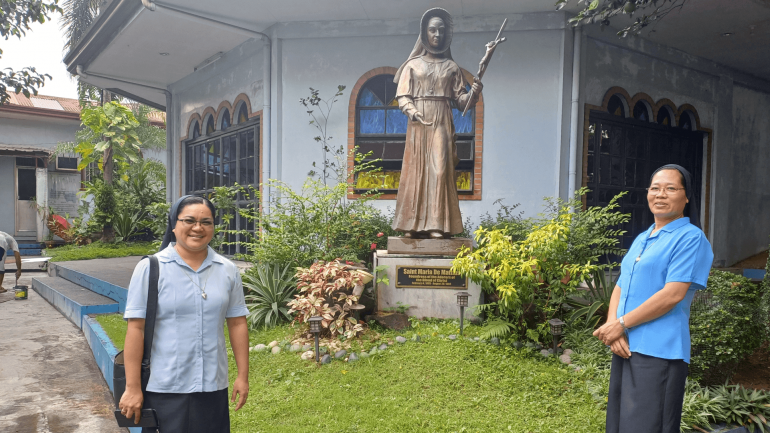
When Aeta farmers first brought their vegetables to Manila in 2023, they had nowhere to sleep.
Members of the Adorers of the Blood of Christ opened their convent doors, offering temporary shelter as the indigenous farmers tried to sell their produce in parish grounds. What began as a gesture of hospitality slowly evolved into something more deliberate: a careful process of accompaniment aimed not at dependence, but at independence.
“We helped them sell whatever was left,” said Sr. Linlee Vios, an Adorer of the Blood of Christ. “At first they sold at St. Vincent parish, and if there were unsold vegetables, we looked for buyers ourselves.”
Eventually, the Aeta farmers no longer needed to stay in parish compounds. Their produce began arriving directly at the sisters’ convent, where the farmers also slept while selling in the city. The sisters reached out to potential buyers, sometimes personally contacting individuals and religious communities.
“When buyers know the vegetables come from the Aeta, they are very responsive,” Sr. Vios said, noting that Claretian priests were among those who regularly purchased the produce.
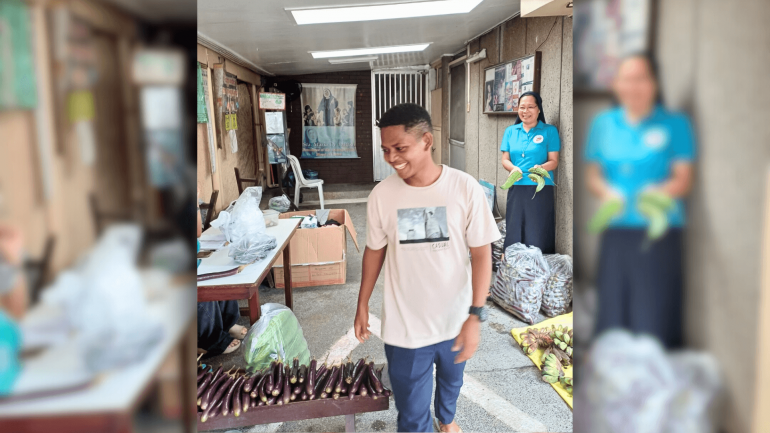
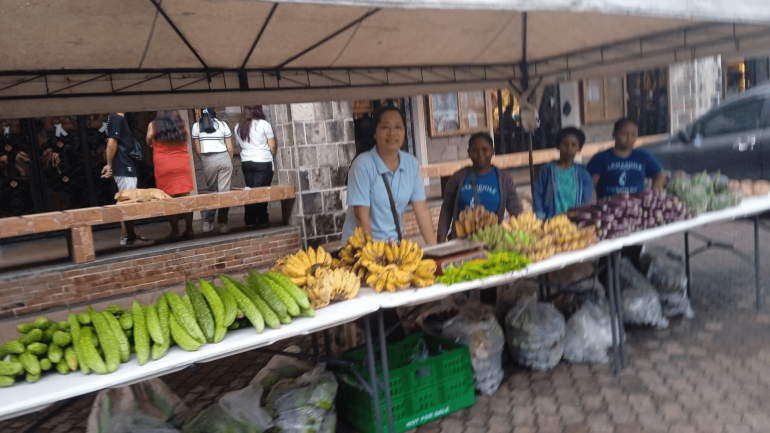
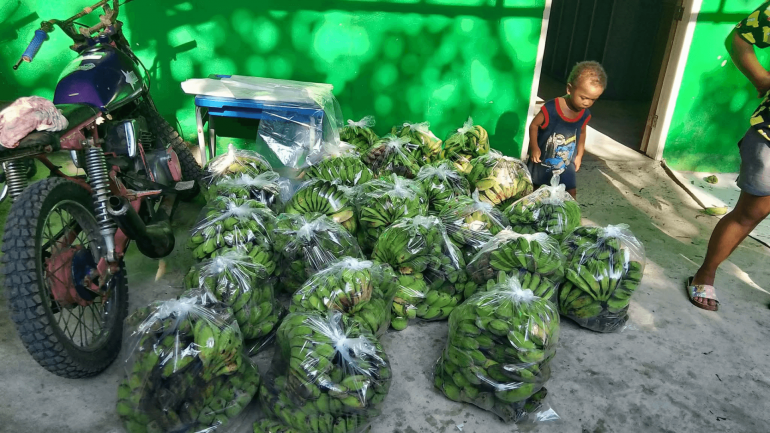
What followed was a shift from occasional selling to stable market access.
Since September 2025, Aeta farmers have been selling regularly at Mt. Carmel Parish every fourth Sunday of the month. Another selling site in Santa Ana has also become steady, addressing one of the farmers’ biggest challenges: location.
“If there’s only one place to sell and many products, it becomes difficult,” Sr. Vios explained. “Buyers also struggle when they don’t know where to find them.”
Fixed selling sites reduced uncertainty for both sellers and buyers. Additional outlets emerged through online marketing among residents of a nearby gated community in Quezon City. The sisters post available produce, collect orders, and arrange delivery or pickup, depending on volume.
The Aeta farmers also sell at the St. Maria De Mattias Mission Center clinic in Quezon City, where patients and visitors can buy vegetables grown on ancestral land in Floridablanca, Pampanga.
Still, growth brought new pressures. With limited manpower, the farmers sometimes struggled to manage crowds when sales were brisk.
“There are only a few Aeta who can stay to sell, especially when many buyers arrive,” Sr. Vios said. “When Sister Flor and I are free, we help them sell.”
The Sisters have stepped back, letting the farmers take charge and become independent.
The Aeta farmers now have their own office in Manila, eliminating the need to sleep at the convent. According to the sisters, this change reflects a growing confidence among the farmers themselves.
“They realized that selling is actually good,” Sr. Vios said. “That’s why they are now eager to continue and improve their livelihood.”
Plans are underway to expand farming areas and add poultry production. The farmers hope to increase both the number of selling sites and the number of vendors—two elements the sisters say must grow together.
“More sites will not work if there are not enough people selling,” Sr. Vios said.
Equally important, she added, is confidence-building.
“When we return to their community in Floridablanca, Pampanga, we are considering formation focused on confidence-building,” she said. “That is what we see some of them need most.”
The sisters also plan to support training on marketing strategies, particularly price adjustments that would allow the Aeta farmers to compete sustainably in urban markets.
The vegetables—bananas, sweet potatoes, bitter gourd, eggplants, long beans, and squash—are grown on ancestral land farmed collectively by the community.
Sr. Flor Montojo Manga, also an Adorer of the Blood of Christ, said around 300 Aeta families live in Sitio Camachile in Floridablanca. Most are now Christian, following years of pastoral visits and accompaniment.
The congregation first met the Aeta community through an outreach program organized with St. Vincent School of Theology in Pampanga. A year after their initial visit in 2022, a Mass was celebrated in the community.
Today, Sr. Manga said, the Aeta are in a period of transition.
“They are moving toward self-management of financial assistance for diversified farming,” she said.
For the sisters, success is measured not by how visible their help remains, but by how unnecessary it becomes.
This approach contrasts sharply with earlier experiences of displacement among Aeta communities living on the slopes of Mt. Pinatubo. When the volcano erupted in 1991—one of the largest eruptions of the 20th century—around 35,000 Aeta were displaced, uprooted from both land and livelihood.
More than three decades later, the vegetables now reaching Manila markets tell a quieter story of recovery: one rooted in land, community, and the slow rebuilding of agency.
“The goal,” Sr. Vios said, “is not that we sell for them forever—but that they can do this on their own.”
Radio Veritas Asia (RVA), a media platform of the Catholic Church, aims to share Christ. RVA started in 1969 as a continental Catholic radio station to serve Asian countries in their respective local language, thus earning the tag “the Voice of Asian Christianity.” Responding to the emerging context, RVA embraced media platforms to connect with the global Asian audience via its 21 language websites and various social media platforms.
Comments

Latest News






- Reply
Permalink