Philippines: National Shrine of Our Lady of Lourdes Celebrates Feast, 75th Parish Anniversary

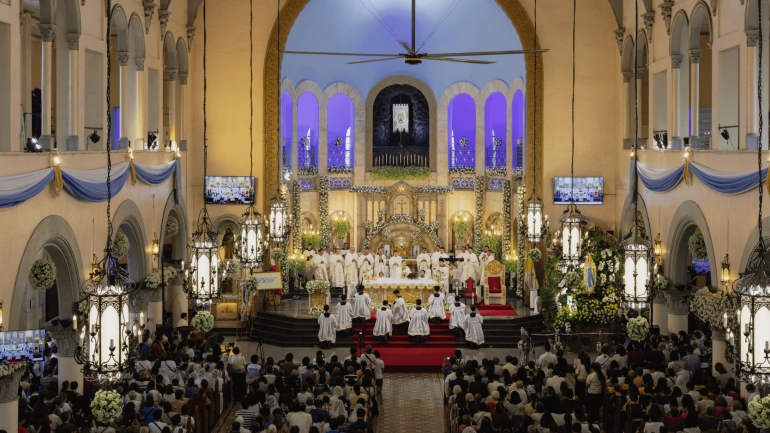
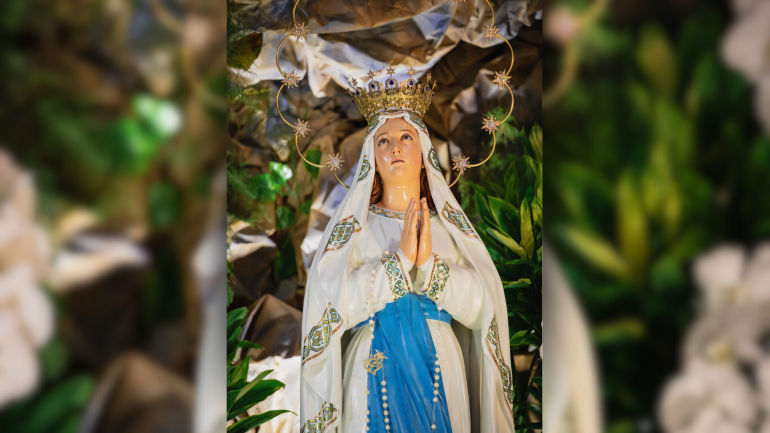
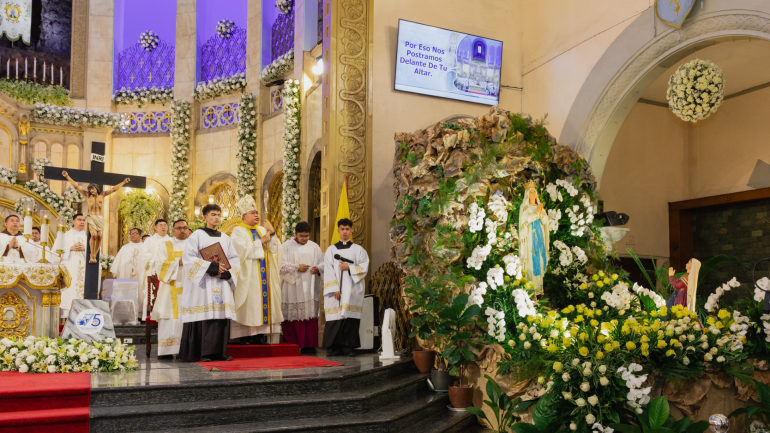
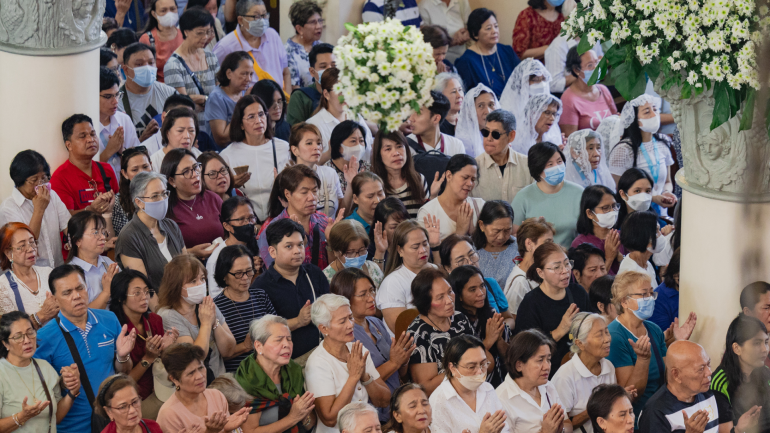
Thousands of devotees gathered at the National Shrine of Our Lady of Lourdes under the Diocese of Cubao, Metro Manila, Philippines, to celebrate the Solemnity of Our Lady of Lourdes, a Marian feast deeply loved by the Filipino faithful, especially the sick who come seeking healing and hope.
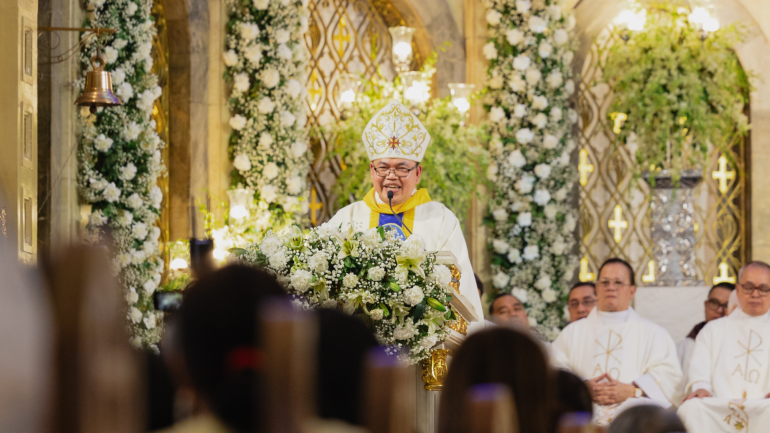
Presiding over the Eucharistic celebration, Bishop Elias L. Ayuban delivered a homily centered on Mary’s maternal attentiveness, portraying her as a mother who sees human suffering and brings it to Jesus.
The celebration was made more meaningful as the shrine community also commemorated the 75th year of its parish fiesta, marking decades of devotion since the sacred image was enthroned in its present home in Quezon City.
A Mother Who Sees and Cares
At the heart of Bishop Ayuban’s reflection was a simple yet profound Marian image, a mother that sees beyond our naked eyes. Mary sees through our hearts. “This is Mary, watchful, compassionate, and never indifferent to the needs of others.”
Drawing from the Gospel story of the Wedding at Cana, Bishop Ayuban highlighted how Mary noticed the couple’s problem even before anyone spoke about it. But Her role, the bishop explained, was not to replace Christ but to lead people to Him. This same maternal mediation continues in Lourdes, where countless pilgrims come carrying burdens of sickness and suffering.
“Mary did not solve the problem herself, she brought it to Jesus. Lourdes reminds us that God is close not only to the physically sick, but also to the wounded in heart and spirit.”
He noted that many wounds are unseen, grief, fear, fatigue, anger, and hopelessness, yet all are held within God’s healing mercy.
From Lack to Grace
Using Cana as a spiritual lens, Bishop Ayuban invited the faithful to recognize their own moments of emptiness and bring them to Mary. He challenged devotees not to dwell on negativity or spread stories about deficiencies, but to become instruments of grace.
“Let us bring to Mary our ‘there is no more wine’, the areas of lack in our lives. Instead of spreading stories about what is lacking, let us become channels of grace.”
The prelate also added that Mary’s guidance remains timeless, pointing to her instruction to the servants at Cana. Mary thought them that obedience and trust, even when God’s ways seem unclear opens the way for transformation.
“Even if it seemed it was not yet time, even if there appeared to be hesitation, Mary did not hold back. Instead, she turned to the servants and said, ‘Do whatever He tells you.’”
Quiet Miracles of God
Linking Cana’s miracle to the spirituality of Lourdes, the bishop reminded the faithful that divine intervention is often gentle and unseen. According to Bishop Ayuban, the miracle at Cana was not marked by loud applause nor made into a public spectacle, yet within that silence, God was at work, performing miracles for His people.
“Let us trust that the God who turned water into wine, and suffering into salvation, continues to work miracles in our lives, quietly, yet always filled with love.”
For many pilgrims, healing in Lourdes is not only physical but also spiritual, bringing renewed faith, restored hope, and inner peace. At times, a weary body and burdened heart simply long to rest in the presence of a mother, and this is what draws devotees to the National Shrine of Our Lady of Lourdes.
From War-torn Intramuros to Quezon City
The devotion to Our Lady of Lourdes in Metro Manila traces its roots to Intramuros, the historic walled city of Manila, where a church dedicated to the Blessed Virgin under the title of Lourdes once stood.
During the Second World War, the Battle of Manila in 1945 left Intramuros in ruins. The Lourdes church was among those heavily damaged, forcing the faithful to safeguard the sacred image amid the devastation.
To protect it from further destruction, the image of Our Lady of Lourdes was first transferred for safekeeping to what is now known as Sta. Teresita del Niño Jesus Parish in Quezon City. There, devotion quietly continued while the Church discerned a permanent home for the image.
As the post-war Catholic population began to grow in Quezon City, plans were made to establish a new shrine where the Marian devotion could flourish once more.
In the early 1950s, the image was finally transferred to its new sanctuary along Kanlaon Street. A church was built to house the revered statue, and it was formally enthroned there, marking the rebirth of the Lourdes devotion outside Intramuros.
Over the decades, the church became a spiritual refuge, especially for the sick and those seeking healing, mirroring the grace associated with the apparitions of Lourdes in France.
Eventually, in recognition of its national significance and the steady stream of pilgrims, the church was elevated as the National Shrine of Our Lady of Lourdes.
Today, the shrine stands not only as a place of prayer but as a living testament to resilience, born from war, preserved in faith, and sustained by generations of Marian devotees.