

RVA General Manager Urges Digital Missionaries to Share Stories of Local Communities


Catholic digital missionaries should use online platforms to tell stories rooted in the lives, cultures and experiences of local communities, a Philippine priest and media executive said.
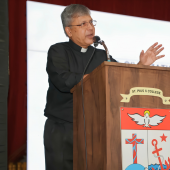
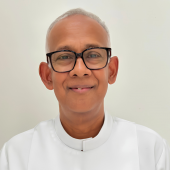
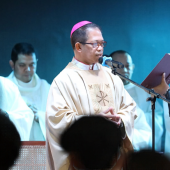
Fr. Felmar Fiel, SVD, general manager of Radio Veritas Asia, shared his experience of using digital media to tell stories about people, communities, Philippine culture and history during the “Understanding Asia Realities” panel on September 11 at the First Asian Catholic Digital Missionary Assembly in Quezon City.
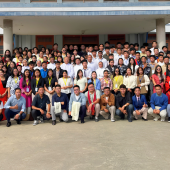
The assembly, being held September 11–13 at the Pope John Paul II Auditorium in Quezon City, brings together Catholic digital missionaries, communicators and content creators from across Asia to explore how the Church can proclaim the Gospel in the digital environment.
Fr. Felmar, a Divine Word missionary from Mindanao in the southern Philippines, said his own journey into digital storytelling grew out of his experience as a blogger and radio broadcaster.
He entered radio ministry in Cebu in 2014. After several years in broadcasting, he realized that he also had stories and reflections to share beyond his radio programs and became more intentional about creating digital content.
Today, he produces English-language content and reflections through Radio Veritas Asia while also maintaining digital platforms in Cebuano.
His Cebuano content includes stories about Philippine culture and history, allowing him to communicate with people through experiences and subjects that are familiar to them.
For Fr. Felmar, digital evangelization is not simply about producing religious material. It also involves recognizing the stories already present in local communities and finding ways to share them through digital platforms.
Stories about local people, communities and their culture can help audiences see their own experiences reflected in the Church’s communication, while also introducing those realities to wider audiences.
His experience also led him to use different platforms for different audiences.
He said his Facebook content is intended not only for Catholics but also for non-Catholics and people from other religious communities. His YouTube reflections, meanwhile, are directed more specifically toward a Catholic audience.


This approach allows the same digital mission to take different forms depending on the language, culture and audience being reached.
Fr. Felmar's use of Cebuano is particularly significant in the Philippines, an archipelago of more than 7,000 islands with hundreds of languages and distinct regional cultures. Cebuano is widely spoken in Mindanao and the central Philippines.
By telling stories in the language of the people, he said, digital missionaries can communicate in a way that is closer to their everyday experiences.
The discussion also pointed to the importance of telling stories that audiences can recognize and relate to rather than relying only on stories from distant places or cultures.
For Asian digital missionaries, Fr. Felmar's experience offers a model of digital evangelization that begins with listening to local communities and discovering the stories that matter to them.
Digital platforms can then become a means of bringing those stories to wider audiences while preserving the language, culture and human experiences from which they emerged.
The mission, in this approach, is not simply to produce more Catholic content, but to communicate the faith through the real stories of the people and communities the Church serves.
Radio Veritas Asia (RVA), a media platform of the Catholic Church, aims to share Christ. RVA started in 1969 as a continental Catholic radio station to serve Asian countries in their respective local language, thus earning the tag “the Voice of Asian Christianity.” Responding to the emerging context, RVA embraced media platforms to connect with the global Asian audience via its 21 language websites and various social media platforms.
Latest News