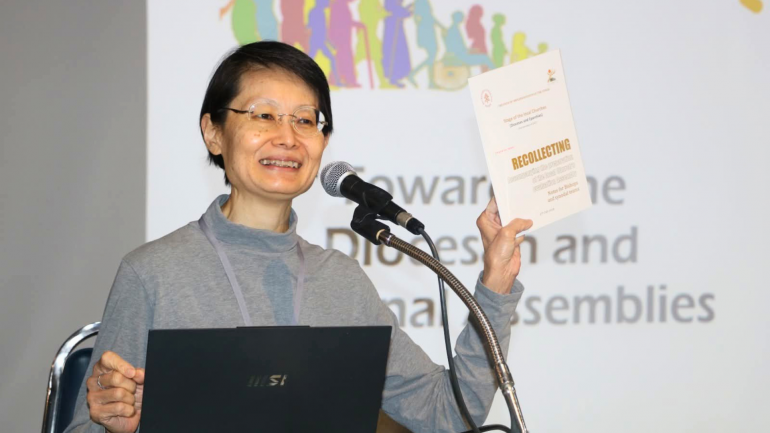
Diocesan assemblies should be more than meetings to review Church activities. They should be spiritual opportunities to recognize God’s presence, listen to one another and discern new paths for mission, a Singaporean synodality specialist told national synodal teams from across Asia.
Dr. Christina Kheng, a member of the Commission for Synodality in Singapore, made the appeal on September 3 during the first session of the final day of the three-day National Synodal Teams Meeting at Baan Phu Waan, the pastoral formation center of the Archdiocese of Bangkok.
In a presentation titled “Towards Diocesan and National Assemblies,” Dr. Kheng focused on preparations for diocesan and national assemblies as the Catholic Church continues its synodal journey.
She urged dioceses to use the assemblies as opportunities to pause amid busy pastoral schedules, reflect on the journey already undertaken and discern where the Holy Spirit is leading the Church.
Using the image of a pilgrim Church, Dr. Kheng said Christians are called to walk together, while also recognizing the need to stop, rest and reflect on the journey.
An ecclesial assembly, she said, can provide such a moment.
“It’s a very spiritual occasion,” Dr. Kheng said, stressing that assemblies should help participants recognize God’s presence in their communities and respond more faithfully to his call.
She compared the process to an annual retreat, in which people review their lives, recognize God’s presence, confront difficulties and discern the way forward. In the same way, an ecclesial assembly can enable a local Church to undertake communal discernment.
Dr. Kheng encouraged diocesan synodal teams to gather existing material from the synodal journey, including consultation reports from 2021 and subsequent evaluations and feedback. But she cautioned against simply reviewing documents.
Teams should look for signs of new life and emerging forms of synodality, including changes in participation, relationships, leadership and mission that may be small or barely visible.
“God is always cultivating new life, new seeds, new saplings,” she said, urging Church communities to become attentive to these developments.
Dr. Kheng proposed four broad areas for reflection: retracing the journey, recognizing its fruits, honestly acknowledging difficulties and remaining open to the Holy Spirit in discerning the next steps.
She also emphasized that listening must extend beyond people already active in parish life.
Dioceses should create small listening circles involving parishioners, priests, pastoral councils, religious communities, schools and other networks, while making a particular effort to hear people who are often overlooked.
Migrants, Indigenous communities, workers, parents, people with disabilities and others on the margins may offer perspectives different from those of regular Church participants, she said.
Dr. Kheng advised dioceses to use simple language when inviting people into the process rather than assuming everyone understands the term “synodality.”
Instead of asking people to identify “signs of synodality,” she suggested questions such as how their experience of the Church has changed, how the community is growing in communion, participation and mission, what challenges remain and where they believe God is leading the Church.
The process should also consider whether synodality is strengthening the Church’s mission and its ability to proclaim the Gospel in concrete human and social situations.
The resulting diocesan report, Dr. Kheng said, should not be merely an administrative document but a spiritual revisiting of the community’s experience, “like your retreat journal,” recognizing where God has been present while honestly confronting pain, failures and unanswered questions.
The diocesan assembly itself should then embody synodality through prayer, silence, listening, spiritual conversation and communal discernment.
Dr. Kheng recommended diverse participation, including people who have traditionally had little voice in Church decision-making, parish priests and representatives of different communities.
The goal is not simply to produce a document but to help the Church move from an individualistic “I” toward an ecclesial “We,” she said.
She also highlighted a proposed practice of writing a “letter to the other churches,” allowing dioceses to share their local context, lessons from the synodal journey, emerging practices, future steps and words of encouragement with other Churches.
Such exchanges can help local Churches recognize their shared gifts and their place within the wider global Church.
Dr. Kheng urged national synodal teams to begin briefing diocesan counterparts soon so the process can advance according to the proposed timeline.
Above all, she urged participants not to treat the preparations as another task added to already demanding pastoral schedules.
“It’s not another thing to do, but it’s a retreat,” she said, encouraging the Church to approach the process as a space to receive the Holy Spirit and discern its future.
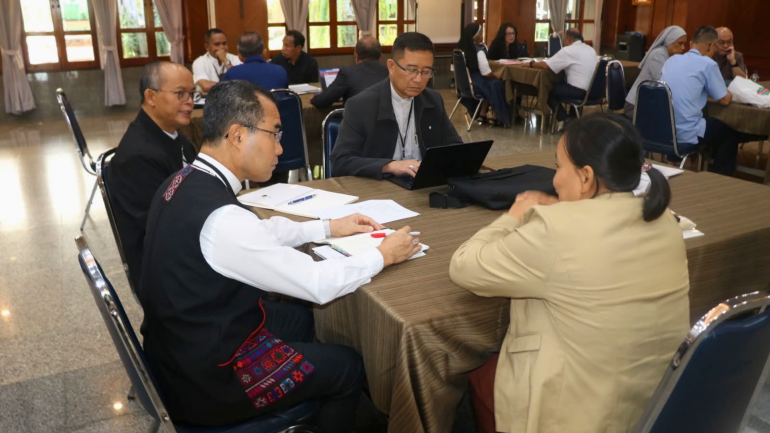
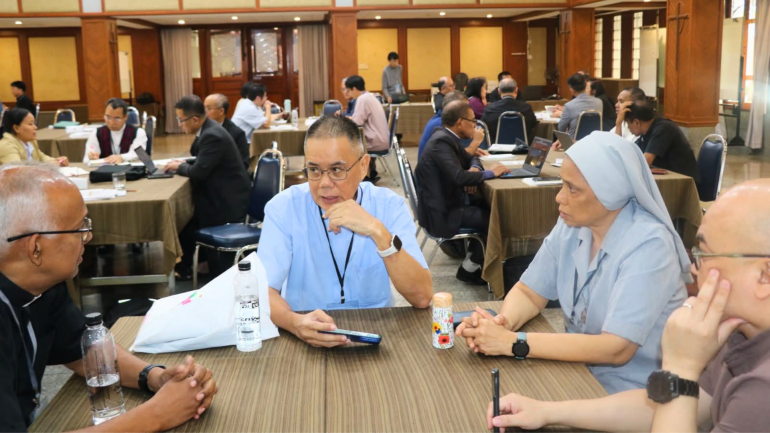
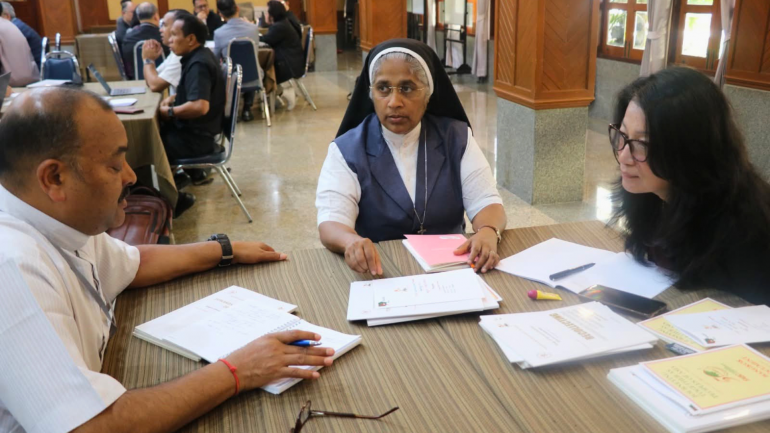
Later, the delegates broke into groups according to their respective episcopal conferences to discuss concrete steps toward diocesan and national assemblies.
The National Synodal Teams Meeting at Baan Phu Waan brings together representatives involved in promoting synodality in local Churches and Episcopal Conferences across Asia. The gathering focuses on accompanying dioceses, sharing experiences and preparing the Church for the next stages of the synodal journe
Radio Veritas Asia (RVA), a media platform of the Catholic Church, aims to share Christ. RVA started in 1969 as a continental Catholic radio station to serve Asian countries in their respective local language, thus earning the tag “the Voice of Asian Christianity.” Responding to the emerging context, RVA embraced media platforms to connect with the global Asian audience via its 21 language websites and various social media platforms.
Latest News