



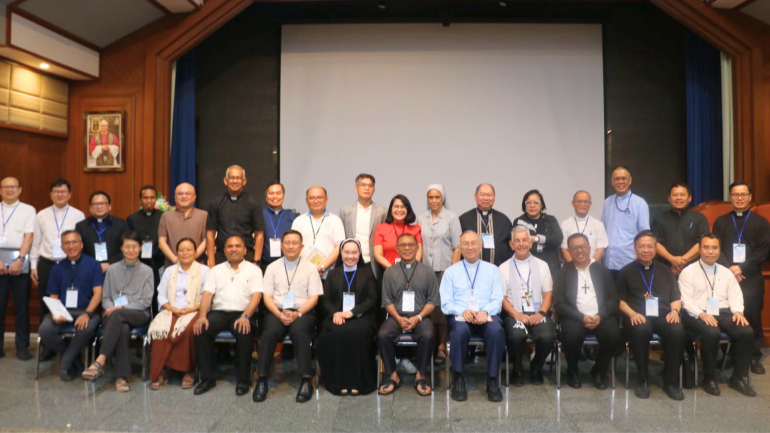
Southeast Asian national synodal teams have called for a permanent regional network and greater continuity of national synodal teams beyond the current phase of the Synod, urging the Federation of Asian Bishops’ Conferences (FABC) to provide a clear roadmap for the journey ahead.
The recommendations came from the largest of three regional groups at the National Synodal Teams Meeting in Bangkok, with nearly 30 delegates from Southeast Asia taking part in discussions on September 3, the final day of the three-day gathering at the Baan Phu Waan Pastoral Training Center.
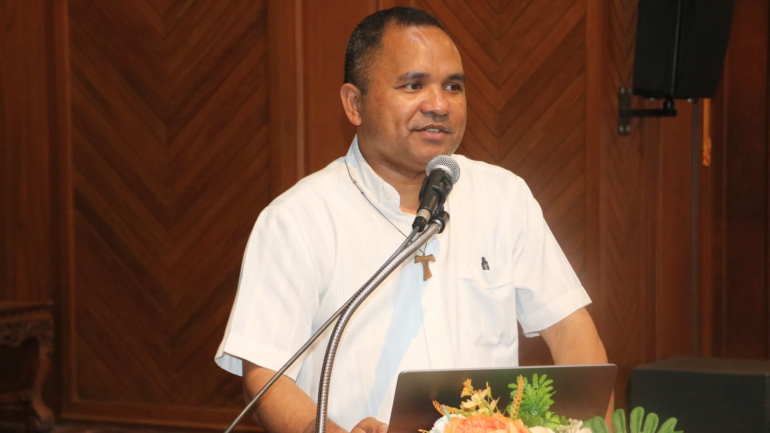
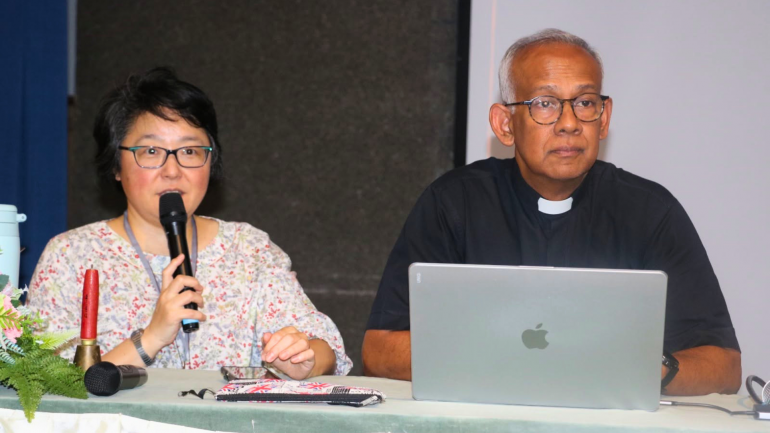
Fr. Joel Casimiro Pinto, OFM, coordinator for the National Synodal Team of Timor-Leste, presented the Southeast Asia group’s report during the regional conversations at Joseph Nattaya Conference Hall.
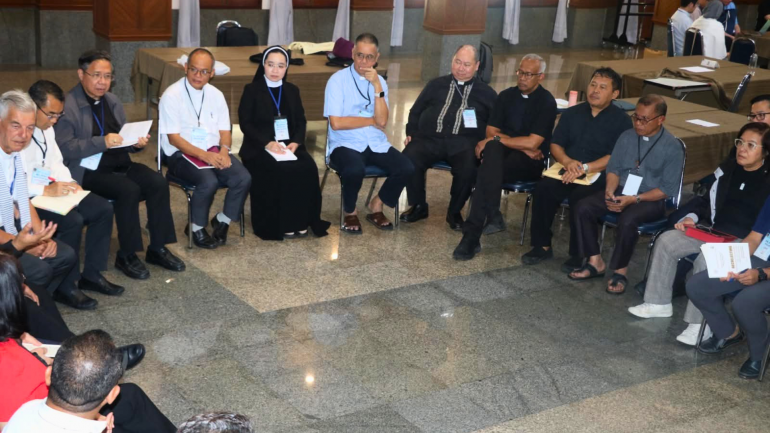
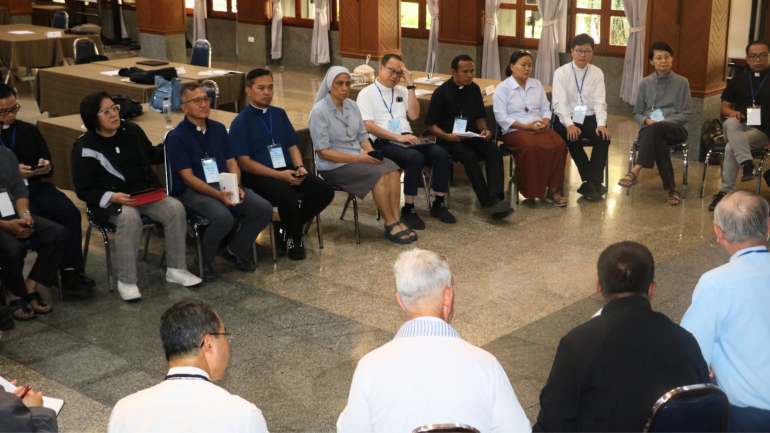
The session brought delegates together according to Asia’s three major regions, South Asia, Southeast Asia, and East and Central Asia, to identify concrete ways of strengthening collaboration after the Bangkok meeting.
Moderated by Fr. Clarence Devadass, executive secretary of the FABC Commission for Synodality, with Sr. Momoko Nishimura, a member of the commission, the discussions focused on two questions: what national teams could do to strengthen collaboration, support one another and share resources, and what the FABC could provide to sustain and deepen synodality in their countries and dioceses.
For Southeast Asia, establishing a permanent communication network was a central recommendation.
The group proposed having one representative from each country in a regional network that would maintain regular communication among national synodal teams. Digital platforms such as WhatsApp and Viber could support ongoing exchange of pastoral resources, experiences, good practices and success stories.
The delegates said regional collaboration should go beyond communication and develop into mutual accompaniment, discernment and shared pastoral action.
They particularly highlighted the value of cooperation among neighboring countries facing common challenges such as migration, refugees, indigenous peoples and ecological concerns.
The group also proposed regional exchange and mission programs for priests and young people, along with opportunities for national teams to participate in diocesan and national assemblies in other countries and learn from different pastoral and cultural experiences.
A second major concern was continuity.
The delegates urged national bishops’ conferences to maintain stable national synodal teams beyond individual phases of the Synod. They asked the FABC to clarify the role and mandate of these teams and encourage bishops to support their continued work.
The Southeast Asian group also called on the FABC to provide a clear timeline and concrete action framework for the next stage of the synodal journey.
One recommendation called for the FABC to write to bishops following the Bangkok meeting, encouraging them to continue implementing synodality in their dioceses and countries.
The FABC, the delegates said, should also formally encourage collaboration among neighboring Episcopal Conferences and their national synodal teams.
Formation emerged as another priority. The group called for regional formation programs on synodality, particularly for seminary formators, professors, priests, pastoral leaders and young priests.
Young people, they said, should be intentionally involved as protagonists of the continuing synodal mission rather than being treated only as participants in Church programs.
The delegates further proposed that the FABC create a sustained regional platform through which national teams can communicate, share resources, discern together and develop common pastoral initiatives.
They also asked the FABC to provide formation and resources for clergy, seminaries, schools and pastoral communities, while supporting regional youth exchanges and pastoral collaboration.
The recommendations reflect the particular realities of Southeast Asia, where neighboring Churches often confront pastoral challenges that cross national borders. Migration, displacement, indigenous concerns and environmental pressures cannot always be addressed within the boundaries of individual countries, the delegates noted.
The September 1–3 National Synodal Teams Meeting brought together representatives from across Asia to reflect on their synodal experiences and identify practical steps for continuing the journey.
The Southeast Asian report called for the region to move from occasional coordination toward sustained relationships in which Churches accompany one another, share resources and discern common responses.
For the delegates, the future of synodality in Southeast Asia will depend not only on what individual national Churches do, but also on whether they remain connected and continue walking together after the present phase of the Synod.
Radio Veritas Asia (RVA), a media platform of the Catholic Church, aims to share Christ. RVA started in 1969 as a continental Catholic radio station to serve Asian countries in their respective local language, thus earning the tag “the Voice of Asian Christianity.” Responding to the emerging context, RVA embraced media platforms to connect with the global Asian audience via its 21 language websites and various social media platforms.
Comments

Latest News






- Reply
Permalink