


Sri Lankan Bishops Pilgrimage to Goa Rekindles Legacy of Servant of God Fr. Jacome Gonsalves


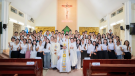
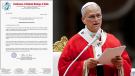
The Bishop of Kandy, Bishop Valence Mendis, and Bishop Emeritus Joseph Vianney Fernando recently visited Goa on a pilgrimage that highlighted the deep spiritual and historical bonds between Sri Lanka and the Church in Goa.
The bishops were warmly received by Cardinal Filipe Neri Ferrão, Archbishop of Goa and Daman, along with priests, religious, and lay faithful. During their visit, they prayed at sites associated with St. Francis Xavier, St. Joseph Vaz—the Apostle of Sri Lanka—and Servant of God Fr. Jacome Gonsalves, the Goan missionary whose life and work left an indelible mark on Sri Lankan Catholicism.

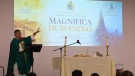
A significant moment of the pilgrimage took place in Divar Island, the birthplace of Fr. Jacome Gonsalves. There, members of the Fr. Jacome Gonsalves Committee discussed ongoing efforts related to his beatification process. The visiting bishops also sang several hymns composed by Fr. Gonsalves in Sinhala, a moving tribute to the missionary who dedicated his life to nurturing the faith of Sri Lankan Catholics in their own language.
A Goan Missionary for Sri Lanka
Born on June 8, 1676, in Piedade (Divar), Goa, Jacome Gonsalves was the eldest son of Tomás Gonsalves and Mariana de Abreu. Coming from a long line of Catholic converts of Konkani Brahmin origin, he grew up in a deeply rooted Christian family during the Portuguese era.
He studied at the Jesuit College in Goa and earned a Bachelor of Arts degree from the University of Goa. In 1696, he began theological studies at the Academy of St. Thomas Aquinas, where he also served as an organist—an experience that nurtured his lifelong love for music, poetry, and literature. He was ordained a priest in April 1700 by Archbishop Agostinho de Anunciação at the Cathedral of St. Catherine in Old Goa.
Drawn to missionary life, Fr. Gonsalves joined the Oratorian Congregation of Goa. Though appointed to the chair of philosophy at the University of St. Paul’s, he relinquished the post in 1705, choosing instead to serve in Ceylon (present-day Sri Lanka), where the Catholic community was suffering under Dutch Calvinist rule following the fall of Portuguese power.
Mission under Persecution
Fr. Gonsalves arrived in Ceylon on August 30, 1705, landing at Talaimannar. At the time, he already knew Konkani, Portuguese, Latin, and Spanish. During the voyage, he began studying Tamil and soon mastered it while ministering in Mannar, Arippu, Musali, and surrounding regions. Later, at the request of St. Joseph Vaz, he learned Sinhala, studying even with Buddhist monks of the Malwatta Chapter to acquire refined literary proficiency.
Working closely with St. Joseph Vaz, Fr. Gonsalves played a crucial role in strengthening the persecuted Catholic community. He ministered in Negombo, Colombo, Kalutara, and Kandy, often under constant threat. In 1709 alone, he is said to have brought more than 1,300 people into the Catholic faith.
Despite harassment and torture by Dutch authorities who controlled the coastal areas, he persevered in his missionary service. He returned to Kandy during the final illness of St. Joseph Vaz, administering the last rites and conducting his funeral in 1711.
Fr. Gonsalves later served as Vicar General of the Bishop of Cochin in Sri Lanka and as Superior of the Goan Oratorians there. He built churches, including one near the royal palace in Hanguranketa, and even acted as a mediator in political conflicts, helping prevent unrest in the late 1720s.


Father of Catholic Literature
Fr. Jacome Gonsalves is best remembered for his extraordinary literary contribution. In a time without printing presses in Sri Lanka, he employed Sinhala scribes to hand-copy his works for circulation among the faithful.
He authored 42 known works: 22 in Sinhala, 14 in Tamil, five in Portuguese, and one in Dutch. His writings included catechisms, devotional books, theological treatises, prayers, and hymns. Many of his compositions remain in use today among Sinhala and Tamil Catholics.
Because of this immense contribution, he is widely honored as the “Father of Catholic Literature in Sri Lanka.” His writings not only preserved the faith during persecution but also rooted Catholic spirituality deeply within local culture and language.
Though the superiors of the Oratorian Congregation in Goa requested his return, Fr. Gonsalves chose to remain in Sri Lanka, dedicating himself entirely to the mission. He spent his later years in Bolawatta, near Negombo, which became a center for missionary coordination.
He died on July 17, 1742, at the age of 66, and was buried at the Church of Our Lady in Bolawatta.
A Living Legacy
The recent pilgrimage of the Sri Lankan bishops to Goa underscores the enduring legacy of Fr. Jacome Gonsalves. Their visit not only honored his memory but also reaffirmed the historical and spiritual ties between the Church in Goa and Sri Lanka.
As the Church continues to advance his cause for beatification, the life of Fr. Jacome Gonsalves stands as a powerful witness to missionary zeal, cultural sensitivity, and unwavering faith in the face of persecution—an enduring bridge between two nations united in Christ.