Sri Lankan Christians celebrate 78th Independence Day alongside the Feast of Our Lady of Lanka

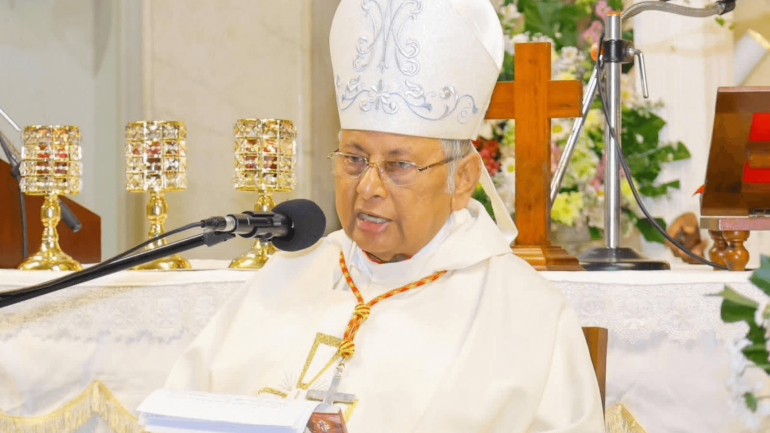
On Feb 4, Sri Lankan Catholics observed the nation's 78th Independence Day by intertwining patriotic commemoration with the religious Feast of Our Lady of Lanka. While official celebrations took place across the island, the day was marked by significant messages from church leadership and a somber "Black Day" protest by Tamils in the North, highlighting the complex journey toward true national unity.
The Cardinal’s Call: Rule of Law and Religious Respect
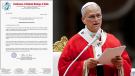
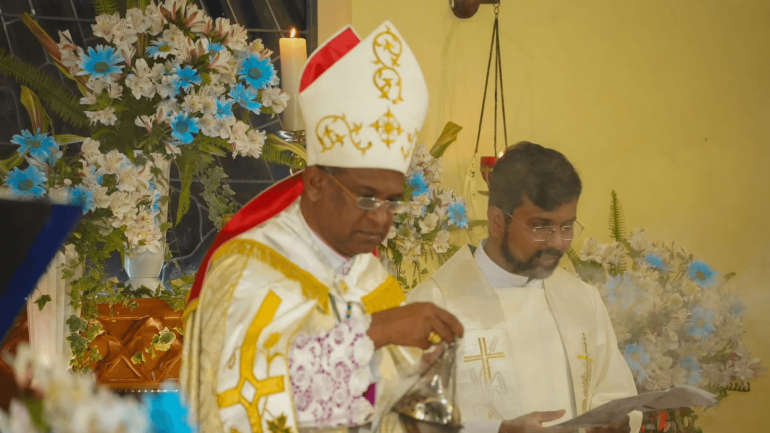
Presiding over the Independence Day Mass at All Saints’ Church, Borella, Cardinal Malcolm Ranjith, Archbishop of Colombo, offered a strong critique of Sri Lanka’s present direction, saying the country has yet to attain “true” independence. He expressed concern over the lack of meaningful progress in the economic, political, and social spheres, stressing that genuine freedom is impossible without the firm and impartial supremacy of the rule of law.
The Cardinal warned that development and economic stability cannot be achieved by ignoring Sri Lanka’s traditional, cultural, and religious foundations, particularly those rooted in Buddhism. He also alleged that members of the 2026 government had shown disrespect toward Buddhist monks and other clergy, undermining the nation’s moral fabric. Calling for unity beyond race and religion, he urged citizens to act responsibly in safeguarding the environment and protecting the poor and vulnerable.
Solemn Feasts at National Landmarks
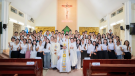
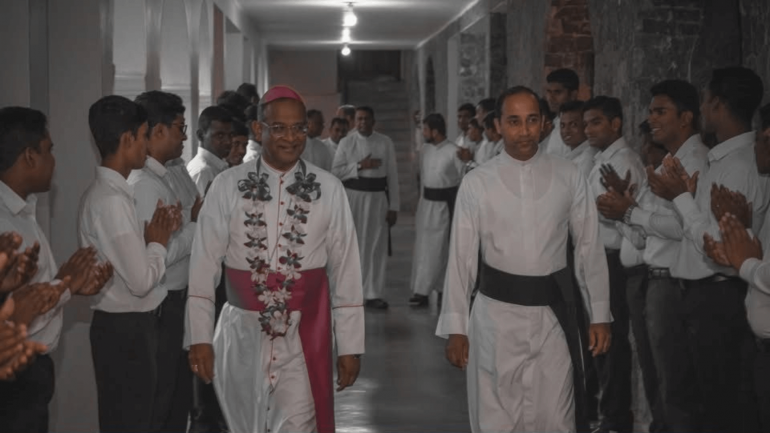
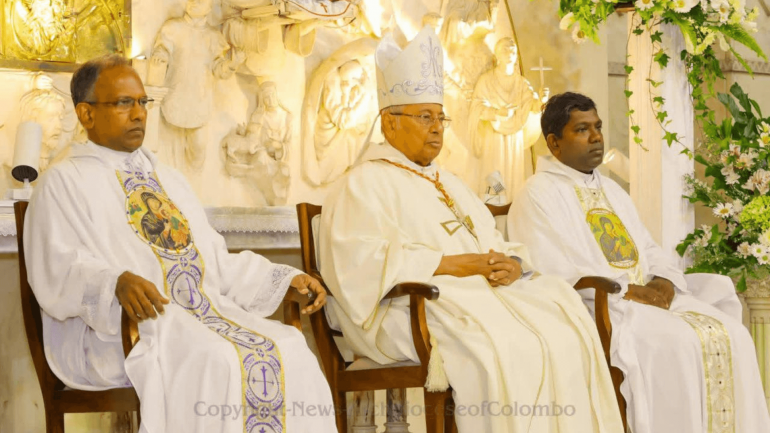
The Feast of Our Lady of Lanka was celebrated with deep devotion at two principal venues: the Basilica of Our Lady of Lanka in Tewatte, which served as a focal point for national prayer, and the National Seminary of Our Lady of Lanka in Ampitiya, where the liturgy was presided over by Bishop Jude Nishantha of Badulla, together with the Rector, lecturers, and seminarians of the Theologate and Philosophate, entrusting the future clergy to the service of the nation.
The North: A Day of Mourning and "Black Independence"
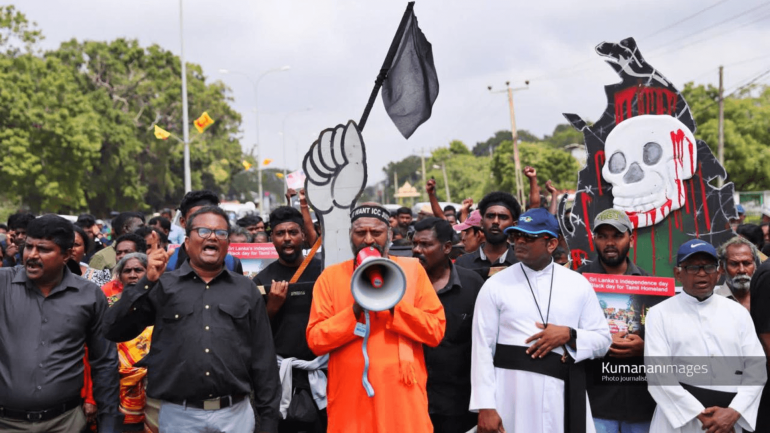
In stark contrast to the official Independence Day celebrations, the Tamil community in Northern Sri Lanka observed the occasion as a Day of Mourning. For many, especially families of the forcibly disappeared, the sixteen years since the end of the civil war have passed without truth, accountability, or justice, deepening a sense of unresolved grief and marginalisation.
While state officials marked the day with ceremonies and festivities, “Black Day” protests were held across the Northern Province. Demonstrators called for answers regarding the disappeared and for meaningful steps toward reconciliation. Catholic priests were among the religious leaders who stood in solidarity with the protesters, lending moral support to those continuing their peaceful struggle for justice.
The observance of the Day of Mourning is rooted in a long history of grievance. It traces back to February 4, 1957, when Thyagi Nadarajan, a 20-year-old Tamil youth, was shot and killed in Trincomalee during a non-violent protest against the “Sinhala Only” Act. For many Tamils in the North, his death remains a powerful symbol of exclusion and a reminder that the promise of equal citizenship remains unfulfilled.
A Long Road to True Freedom
The duality of this year’s celebrations—one of religious devotion and the other of mourning underscores a critical reality: for Sri Lanka to celebrate a truly inclusive independence, it must embark on a deeper journey toward justice, equity, and the rule of law.
The participation of religious leaders in both the celebratory and the protesting spheres highlights the Church's ongoing role as a voice for both national guidance and the grievances of the marginalized.